



Tapping the private sector to grow public transit service
While transit agency partnerships with other public agencies have resulted in increased ridership, revenue and service, some have also actively entered partnerships with private entities with similar results.

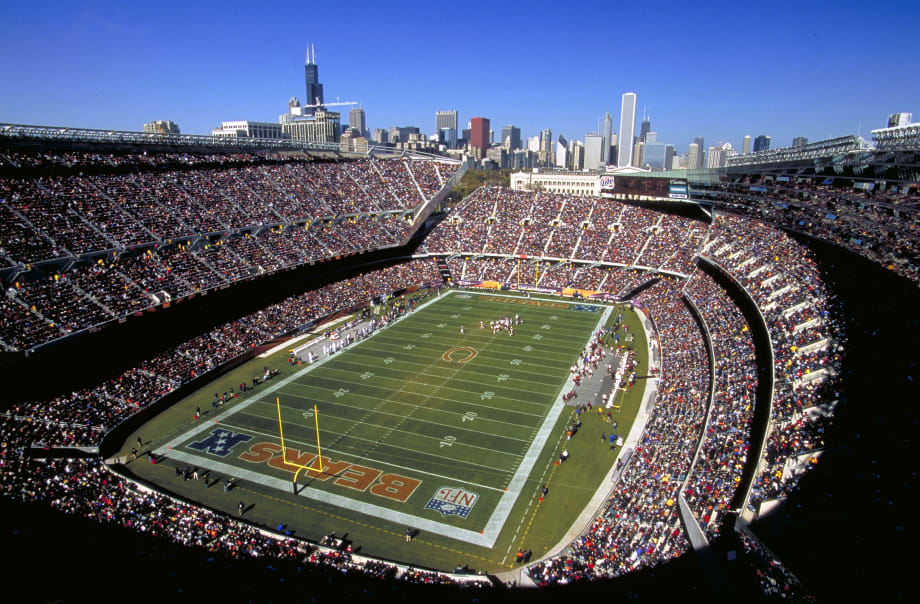
Soldier Field. (C) City of Chicago.
Last month I posted a piece on the various ways transit agencies are partnering with other public agencies that result in increased ridership, revenue and service. Public partners have included universities, local schools, social service agencies, downtown development authorities, and cities and counties among others. Transit agencies have also been active in entering partnerships with private entities with similar results as noted below:
Fourteen different entities have partnered with the Greater Cleveland Regional Transit Authority to provide $3.6 million over three years for an expanded downtown rubber tired trolley service.
SamTrans in the San Francisco Bay area has a Shuttles Program that provides the “last mile” to link rail stations with business parks, hospitals, schools and other major employers. Typically, employers pay 50% of the costs, various government grants pay 25% and SamTrans pays 25%.
In Portland, Ore., businesses have taxed themselves via a local improvement district and donated land for light rail system amenities provided by TriMet.
The Centre Area Transportation Authority, not being able to initiate a U-Pass program at Penn State, has developed a similar program through off-campus student housing complexes. CATA currently contracts with 15 apartment complexes, each of which includes pre-paid transit passes as one of the amenities they offer their tenants.
The North County Transit District has partnered with a local hospital to increase frequency on route 353 to serve as a shuttle between two hospital facilities. The hospital pays NCTD approximately $90,000 per year for increased service on the route.
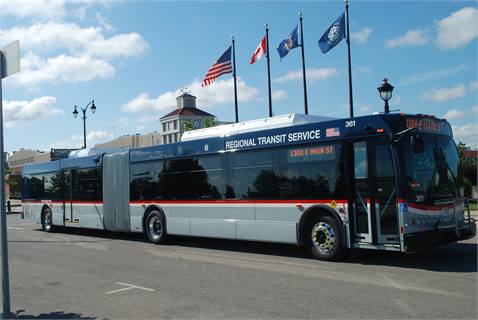
Rochester-Genessee Regional Transportation Authority
There are three transit agencies that have taken additional steps to work with private partners to expand service or help cover the cost of existing service. The Rochester-Genesee Regional Transportation Authority (RGRTA) in New York dedicates two full-time positions to “Business Development” which involves finding new partners to help fund transit services that would not ordinarily be provided in certain areas. Many public and private organizations build new facilities in areas outside of the more dense urban core in order to save development costs, but in so doing, they deprive employees and customers of the ability to reach them by public transportation. RGRTA is a fiscally constrained agency that cannot serve every street and every destination in the greater Rochester area.
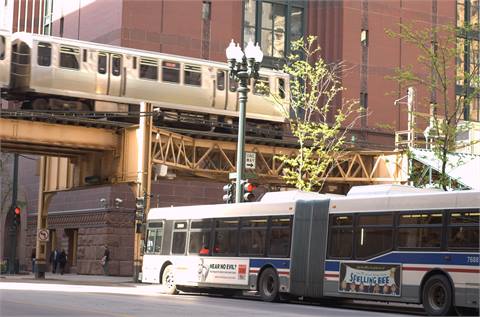
Chicago Transit Authority
To serve new markets at no or low additional cost to the transit agency, RGRTA’s two business development sales professionals invest time in meeting with institutions, such as customer calling centers, nursing homes, apartment complexes, supermarkets, health care facilities, technical schools, bingo halls and others that have located in places not currently served by transit. They discuss the possibilities of extending service to their locations, if those entities are willing to pay the costs associated with those new services. To date, that staff is finding that 20% of the organizations they meet with agree to pay for the additional transit service that would be required to serve their institution. The transit agency is earning as much through such agreements as they are through the fare box. In the meantime, the business development staff continues to meet with the Chamber of Commerce, the Kiwanis Club, the local Rotary Club and many other organizations in order to stay in the front of the minds of all the business interests in their community.
Similarly, the Chicago Transit Authority has partnered with Soldier Field, United Parcel Service (UPS), the Wrigley Co., and other attractions, hospitals and downtown business interests to allow these entities to provide subsidized service. CTA has begun renegotiating these contracts to decrease and/or eliminate the operating and overhead costs it incurs for such service. In addition, the CTA has established an official "Corporate Partnership Program” to promote corporate investment in its transit system. Benefits to the "Corporate Partner" include being promoted in CTA press releases, having the right to advertise on the CTA system, and having their name or logo incorporated into a CTA station name and signage.
Soldier Field. (C) City of Chicago.
In 2012, CTA launched an official program to sell the business naming and sponsorship rights to 11 of its stations. Current corporate partners include the Chicago Sun-Times and Miller Coors, which sponsor penny rides on the first day of school for Chicago Public School children and on New Year’s Eve for all riders on CTA, respectively. CTA’s agreement with Sun-Times Media Productions LLC is for three years plus a three-year option totaling $900,000 for the first three-year agreement and an additional $900,000 if an additional three-year agreement is entered. The agreement would cover out-of-pocket costs incurred by the CTA as a result of providing free rides to students.
CTA’s three-year (plus three-year option) sponsorship agreement with Miller Coors to provide free rides on New Year's Eve allows the company to advertise in stations and on fare cards sold in predetermined stations. The total contract value including option years is $1.4 million. CTA estimates a total of $154,000 in lost revenues on New Year's Eve every year, but this sponsorship agreement will result in an estimated $1.1 million in revenue for the CTA over six years.
On a smaller scale, the Fredericksburg Regional Transit Authority (FRED) in Virginia has also established a partnership program that invites public and private partners who make annual contributions or grants of $25,000 or more in cash or in kind to receive the following benefits:
Acknowledgment of their support on all FRED promotional materials.
Acknowledgment of their support at all FRED-sponsored public events.
VIP invitations to all FRED-sponsored events (e.g., ground breakings, ribbon cuttings, new service launches).
Invitations to all Public Transit Advisory Board meetings, where your voice can be heard.
Free system-wide ridership for all of their employees (upon presentation of a valid ID).
In some of the three cases noted above, new service, revenue and ridership result from the partnerships. In other cases, stronger bonds are formed with the public and private partners that serve the transit agency well in terms of their own relevance in their communities.
In case you missed it...
Read our METRO blog, "Reports Can Only Help Public Transit's Case."
More Blog Posts
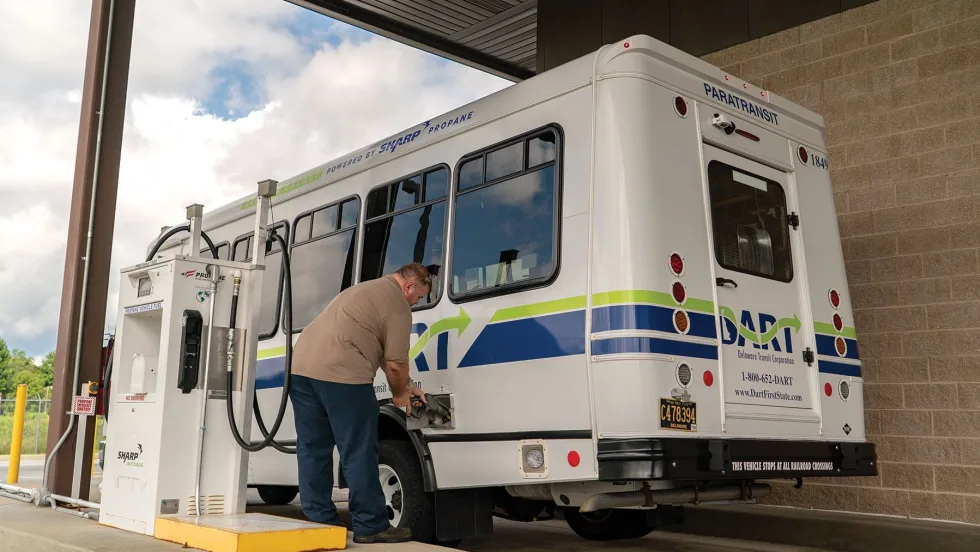
Building a Winning FTA Grant Proposal: Why Propane Autogas is the Pragmatic Choice for Fleet Resilience
With $610 million available through the FY 2026 Buses and Bus Facilities Competitive Program and the Low or No Emission Grant Program, agencies must build a compelling case before the September 21 deadline that balances environmental compliance with operational feasibility.
Read More →
Velo-city Conference 2026: Latest Trends in Cycling as Part of Urban Mobility
The global cycling conference highlighted how cities are integrating bicycles into multimodal transportation networks, expanding cycle tourism and reshaping urban mobility.
Read More →
Kindness Isn’t Soft...It’s Strategic.
Mike Bismeyer — often known as “The Kindness Guy” — has spent more than 17 years in public transit and mobility, serving in industry leadership roles, speaking across North America, and advocating for stronger workplace cultures. But his message doesn’t come from theory. It comes from lived experience.
Read More →
Inside ITF 2026: Transport Reacts to A Challenging World
Transport leaders from around the world gathered in Leipzig, Germany, for the 2026 International Transport Forum to discuss resilience, climate impacts, supply chains and the future of sustainable mobility.
Read More →
Every Ride Tells a Story — But You’re Not Just Selling the Ride
You’re selling the moment, the meaning, and the emotion behind it.
Read More →
How Digital Signage is Reshaping the Traveler Experience at Transportation Hubs
What was once a landscape of static signs has evolved into a responsive, immersive environment powered by real-time visual communication.
Read More →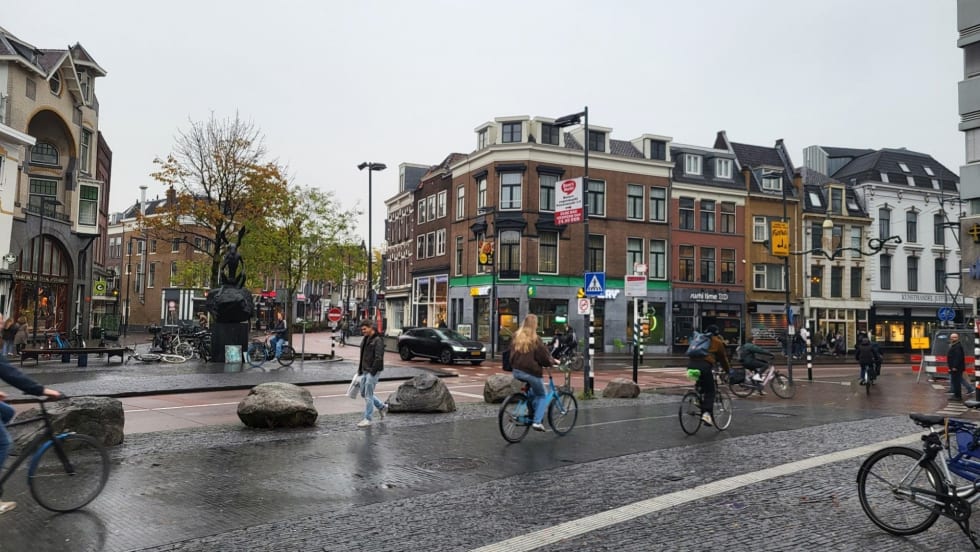
Latest Trends in Urban Mobility from Polis Conference 2025
Polis comprises cities and regions, as well as corporate partners, from across Europe, promoting the development and implementation of sustainable mobility. This year’s event had over a thousand attendees across various policy forums and an exhibition.
Read More →
Why Transit Leaders Require Better Tools for Operational Clarity In Today’s Tech-Fragmented Environment
Across North America and beyond, transit agency officials are contending with a perfect storm of operational headaches and strategic challenges that hamper daily service and long-term progress.
Read More →
The Powerless Brokers: Why California Can’t Build Transit
It is no secret that transit in the U.S. is slow and expensive to build.
Read More →
Why Transport Sustainability Should Focus on People Instead of Cars
Simply incentivizing electrification is not enough to make a meaningful impact; we must shift our focus toward prioritizing public transportation and infrastructure.
Read More →