




RELATED: [Blog] Will driverless buses be accepted sooner than driverless cars?
Technology and the Transformation of Urban Transportation: 2015 U.S. Conference of Mayors
Disruptive technologies and the new era of information sharing are helping to evolve and advance public transportation in our nation’s greatest cities. Nearly 300 mayors and government officials convened in San Francisco June 19-22 for the U.S. Conference of Mayors’ 83rd Annual Meeting, featuring remarks from President Obama and former U.S. Secretary of State and Democratic presidential candidate Hillary Clinton. I was invited to speak in front of these influential government leaders to discuss “Technology and the Transformation of Urban Transportation.” This article will give readers an inside look at the conversation.
June 30, 2015
7 min to read
Disruptive technologies and the new era of information sharing are helping to evolve and advance public transportation in our nation’s greatest cities. Nearly 300 mayors and government officials convened in San Francisco June 19-22 for the U.S. Conference of Mayors’ 83rd Annual Meeting, featuring remarks from President Obama and former U.S. Secretary of State and Democratic presidential candidate Hillary Clinton. I was invited to speak in front of these influential government leaders to discuss “Technology and the Transformation of Urban Transportation.” This article will give readers an inside look at the conversation.
Our cities are entering a period of challenge and opportunity. One thing we do know is that change will be constant, and there are already some huge trends impacting urban areas and transportation.
We know that population growth is only occurring in cities. Within this population profile, we have the aging of the baby boomers and the appearance of the tech-savvy millennials. This will inevitably affect transportation in municipalities where we already have major congestion at peak travel periods yet under-utilized capacity at other times of the day.
With getting people to work, rest or play at the heart of the economic activity of a city, addressing this challenge has to be a priority.
Yet we also know that we do not have enough real estate to build the requisite infrastructure to cope with that additional peak demand and that we need to find ways to make our cities more sustainable. Also, the primary funding source for transportation infrastructure – fuel taxes – hasn’t kept in line with inflation.
Contributing to both challenge and opportunity are major tech trends. Whilst cars’ becoming more efficient helps sustainability, it also contributes to the fuel tax issue.
People’s expectation of customer service is quite rightly being elevated by technology – which can be a large part of the solution. After all, the world’s largest taxi company, book store and music shop do not have vehicles or stores. They have originated from tech-led disruptive ways of delivering service differently.
We should encourage these disruptions but recognize that they bring both opportunity and challenge.
The rise of the sharing economy will enable us to stretch existing infrastructure further. But together, with increased commercial vehicles from online shopping, this is creating a much more complicated job of managing that shared road-space.
The next wave will begin to solve this issue – we’ll see concierge services in transit taking delivery of shopping; we’ll see further ride-pooling, smarter bikes and a more coordinated road-space as vehicles talk to infrastructure as well as each other and park themselves.
We’ll charge vehicles not based on how much fuel they burn but which roads they use and at what time of day.
Then there will be the autonomous wave. Our cars will drive themselves and won’t need to park in the city – they can wait at home or in surrounding neighborhoods. We’ll have driverless taxis and cars that are shared as a service. Buses can become driverless, and whilst some may have fixed-routes, others will optimize based on demand. Our shopping may be delivered by air or collected by our driverless car on route to collect us from work. We’ll be charged according to how efficiently we utilize capacity and contribute to sustainability.
These waves of disruption will fundamentally change the way that we operate and plan transportation in cities. At the moment, we plan and schedule, and then control and respond. In the future, the technology will allow us to be demand-led and command vehicles to optimize.
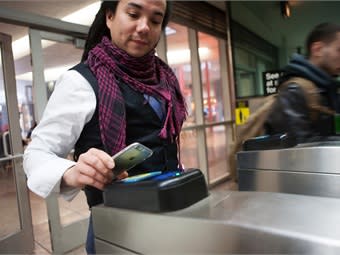
How humans interface with transportation will also change. We’ll go from interfacing with equipment such as vending machines and kiosks, to mobile payments and location-based services, to ultimately digitized personal assistants that accompany us and provide predictive services based on a very rich understanding of our habits and preferences.
So if change is the new constant and disruptive technology will solve problems, what is the challenge?
There is a risk that these developments, which individually address part of the problem, do not evolve in a coordinated way. Service providers are beginning to compete on making the convenience of their service obvious to you, but this is leading to disintegration of information and choices.
We, therefore, need to enable this disruption to occur within a coordinated framework in a way that is to the benefit of people in cities and those that do business in them.
NextCity is Cubic Transportation Systems’ roadmap for this coordinated framework – centered around three core principles of integrated customer experience, one account and integrated operations and analytics.
We are working hard on bringing to market solutions that provide an integrated customer experience, such as our NextBus product or the multi-agency mobile payments and real-time app we will be launching in Chicago this year.
This is important, because as a consumer, I have preferences, but I’m mostly agnostic to the mode or service - I want to know my travel time and cost options; I want that information to be reliable so that I can make the choice most applicable to me.
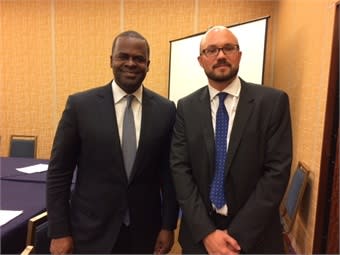
Matt Cole speaks with Kasim Reed, mayor of Atlanta, during the 2015 U.S. Conference of Mayors. Cubic designed and delivered MARTA’s contactless Breeze Card system, which generates more than 106 million rides per year by local riders and visitors to the city.
What’s more, the majority of journeys within a region are habitual. For these journeys, even real-time information isn’t good enough because they are not pre-planned; there is an inherent expectation of time and cost based on experience. People optimize their routines based on that experience and don’t always leave room, or check, for anomalies.
Therefore, we need to be predictive and eliminate uncertainty. We need to have an intimate understanding of our customers’ preferences, constraints and habits. We need to think network wide, understand real-time conditions and predict the likely conditions in the next few hours.
We then need to associate those predicted conditions to those that are likely to be traveling and may be impacted by anomalies and deliver that information in a targeted way to those travelers that you wish to redirect or influence – with those two key journey factors – time and price. Perhaps the impact of predicted journey changes can be softened with relevant third party offers at transfer points, or even by leveraging third party offers as a means to alter journey patterns or subsidize fare incentives.
Integrated payments are critical to our coordinated framework because it is how you make the integrated customer experience ‘actionable’ – through the delivery of tickets and passes associated with the recommended journey. And the payment footprint is a very sophisticated way of enabling the system to understand habits and preferences.
Cubic already integrates multi-modal transportation payments. We process more than 24 billion transactions and integrate more than 450 operators on the 20 platforms we have deployed in some of the world’s biggest cities. Our goal is for there to be ‘One Account’ – one place for paying for all transportation in a city.
In business, we use measurements and compensation to incentivize the behavior we want.
Transportation will be no different – if we want to create modal-shift and to distribute the peak – we will need to use the payment system as a tool. If we look at and price the whole transport network, perhaps dynamically, we can charge for and influence how the network is used – through combinations or travel time and price – provided everyone is afforded a viable option.
Finally, integrating data, information and operations will be critical in the future because there will be more silos as new transportation services arise.
Data and information silos result in a loss of insights into relationships that exist across them. Only through integrated information can we get a city-wide view of mobility use and identify otherwise unknown interrelationships and inefficiencies. Through integrated analytics, we are able to model and measure the impact of decisions and policy changes across the entire network, as well as perform complex benchmarking and performance measurement.
Cubic is deploying and evolving tools and services that enable integrated operations and analytics across agencies. NextBus provides operator tools to more than 160 agencies, our ITS solutions integrate multiple elements of traffic and incident management in urban and inter-urban parts of Europe and the Far East, and we have recently launched an advanced analytics business in Urban Insights.
Our cities face many disruptions in the future, but the opportunities can by far outweigh the challenges and be harnessed as a solution to keep our cities livable as they grow.
Matt Cole is executive vice president, Strategy and Business Development for Cubic® Transportation Systems Inc., a business segment of Cubic Corp. and a leading integrator of payment and information technology and services for intelligent travel solutions.
Subscribe to Our Newsletter
More Blog Posts
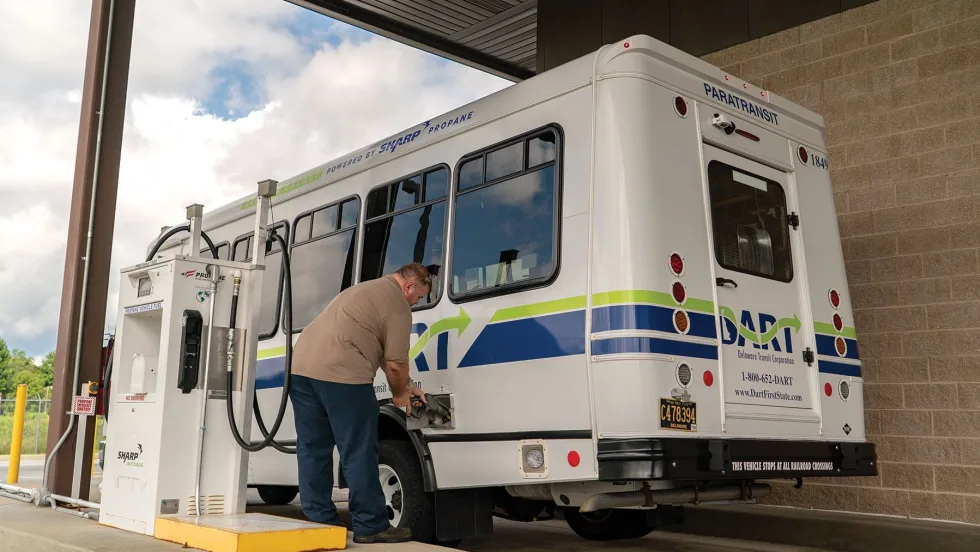
Building a Winning FTA Grant Proposal: Why Propane Autogas is the Pragmatic Choice for Fleet Resilience
With $610 million available through the FY 2026 Buses and Bus Facilities Competitive Program and the Low or No Emission Grant Program, agencies must build a compelling case before the September 21 deadline that balances environmental compliance with operational feasibility.
Read More →
Velo-city Conference 2026: Latest Trends in Cycling as Part of Urban Mobility
The global cycling conference highlighted how cities are integrating bicycles into multimodal transportation networks, expanding cycle tourism and reshaping urban mobility.
Read More →
Kindness Isn’t Soft...It’s Strategic.
Mike Bismeyer — often known as “The Kindness Guy” — has spent more than 17 years in public transit and mobility, serving in industry leadership roles, speaking across North America, and advocating for stronger workplace cultures. But his message doesn’t come from theory. It comes from lived experience.
Read More →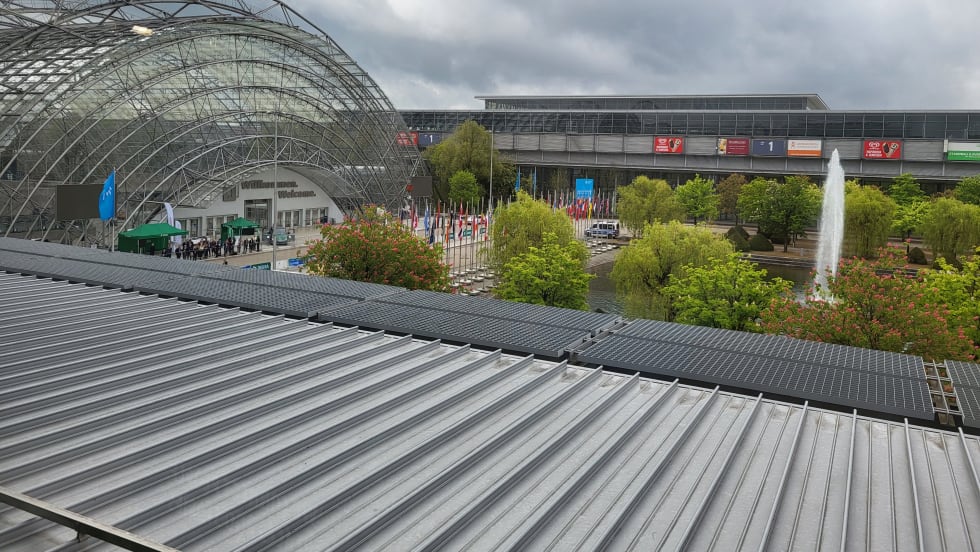
Inside ITF 2026: Transport Reacts to A Challenging World
Transport leaders from around the world gathered in Leipzig, Germany, for the 2026 International Transport Forum to discuss resilience, climate impacts, supply chains and the future of sustainable mobility.
Read More →
Every Ride Tells a Story — But You’re Not Just Selling the Ride
You’re selling the moment, the meaning, and the emotion behind it.
Read More →
How Digital Signage is Reshaping the Traveler Experience at Transportation Hubs
What was once a landscape of static signs has evolved into a responsive, immersive environment powered by real-time visual communication.
Read More →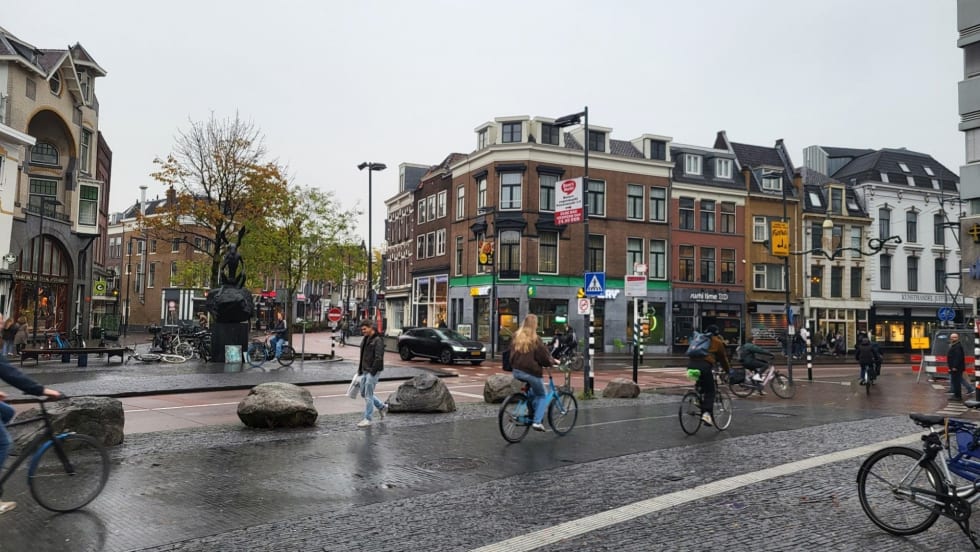
Latest Trends in Urban Mobility from Polis Conference 2025
Polis comprises cities and regions, as well as corporate partners, from across Europe, promoting the development and implementation of sustainable mobility. This year’s event had over a thousand attendees across various policy forums and an exhibition.
Read More →
Why Transit Leaders Require Better Tools for Operational Clarity In Today’s Tech-Fragmented Environment
Across North America and beyond, transit agency officials are contending with a perfect storm of operational headaches and strategic challenges that hamper daily service and long-term progress.
Read More →
The Powerless Brokers: Why California Can’t Build Transit
It is no secret that transit in the U.S. is slow and expensive to build.
Read More →
Why Transport Sustainability Should Focus on People Instead of Cars
Simply incentivizing electrification is not enough to make a meaningful impact; we must shift our focus toward prioritizing public transportation and infrastructure.
Read More →