



The commute gets cultured
The average daily rail commute can be quite mundane — wait at the station, get on the train and read, catch up on work or nap. Recently, though, Southeastern Pennsylvania Transportation Authority partnered with local music organizations to add a little culture to the regular rail routine.

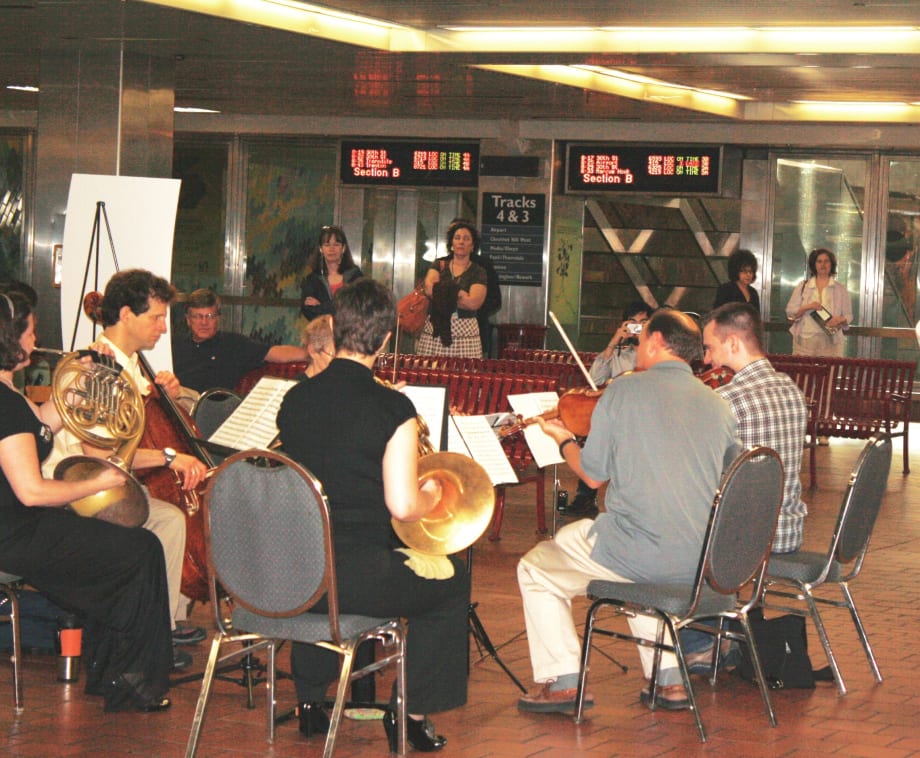
The average daily rail commute can be quite mundane — wait at the station, get on the train and read, catch up on work or nap on the trip. Almost every passenger is in his or her own “zone.” And while this is usually the case for Southeastern Pennsylvania Transportation Authority’s (SEPTA) regional rail passengers, the authority recently partnered with local music organizations to add a little culture to the regular rail routine.
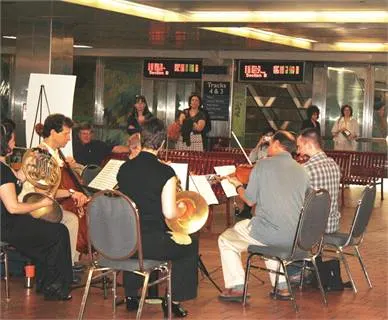
Normally, one would find the Philadelphia Orchestra performing at one of the city’s major concert halls, not at the train station. But on a Friday morning, SEPTA passengers exiting or waiting for their trains at Market East Station were treated to a rush hour performance of Beethoven’s Sextet by members of the Orchestra. The concert attracted quite a crowd looking to start their day with something other than the standard station Muzak.
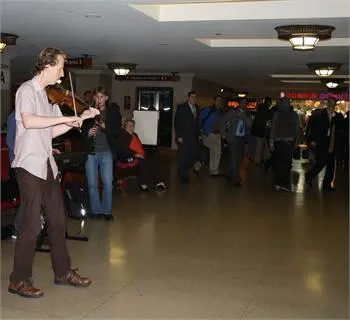
For those whose musical tastes lean a little more toward jazz than classical, the Sixth Floor Trio jazz band performed an impromptu midweek morning rush concert at Suburban Station, sending passengers off to work and school with smiles.
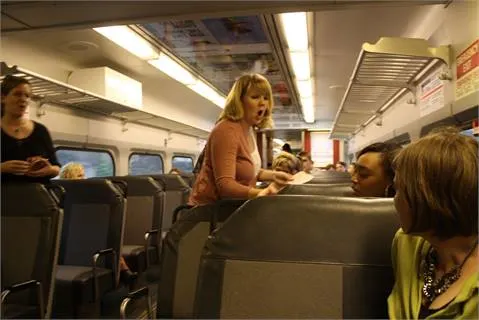
The performances weren’t limited to the stations. To promote its upcoming production of Carmen, members of the Opera Company of Philadelphia spent a week riding various routes between SEPTA’s three Center City Stations — 30th Street, Suburban and Market East — getting up during the ride and surprising riders by singing selections from the Bizet classic in the train aisles.
Philadelphia has a rich arts and music scene, and the pop-up concerts not only gave SEPTA an opportunity to start or end our passengers’ days on a different “note,” but also allowed the authority to support the city’s cultural institutions and introduce thousands of commuters to music they might not otherwise give a listen.
While the Orchestra’s concert was held to promote the organization’s “Listen with Your Heart” campaign, an initiative aimed at raising public awareness and funding, the Sixth Floor Trio and Opera Company mini-concerts were part of the Knight Foundation-sponsored “Random Acts of Culture” (RACs) program. The program consists of spontaneous performances held at unexpected locations to create a sense of community through a shared experience, introduce the arts to the general public and encourage community members to patronize musical performances at traditional venues. In addition to the SEPTA trains and stations, RACs have been held at Philadelphia’s Reading Terminal Market and Macy’s.
The Knight Foundation’s Erik Lambertson, a daily SEPTA Regional Rail rider, got the idea for the Opera RACs at SEPTA locations on his Media/Elwyn Line commute.
“I realized each rider was isolated from all the others, sharing a car, a commute, yet still disconnected. I looked around at all the tired people and decided there would be nothing more uplifting and surprising than a rendition of opera on the railroad,” he said “After quick collaboration with the Opera Company, SEPTA and the Knight Foundation, the plan was set in motion. The performances went exactly according to plan. We completed 20 Random Acts of Culture in total, each one to a resounding applause.”
“The concerts were well-received by our riders,” said SEPTA GM Joseph Casey. “The RACs were most likely the most pleasant service interruptions our passengers have experienced.”
Let the rider beware — the next time you are traveling on SEPTA, the person sitting next to you at the station or on the train could be a professional performer and you could be treated to a Random Act of Culture.
In case you missed it...
Read our METRO blog, "'Good News/Bad News: just like the basketball strike" here.
More Blog Posts
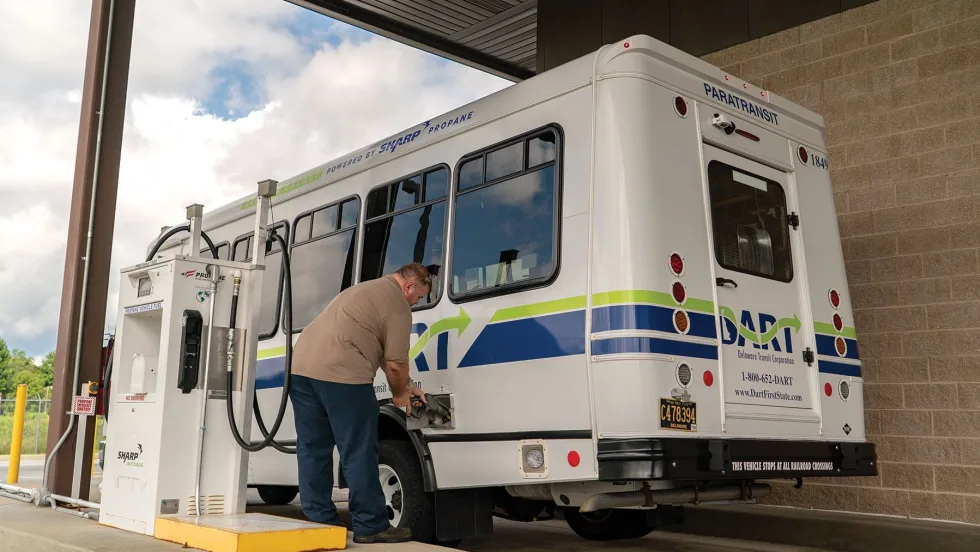
Building a Winning FTA Grant Proposal: Why Propane Autogas is the Pragmatic Choice for Fleet Resilience
With $610 million available through the FY 2026 Buses and Bus Facilities Competitive Program and the Low or No Emission Grant Program, agencies must build a compelling case before the September 21 deadline that balances environmental compliance with operational feasibility.
Read More →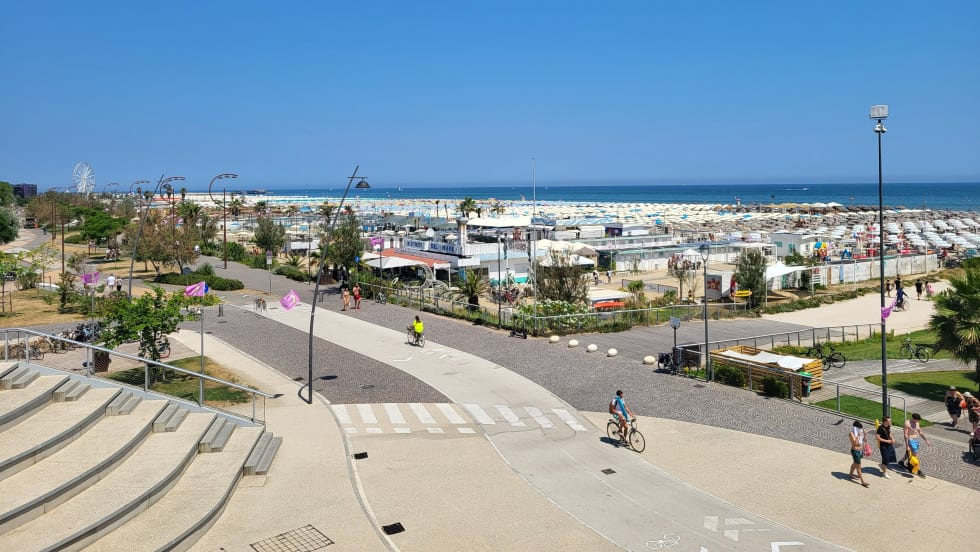
Velo-city Conference 2026: Latest Trends in Cycling as Part of Urban Mobility
The global cycling conference highlighted how cities are integrating bicycles into multimodal transportation networks, expanding cycle tourism and reshaping urban mobility.
Read More →
Kindness Isn’t Soft...It’s Strategic.
Mike Bismeyer — often known as “The Kindness Guy” — has spent more than 17 years in public transit and mobility, serving in industry leadership roles, speaking across North America, and advocating for stronger workplace cultures. But his message doesn’t come from theory. It comes from lived experience.
Read More →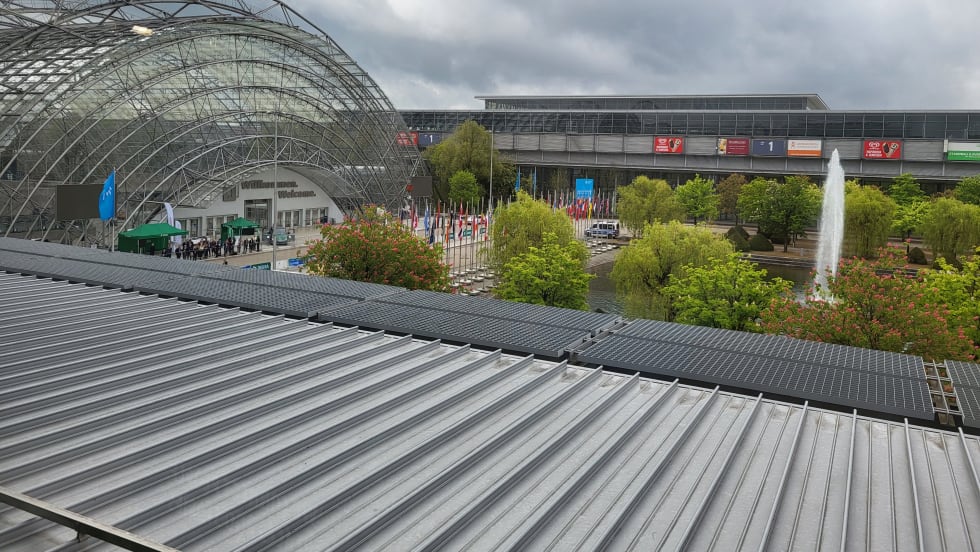
Inside ITF 2026: Transport Reacts to A Challenging World
Transport leaders from around the world gathered in Leipzig, Germany, for the 2026 International Transport Forum to discuss resilience, climate impacts, supply chains and the future of sustainable mobility.
Read More →
Every Ride Tells a Story — But You’re Not Just Selling the Ride
You’re selling the moment, the meaning, and the emotion behind it.
Read More →
How Digital Signage is Reshaping the Traveler Experience at Transportation Hubs
What was once a landscape of static signs has evolved into a responsive, immersive environment powered by real-time visual communication.
Read More →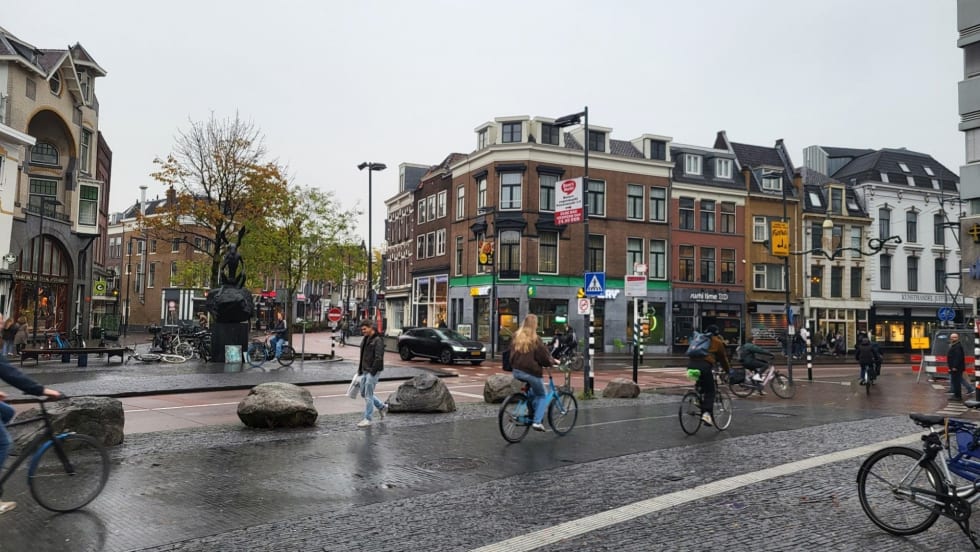
Latest Trends in Urban Mobility from Polis Conference 2025
Polis comprises cities and regions, as well as corporate partners, from across Europe, promoting the development and implementation of sustainable mobility. This year’s event had over a thousand attendees across various policy forums and an exhibition.
Read More →
Why Transit Leaders Require Better Tools for Operational Clarity In Today’s Tech-Fragmented Environment
Across North America and beyond, transit agency officials are contending with a perfect storm of operational headaches and strategic challenges that hamper daily service and long-term progress.
Read More →
The Powerless Brokers: Why California Can’t Build Transit
It is no secret that transit in the U.S. is slow and expensive to build.
Read More →
Why Transport Sustainability Should Focus on People Instead of Cars
Simply incentivizing electrification is not enough to make a meaningful impact; we must shift our focus toward prioritizing public transportation and infrastructure.
Read More →