




Within America, driving is the most common form of transportation and public transit is often viewed as a disruption to the status quo.
We consistently ask the wrong questions about transit investment
"Public transit wastes my money." This is a fairly common argument to encounter when discussing public transportation. It’s easy to say this when looking at delays, faulty service, or drab trains and buses.
February 12, 2018
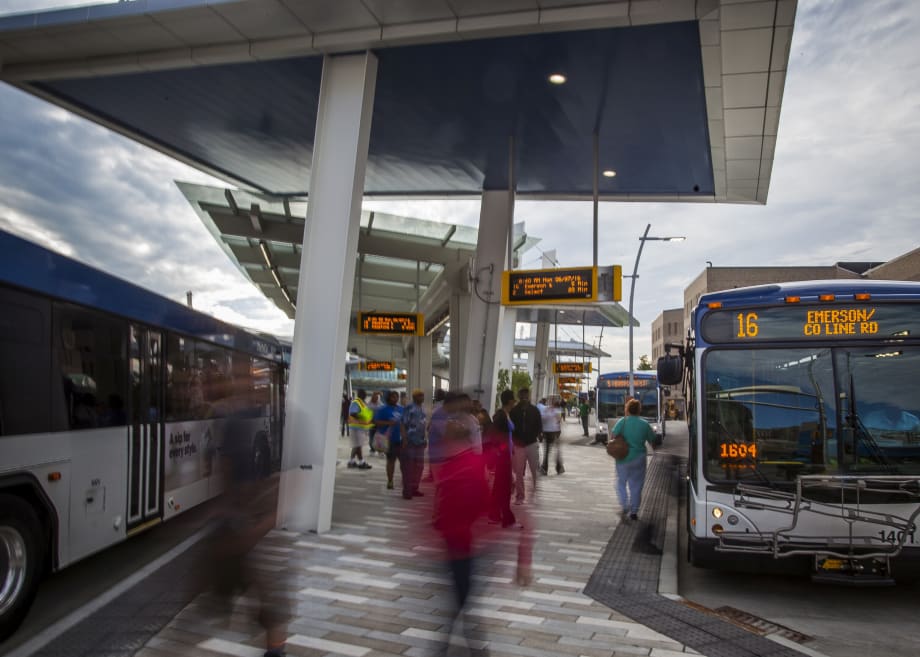
Indianapolis Transit Center. Photo: Axis Architecture and Interiors
5 min to read
Indianapolis Transit Center. Photo: Axis Architecture and Interiors
This article was originally published on Mobility Lab.
“Public transit wastes my money.” “If public transit is so great, shouldn’t ticket sales cover the cost?” “Why should I pay for a bus I’ll never take?”
Read the comments section on just about any news story dealing with public transportation and you’ll likely see these thoughts appear in some form. So let’s take a look at these questions. More importantly, let’s examine these questions for all forms of transportation, and consider if these are even the right questions to ask at all.
Public transit wastes my money.
This is a fairly common argument to encounter when discussing public transportation. It’s easy to say this when looking at delays, faulty service, or drab trains and buses. For example, many have used WMATA’s recent service reduction in Washington D.C. as proof of the wastefulness of public transit.
Certainly these issues don’t point to a perfectly efficient transit system. But do they point to waste? For example, according to independent analysis, WMATA has been underfunded for decades. In fact, public transportation systems across the nation struggle with adequate funding. Therefore, it seems the current issues facing transit systems may have more to do with inadequate investment rather than wasting money.
But what if we posed the same question to our roads, highways, and bridges? Surely everyone reading this has experienced potholes and other signs of poor maintenance while driving. When we encounter a pothole or see single-lane traffic due to road repair, how do we respond? Do we consider road maintenance wasteful?
Of course not. We see road maintenance as a painful but necessary burden. When potholes appear, we get angry at the pothole, but seldom rail against the idea of roads in general. When it comes to wasteful spending in transportation, we have different definitions for roads compared to everything else.
If public transit is so great, shouldn’t ticket sales cover the cost?
This question gets to the heart of how people conceptualize cost in their lives. As a society, we tend to believe any new or “other” technology should pay for itself. We view changes to the status quo with harsh skepticism rarely applied to our current situation. Within America, driving is the most common form of transportation and public transit is often viewed as a disruption to the status quo. With this in mind, some argue that if buses and trains are truly a good idea, they should pay for themselves through ticket sales and advertising revenue.
Of course, public transportation systems could never pay for themselves this way. But does this really mean that public transit is a bad idea? Or does it prove that we have a hard time conceptualizing public investment?
Consider roads. Our nation spends billions of dollars every year to build new roads and maintain existing ones. This money comes from a mixture of federal, state, and local sources. Yet, when we drive past a new road construction project, do we stop to ask about the cost? When people see a highway lane being added, do they complain about wasteful spending? Most likely not, although due to induced demand, they could be witnessing just that.
The energy sector faces a similar situation. Ask someone about building a nuclear power plant and they will likely site the possible danger to workers and neighbors of the plant. No such thought is given to the many who die each year due to the externalities of coal, although the number is much greater. This is part of a common phenomenon wherein we think deeply about the possible costs and downsides of a new action, but fail to question the status quo. Since the car is king, we do not question the cost of the road on which it travels. However, any competitor is sure to face scrutiny.
Why should I pay for a bus I’ll never take?
Good question. There are 4.12 million miles of road in the U.S. Have you driven them all? Probably not. Does that make roads a waste of money? Certainly not.
Imagine a city where people who could not afford vehicles protested the construction of a highway they won’t use. Obviously, the citizens with cars would immediately state the benefits to the city as a whole from allowing goods and services to move more freely. These benefits exist for transportation of all types. A bike trail can help ease congestion by diverting would-be drivers off the road. Buses and trains can provide people without personal vehicles valuable access to jobs and opportunities. The list of positive externalities goes on. These are all real benefits experienced by society writ large, regardless of your preferred method of travel.
People should question how we invest our tax dollars. More importantly, we should question how we spend this money on everything, including expenses we’ve become accustomed to. If the same questions asked of transit were asked of roads and highways, we would never build a country road again. Obviously, this would be calamitous.
We need to reconsider how we view public investment in transportation. Rather than viewing these issues as a simple question of short-term accounting and personal utility, we must also consider the long-term impacts on the public good. Once we are able to conceptualize our individual interests along with society’s interests, we can begin investing in a transportation system capable of moving all of us into the coming decades.
Ross Matters is a planning specialist in Arlington, Va.
Subscribe to Our Newsletter
More Blog Posts
Velo-city Conference 2026: Latest Trends in Cycling as Part of Urban Mobility
The global cycling conference highlighted how cities are integrating bicycles into multimodal transportation networks, expanding cycle tourism and reshaping urban mobility.
Read More →
Kindness Isn’t Soft...It’s Strategic.
Mike Bismeyer — often known as “The Kindness Guy” — has spent more than 17 years in public transit and mobility, serving in industry leadership roles, speaking across North America, and advocating for stronger workplace cultures. But his message doesn’t come from theory. It comes from lived experience.
Read More →
Inside ITF 2026: Transport Reacts to A Challenging World
Transport leaders from around the world gathered in Leipzig, Germany, for the 2026 International Transport Forum to discuss resilience, climate impacts, supply chains and the future of sustainable mobility.
Read More →
Every Ride Tells a Story — But You’re Not Just Selling the Ride
You’re selling the moment, the meaning, and the emotion behind it.
Read More →
How Digital Signage is Reshaping the Traveler Experience at Transportation Hubs
What was once a landscape of static signs has evolved into a responsive, immersive environment powered by real-time visual communication.
Read More →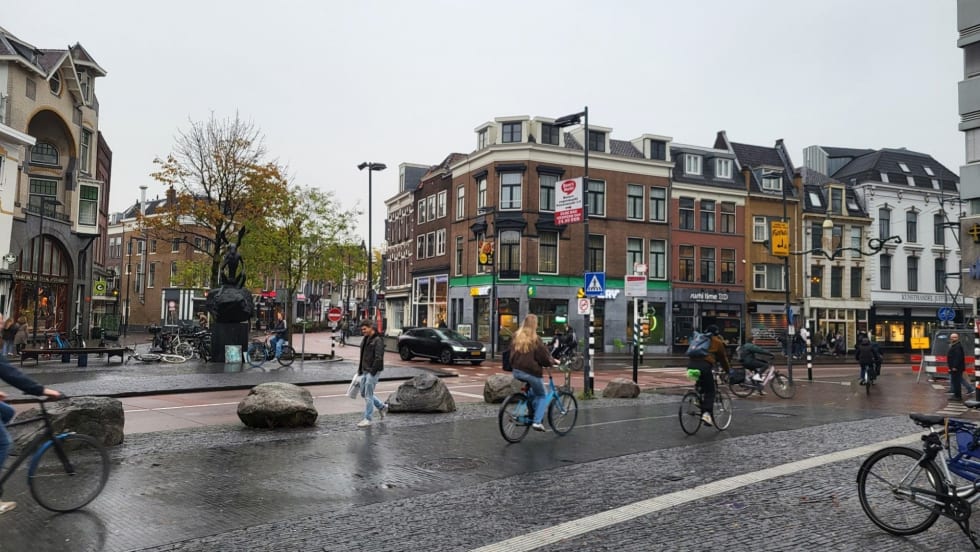
Latest Trends in Urban Mobility from Polis Conference 2025
Polis comprises cities and regions, as well as corporate partners, from across Europe, promoting the development and implementation of sustainable mobility. This year’s event had over a thousand attendees across various policy forums and an exhibition.
Read More →
Why Transit Leaders Require Better Tools for Operational Clarity In Today’s Tech-Fragmented Environment
Across North America and beyond, transit agency officials are contending with a perfect storm of operational headaches and strategic challenges that hamper daily service and long-term progress.
Read More →
The Powerless Brokers: Why California Can’t Build Transit
It is no secret that transit in the U.S. is slow and expensive to build.
Read More →
Why Transport Sustainability Should Focus on People Instead of Cars
Simply incentivizing electrification is not enough to make a meaningful impact; we must shift our focus toward prioritizing public transportation and infrastructure.
Read More →
Transit ROI & System Efficiencies Will Drive 'Big, Beautiful' Transit Funding
For many years, the narrative surrounding public transit improvements has been heavily weighted toward environmental gains and carbon reduction. While these are undeniably crucial long-term benefits, the immediate focus of this new funding environment is firmly on demonstrable system efficiencies and a clear return on investment.
Read More →