



What Does Mobility Look Like in Gothenburg, Sweden?
Gothenburg is Sweden’s second largest city and sits near the coast on the west side of the country south of Norway and north of Denmark. It is a, relatively, recent city and has a 400th anniversary in 2021.

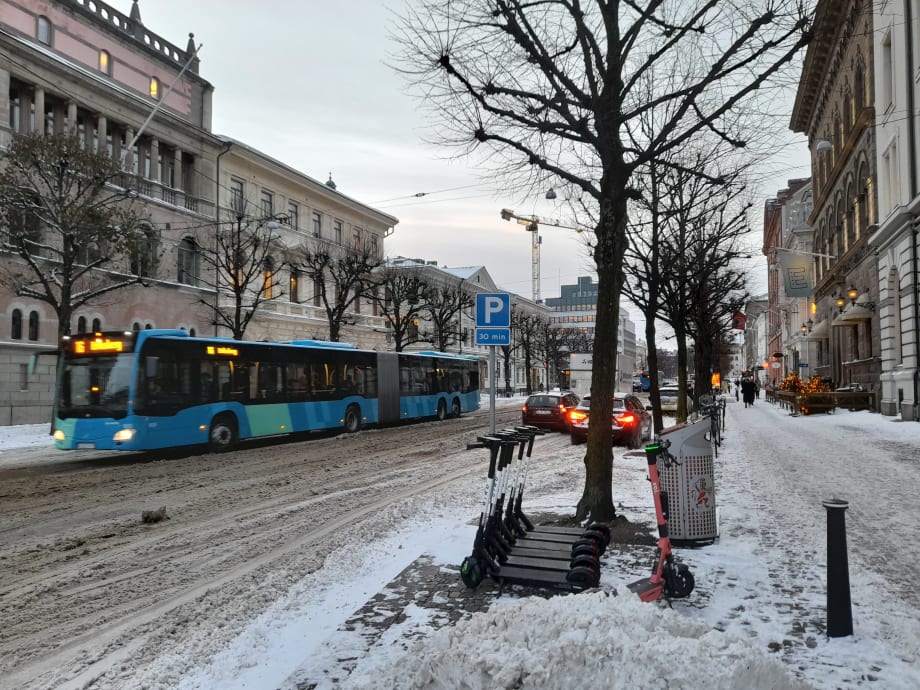
Gothenburg is Sweden’s second largest city and sits near the coast on the west side of the country south of Norway and north of Denmark.
Photos Courtesy Giles Bailey
The annual Polis Conference was hosted by the City of Gothenburg, Sweden in early December 2021. The conference was held physically, with some hybrid portions, as the pandemic continues.
Gothenburg is Sweden’s second largest city and sits near the coast on the west side of the country south of Norway and north of Denmark. It is a, relatively, recent city and has a 400th anniversary in 2021. It is a logistics, regional service, and industrial city, which has a long, but recently diminished history in shipbuilding, as well as is the home of famous industrial brands such as SKF (ball bearings), Volvo Cars, and Volvo Trucks. The urban area has a population of one million, while the city 570,000. Like many urban areas in Sweden, the population is rapidly increasing and this is presenting the opportunity to redesign much of the city.
The Polis Conference this year was focusing on “Agents of Change and Innovation in Mobility” but featured its typical wide range of sessions on topical issues in urban mobility — including themes such as environment, traffic efficiency, access, road safety and security, and governance and integration. There were also conference plenaries specifically on the overall theme as well as “Embracing Equality, Enhancing Equity.”
The conference was attended by over 600 people in person with further attendees listening online to parts of the proceedings. Even with renewed issues around the pandemic making it not possible for some to attend in person at the last minute, there was a waiting list and others were subsequently able to attend the conference in person.
As a regular attendee, though, the most important aspect of the conference was the ability to reconnect in person with topical trends in the sector and learn about, discuss, and see examples of recent trends in mobility, as well as network and discuss with conference peers about the challenges in our industry and what it may mean for the coming years. These discussions included the latest trends in shared micro-mobility, the evolution of thinking about the 15-minute city, Mobility-as-a-Service, and the cycling revolution in European cities.
Mobility and Weather
As hosts, Gothenburg presents an interesting case study on the issues of delivering urban mobility. As a city in a northern climate it is subject to cold winter weather and during the conference it experienced a rare bout of significant and persistent snow.
Mobility in the city continued, albeit at a slower pace, but the numerous shared e-scooter operators suspended the operation of most of their devices, leaving them buried under snow across many neighborhoods in the city. It is of note that most of the devices were not moved or removed while the operators waited for the snow to melt and more favorable conditions for shared e-scooter use to return. The same situation also appeared to apply to the docked bicycle provider in the city.
The city is making a concerted effort to become more bicycle friendly, and substantial bicycle lanes are present across the city. Even during the snowy weather, it was common to see many cyclists continuing to travel around the city. The city was also prioritizing the clearing of cycle paths during the snow. The support for cycling, even in winter weather, is an important part of making the cycling revolution a permanent part of the urban mobility offer.
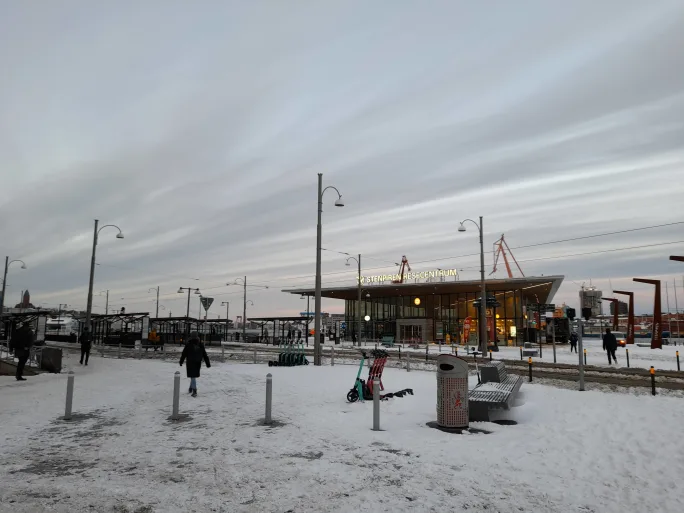
As a city in a northern climate, Gothenburg is subject to cold winter weather and during the conference it experienced a rare bout of significant and persistent snow.
A Typical Gothenburg Mobility Picture
The transport situation in Gothenburg, as in many cities, has been dominated by the needs of the private car — which is not surprising as the city is the home of a global OEM. Even in comparison to other typical European cities, there remains a substantial amount of central area car parking, albeit city traffic levels do not seem to be that severe. However, over several years the local authority has been making significant efforts to realign this car focused dynamic.
As the city goes through a substantial period of population growth, along with a transition away from the ship building industry, land in the city center is being reimagined and re-developed, as well as more “sympathetic” and sustainable mobility solutions implemented.
In the early 2000’s a one-mile motorway tunnel was built under the city center and adjacent to the river that has enabled the city to once again easily access its waterfront.
The city is now implementing a major rail scheme from the main rail station, along the same river corridor and looping back through inner city districts to turn the stub-end rail station into a through station for commuter rail services. This will increase capacity on the regional commuter train network and provide better distribution of demand across the intercity for rail services through three underground city center stations. The “West Link” scheme is in mid-construction and is expected to open in 2025. The scheme is funded by the city, region, state, as well as via funds from the local congestion charge tax. This type of through city center rail intervention is becoming increasingly popular in major as well as many smaller European cities including Geneva, Leipzig, and Stockholm.
The city also has an extensive tram system, which is the largest in northern Europe at over 100 miles in total trackage. This is a legacy system from the first wave of trams in the late 1800s that was preserved and modernized rather than replaced with buses. The trams are present throughout the city center and inner suburbs and offer an intensive and well used service that forms the core of an effective local public transport system. They are then supported with local buses and express buses to regional destinations.
As mentioned, micromobility — both personal and shared — are widespread in the city, even with its northern weather and cycling was common even in the snowy weather. A range of the larger shared scooter operators, including VOI who are based in Sweden, have services in the city as well as shared bike operators.
Supporting the sustainability initiatives in the city as well as regeneration on the northern industrial side of the city’s harbor, electric ferries have been introduced into the existing diesel urban ferry fleet.
While Gothenburg has several challenges, as well as opportunities, in dealing with a fast-growing population, regeneration of substantial areas of former industrial city center land, suppressing a car-based mobility culture, and earlier car based urban development, it remains a contemporary European city region that is adopting many and leading quite a few of the key issues of a 21st century sustainable urban agenda.
The annual Polis conference will return in late 2022 and will again be Brussels, Belgium.
More Blog Posts
Building a Winning FTA Grant Proposal: Why Propane Autogas is the Pragmatic Choice for Fleet Resilience
With $610 million available through the FY 2026 Buses and Bus Facilities Competitive Program and the Low or No Emission Grant Program, agencies must build a compelling case before the September 21 deadline that balances environmental compliance with operational feasibility.
Read More →
Velo-city Conference 2026: Latest Trends in Cycling as Part of Urban Mobility
The global cycling conference highlighted how cities are integrating bicycles into multimodal transportation networks, expanding cycle tourism and reshaping urban mobility.
Read More →
Kindness Isn’t Soft...It’s Strategic.
Mike Bismeyer — often known as “The Kindness Guy” — has spent more than 17 years in public transit and mobility, serving in industry leadership roles, speaking across North America, and advocating for stronger workplace cultures. But his message doesn’t come from theory. It comes from lived experience.
Read More →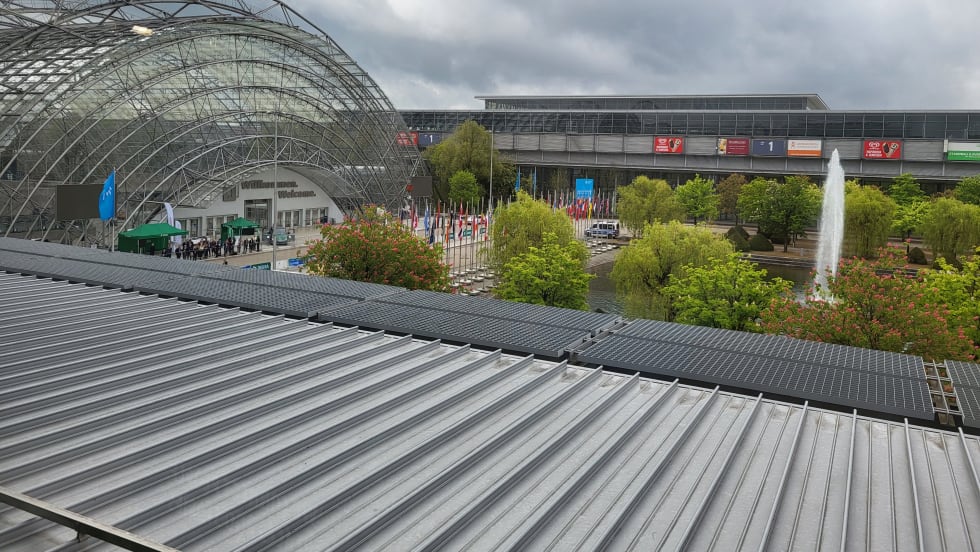
Inside ITF 2026: Transport Reacts to A Challenging World
Transport leaders from around the world gathered in Leipzig, Germany, for the 2026 International Transport Forum to discuss resilience, climate impacts, supply chains and the future of sustainable mobility.
Read More →
Every Ride Tells a Story — But You’re Not Just Selling the Ride
You’re selling the moment, the meaning, and the emotion behind it.
Read More →
How Digital Signage is Reshaping the Traveler Experience at Transportation Hubs
What was once a landscape of static signs has evolved into a responsive, immersive environment powered by real-time visual communication.
Read More →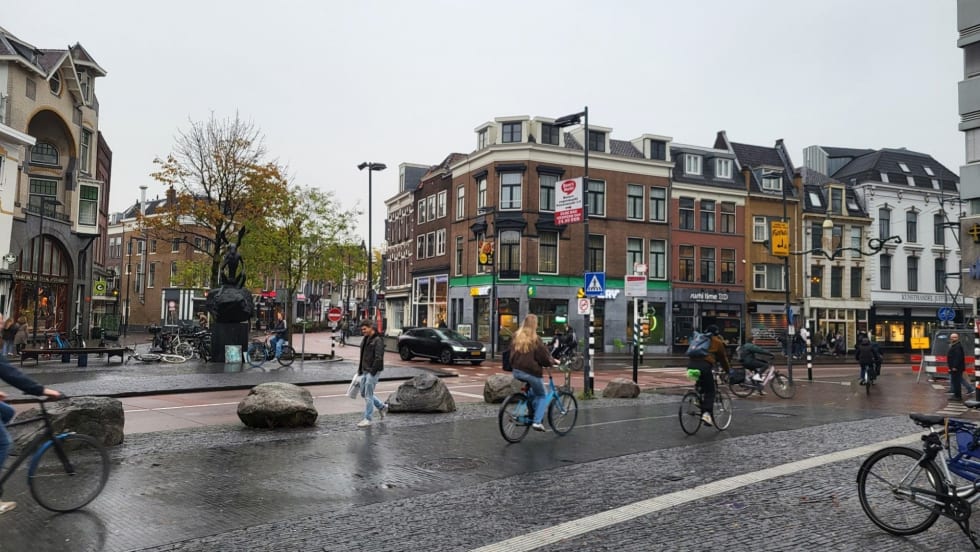
Latest Trends in Urban Mobility from Polis Conference 2025
Polis comprises cities and regions, as well as corporate partners, from across Europe, promoting the development and implementation of sustainable mobility. This year’s event had over a thousand attendees across various policy forums and an exhibition.
Read More →
Why Transit Leaders Require Better Tools for Operational Clarity In Today’s Tech-Fragmented Environment
Across North America and beyond, transit agency officials are contending with a perfect storm of operational headaches and strategic challenges that hamper daily service and long-term progress.
Read More →
The Powerless Brokers: Why California Can’t Build Transit
It is no secret that transit in the U.S. is slow and expensive to build.
Read More →
Why Transport Sustainability Should Focus on People Instead of Cars
Simply incentivizing electrification is not enough to make a meaningful impact; we must shift our focus toward prioritizing public transportation and infrastructure.
Read More →