



APTA officials focus on road ahead
Working to repair an association faced with the recent departure of its largest transit property and the resignation of its president/CEO, APTA Interim President/CEO Richard A. White and Chair Valarie J. McCall laid out the group’s plan to move forward during a press conference at the Bus & Paratransit Conference this week in Charlotte, N.C.

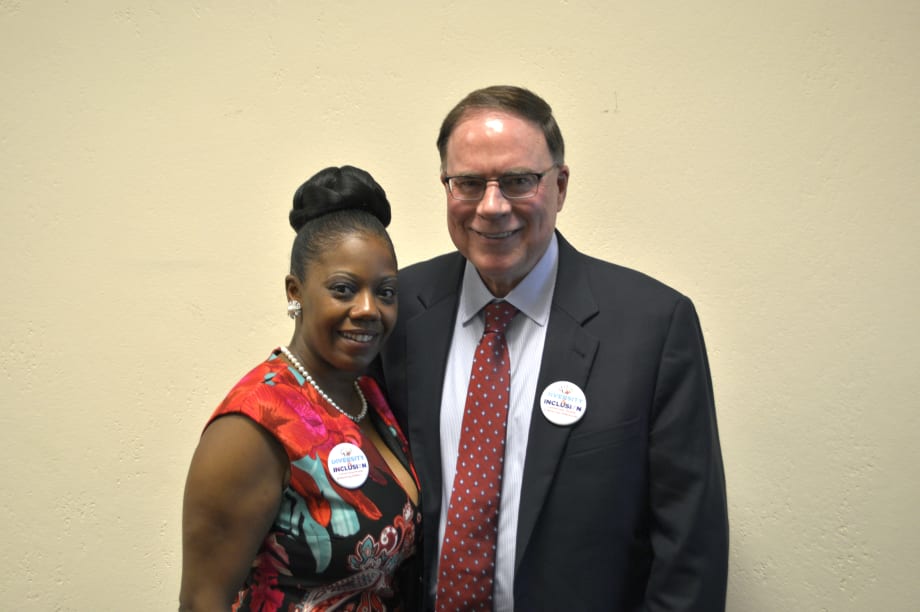
Working to repair an association faced with the recent departure of its largest transit property and the resignation of its president/CEO, American Public Transportation Association (APTA) Interim President/CEO Richard A. White and Chair Valarie J. McCall laid out the group’s plan to move forward during a press conference at the Bus & Paratransit Conference this week in Charlotte, N.C.
White and McCall explained that APTA’s path forward took place almost immediately after Michael Melaniphy tendered his resignation on Friday, April 29. By Saturday, APTA’s VP, Member Services, White, who has more than 41 years of experience in the industry, including stays at Oakland, Calif.’s BART and the Washington Metropolitan Area Transit Authority, was tapped to lead the association on an interim basis.
By Monday, both White and McCall were in Washington, D.C., holding an “all hands” Monday morning meeting and forming a list of 30 key stakeholders, including the Federal Transit Administration and U.S. DOT, transit properties such as the New York Metropolitan Transportation Authority (MTA), which discontinued its membership in April; and partner organizations including AASHTO. By the end of the week, each of those key stakeholders had been touched to reiterate APTA’s commitment to them to continue on the path forward as a unified voice for transportation, said White.
In fact, the process to repair its relationship with the MTA, and hopefully, get them back as members has already started, according to White and McCall.
APTA’s plan includes strengthening and restoring the group’s foundation, getting its “governance back in order” and further clarifying the value of membership for each of the various groups it represents.
One key of APTA’s “moving forward” message is continuing to advocate in a united voice as it has in the past and is often viewed as one of its greatest strengths.
While discussing the universal win for public transportation with the passage of the FAST Act, McCall stressed that the need to unify and focus on the next surface transportation bill is now.
More urgently on the advocacy front, APTA is participating in the fourth annual National Infrastructure Week this week, which aims to bring broader attention to the need to consistently invest and maintain the nation’s aging infrastructure, including its public transportation systems.
White discussed the $86 billion backlog to get the nation’s transportation infrastructure and the $43 billion needed, annually, to then maintain that infrastructure. To send that message home, both McCall and White will participate in a media conference call on Thursday, which will include GMs and CEOs from across the nation who are dealing with day-to-day real-world challenges of providing public transit service after multiple decades of “American disinvestment in infrastructure.”
Other participants on the call will include Joseph Calabrese, GM/CEO of the Greater Cleveland Regional Transit Authority; Chicago Transit Authority President Dorval Carter; and Ed Mortimer, executive director, transportation infrastructure, U.S. Chamber of Commerce.
Finally, McCall explained there is no timetable for replacing Melaniphy, though plans are already in place to engage in a transparent process, which will include hiring a search firm to identify possible candidates.
“Fortunately, there is no shortage of talent in this industry,” said McCall on the search.
More Management

METRO Opens Submissions for 2026 Motorcoach Awards
Nominations are now being accepted for METRO Magazine’s Operator of the Year and Innovative Operator of the Year awards.
Read More →
New York MTA Advances Final Contract for Second Avenue Subway Expansion
Contract Four is the largest in the Second Avenue Subway Phase 2 project and includes construction of station infrastructure, tracks, and signals for the subway expansion, MTA officials said. Work on Contract Four will begin in 2027.
Read More →
Transit Agencies Highlight Safety Gains at National Summit
Leaders from 15 major transit systems shared crime-reduction results and safety initiatives while discussing the role of continued federal support.
Read More →

NITA Names New Leadership, Expands Reduced-Fare Program at First Board Meeting
The new regional transit authority appointed its first board chair and interim executive director while extending reduced fares across CTA, Metra, and Pace for eligible riders.
Read More →
Beyond the Checklist: A Structured Approach to Transit Maintenance
Reliability-Centered Maintenance helps transit agencies move beyond routine checklists to focus limited resources on the assets and failures that have the greatest impact on safety, reliability, and service.
Read More →
APTA 2026 Nominating Committee Selects Leadership Slate, Names Chair and Vice Chair Nominees
Leadership changes will help shape the association’s priorities and its representation of the transportation industry during the 2026–2027 term.
Read More →
DART Launches Major Security, Fare Enforcement Initiative
The 90-day demonstration will deploy coordinated security teams at five light rail stations while testing controlled access and gathering data to guide future investments.
Read More →
Advancing Fare Collection Through Technology and Innovation
Learn about delivering 1300 gates at 91 stations while managing fare evasion. Explore the large scale deployment, solution customization and real-world results that affect the region. Prepare for deployment in your region now.
Read More →
Game Day in Motion: Moving Millions During the 2026 World Cup
Between packed transit stations and team motorcoaches, see how agencies and operators across North America tackled the transportation demands of the 2026 FIFA World Cup.
Read More →
Surface Transportation Extension Averts Shutdown, Leaves Transit Funding Gap
The stopgap keeps federal transportation programs moving, but missing advance funding could complicate the transit and rail projects agencies are planning next.
Read More →