




Related: Caltrain’s Electric Fleet More Efficient than Expected
Caltrain Celebrates First Anniversary of Electrified Service with Record Ridership
A year after electrification, Caltrain delivers faster commutes and record-breaking ridership growth.
September 23, 2025
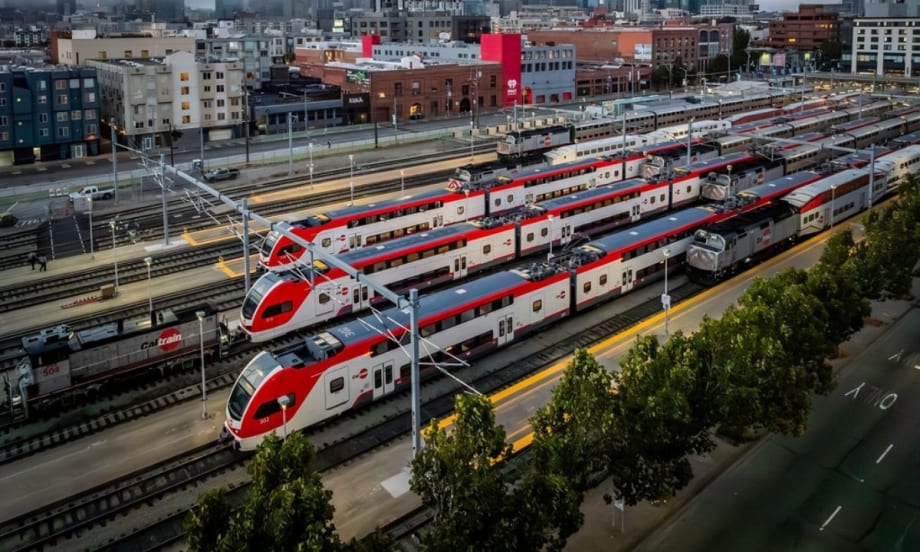
After electrifying its service, Caltrain carried 9.1 million passengers over fiscal year 2025, up from 6.2 million in FY 2024.
Photo: Caltrain
3 min to read
This week, Caltrain marked the first anniversary of its fully electrified service today, celebrating a transformative year that has seen record ridership growth and faster, more frequent service throughout the peninsula.
According to an agency release, Caltrain has recorded a surge in ridership since the launch of the electrified service in September 2024.
Over fiscal year 2025, Caltrain carried 9.1 million passengers, up from 6.2 million in FY 2024. Weekend ridership has more than doubled, and July 2025 alone saw ridership increase 78% compared to the same month the year prior, making it the second consecutive month with more than one million riders.
Special event travel has also increased, with monthly San Francisco Giants ridership up by as much as 82% over last year, and Caltrain running popular themed trains for special events since last December. Youth ridership has also quadrupled since the introduction of the $1 Youth Fare, which launched the same month as electrification.
“Electrification has completely transformed Caltrain,” said Michelle Bouchard, Caltrain executive director. “We’re delivering cleaner, faster, and more frequent service, and riders are responding in record numbers. This first year has shown what’s possible when we invest in sustainable rail, and we’re only just getting started.”
Electrification has allowed Caltrain to expand service while cutting travel times:
Express trains now travel between San Francisco and San Jose in just one hour.
Local trains cover the same distance in 75 minutes, 33% faster than diesel service.
Weekend service has doubled, with trains every 30 minutes.
Every station on the line is now served by at least one train in each direction every thirty minutes, with 16 stations seeing trains every 20 minutes and 11 stations seeing one every 15 minutes.
These upgrades have expanded system capacity by 30%, providing more options for riders across the peninsula and beyond.
Additional Benefits of Caltrain’s Electric Service
The new fleet also enhanced the onboard experience for Caltrain riders. The new trains offer free Wi-Fi and charging outlets at nearly all seats, all while being cleaner and quieter than ever before.
The transition to electrified service has also produced environmental benefits, according to the release. Caltrain’s electric fleet is returning 23% of its power supply to other trains or the grid, thanks to its new regenerative braking technology. Additionally, the new fleet is even more efficient than projected, costing $3 million less than expected.
Caltrain has been celebrating this milestone for all of Transit Month, with passenger outreach efforts planned at San Francisco, Millbrae, Hillsdale, Redwood City, Palo Alto, Mountain View, Santa Clara, and San Jose Diridon Stations for this week, offering opportunities for riders to receive Caltrain merchandise for speaking of their experiences on Caltrain.
“Today we celebrate one year of electrified Caltrain — using clean technology to connect more communities and economies throughout our state while laying crucial groundwork for high-speed rail,” said Governor Gavin Newsom, one of many elected officials who celebrated Caltrain’s anniversary. “I’m proud to back projects like this, showcasing California’s leadership in driving innovation in a way that is future-proof and accessible for all.”
The Caltrain Electrification Project also provided a boost to the economy, supporting more than 33,000 jobs across 36 states through design, construction, and supply chain partnerships.
More Management

METRO Opens Submissions for 2026 Motorcoach Awards
Nominations are now being accepted for METRO Magazine’s Operator of the Year and Innovative Operator of the Year awards.
Read More →
New York MTA Advances Final Contract for Second Avenue Subway Expansion
Contract Four is the largest in the Second Avenue Subway Phase 2 project and includes construction of station infrastructure, tracks, and signals for the subway expansion, MTA officials said. Work on Contract Four will begin in 2027.
Read More →
Transit Agencies Highlight Safety Gains at National Summit
Leaders from 15 major transit systems shared crime-reduction results and safety initiatives while discussing the role of continued federal support.
Read More →

NITA Names New Leadership, Expands Reduced-Fare Program at First Board Meeting
The new regional transit authority appointed its first board chair and interim executive director while extending reduced fares across CTA, Metra, and Pace for eligible riders.
Read More →
Beyond the Checklist: A Structured Approach to Transit Maintenance
Reliability-Centered Maintenance helps transit agencies move beyond routine checklists to focus limited resources on the assets and failures that have the greatest impact on safety, reliability, and service.
Read More →
APTA 2026 Nominating Committee Selects Leadership Slate, Names Chair and Vice Chair Nominees
Leadership changes will help shape the association’s priorities and its representation of the transportation industry during the 2026–2027 term.
Read More →
DART Launches Major Security, Fare Enforcement Initiative
The 90-day demonstration will deploy coordinated security teams at five light rail stations while testing controlled access and gathering data to guide future investments.
Read More →
Sponsored•September 9, 2026
Advancing Fare Collection Through Technology and Innovation
Learn about delivering 1300 gates at 91 stations while managing fare evasion. Explore the large scale deployment, solution customization and real-world results that affect the region. Prepare for deployment in your region now.
Read More →
Game Day in Motion: Moving Millions During the 2026 World Cup
Between packed transit stations and team motorcoaches, see how agencies and operators across North America tackled the transportation demands of the 2026 FIFA World Cup.
Read More →
Surface Transportation Extension Averts Shutdown, Leaves Transit Funding Gap
The stopgap keeps federal transportation programs moving, but missing advance funding could complicate the transit and rail projects agencies are planning next.
Read More →