




RELATED: D.C. Metro train runs red light, faces another train
D.C. Metro chief presents agenda for 'critical change at all levels'
Some of those actions are already underway — including increased police patrols, installing new radio systems and cell phone cabling in tunnels, changes to rail car parts inventory, and the accelerated delivery of 7000-series trains.
March 8, 2016
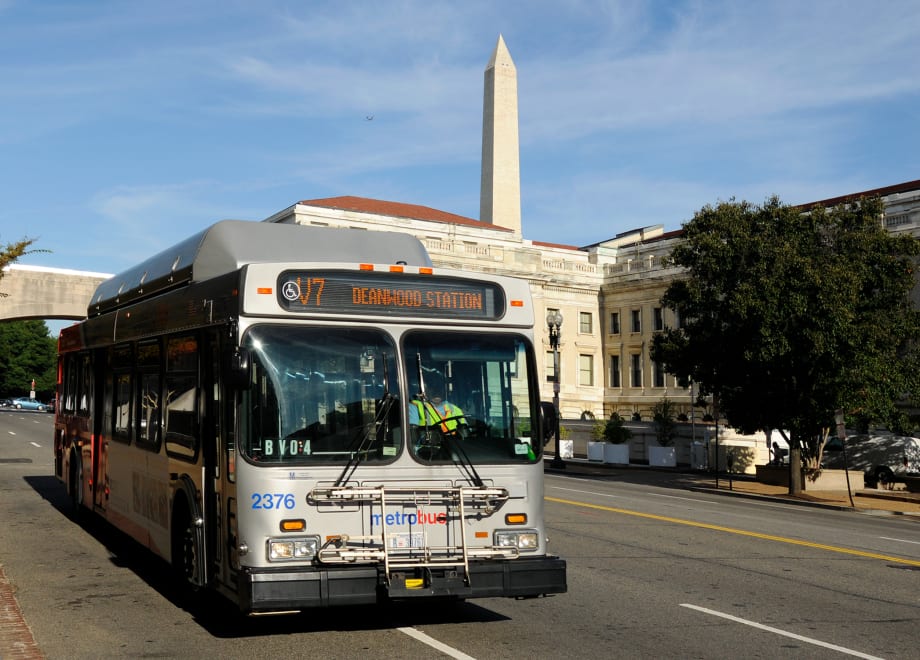
D.C. Metro bus/Larry Levine
3 min to read
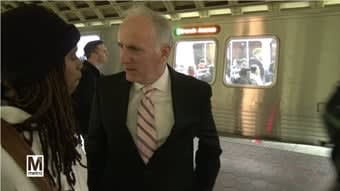
D.C. Metro GM/CEO Paul J. Wiedefeld (screenshot).
In his first public policy address since being appointed Metro’s GM/CEO last November, Paul J. Wiedefeld began to lay out his plans to make Metro safer and more secure, improve service reliability, and get its financial house in order.
During a luncheon at the National Press Club on Monday, Wiedefeld discussed his roadmap for restoring the public’s trust in Metro. While confronting some hard truths regarding Metro’s current safety culture, declining ridership and the mechanical failures that have caused a deterioration in Metrorail on-time performance, Wiedefeld identified clear priorities with defined immediate and longer range deliverables for the entire Authority.
“In many ways, what you see here today is the CEO’s ‘To Do’ list to get Metro back on track,” said Wiedefeld. “It’s my commitment to be transparent about what needs to be fixed, how we are going to fix it, and ensure that our stakeholders can easily monitor progress so that public confidence is restored in Metro.”
Wiedefeld said there is no single action that will turn Metro around but a combination of efforts “to grind out critical changes at all levels” is needed to improve the customer experience. Some of those actions are already underway — including increased police patrols, installing new radio systems and cell phone cabling in tunnels, changes to rail car parts inventory, and the accelerated delivery of 7000-series trains.
Other actions will be implemented over the next weeks and months, such as a rail service reliability program to reduce waiting, crowding and passenger offloads. Other highlights include:
Create online reports to monitor all actions taken to meet Federal Transit Administration safety recommendations (released today on wmata.com)
Restructure the executive unit for a more business-like approach that delivers results for customers (released today on wmata.com)
Introduce platform attendants at key transfer stations
Establish management “ownership” by rail line to improve customer experience
Launch traffic signal prioritization to improve performance for buses along seven busy corridors
Deliver a timely financial audit for FY16
Cut back-office costs and redundant positions
Reduce overhead costs through public-private partnerships for select paratransit trips and parking management
Analyze revenue potential from sale of Metro headquarters building that can be reprogrammed for customer service initiatives
Customers and stakeholders will be able to track progress and monitor Metro’s actions through a Customer Accountability Report (CARe), available at wmata.com. As specific actions are developed, funded and scheduled, they will be added to the inventory.
In laying out his plans to turn around Metro, Wiedefeld said the agency first had to confront some hard truths. High-profile operational safety incidents and recent crimes on the system have alarmed customers. Last year, rail car mechanical failures caused the number of late trains to double. Doors, brakes, and propulsion system problems result in frequent customer offloads. Riders are deeply frustrated by unpredictable track work on weekdays and weekends.
D.C. Metro bus/Larry Levine
On the financial side, Wiedefeld said that the capital budget has been significantly underspent every year for more than ten years. He announced today that he expects Metro will adjust its capital plan to a more realistic estimate of about $950 million instead of the $1.1 billion projected next year.
While Metro’s current financial position is stable and the agency’s cash flow is positive, Wiedefeld said that Metro’s financial systems are substandard compared to other transit authorities and require enormous efforts to modernize to ensure timely financial reports and clean audits.
He also said that the Board and jurisdictions are considering how to confront Metro’s structural operating deficit. In order to continue balancing its budget, Metro would require a combination of operating subsidies and passenger fare increases of about six percent annually over the next ten years just to keep pace with cost growth for existing service levels. Like other transit systems, cost escalation is driven primarily (73%) by personnel expenses to operate, maintain and manage bus and rail services. Unlike other systems, however, Metro has no clearly defined multi-year operating funding plan.
More Management

METRO Opens Submissions for 2026 Motorcoach Awards
Nominations are now being accepted for METRO Magazine’s Operator of the Year and Innovative Operator of the Year awards.
Read More →
New York MTA Advances Final Contract for Second Avenue Subway Expansion
Contract Four is the largest in the Second Avenue Subway Phase 2 project and includes construction of station infrastructure, tracks, and signals for the subway expansion, MTA officials said. Work on Contract Four will begin in 2027.
Read More →
Transit Agencies Highlight Safety Gains at National Summit
Leaders from 15 major transit systems shared crime-reduction results and safety initiatives while discussing the role of continued federal support.
Read More →

NITA Names New Leadership, Expands Reduced-Fare Program at First Board Meeting
The new regional transit authority appointed its first board chair and interim executive director while extending reduced fares across CTA, Metra, and Pace for eligible riders.
Read More →
Beyond the Checklist: A Structured Approach to Transit Maintenance
Reliability-Centered Maintenance helps transit agencies move beyond routine checklists to focus limited resources on the assets and failures that have the greatest impact on safety, reliability, and service.
Read More →
APTA 2026 Nominating Committee Selects Leadership Slate, Names Chair and Vice Chair Nominees
Leadership changes will help shape the association’s priorities and its representation of the transportation industry during the 2026–2027 term.
Read More →
DART Launches Major Security, Fare Enforcement Initiative
The 90-day demonstration will deploy coordinated security teams at five light rail stations while testing controlled access and gathering data to guide future investments.
Read More →
Sponsored•September 9, 2026
Advancing Fare Collection Through Technology and Innovation
Learn about delivering 1300 gates at 91 stations while managing fare evasion. Explore the large scale deployment, solution customization and real-world results that affect the region. Prepare for deployment in your region now.
Read More →
Game Day in Motion: Moving Millions During the 2026 World Cup
Between packed transit stations and team motorcoaches, see how agencies and operators across North America tackled the transportation demands of the 2026 FIFA World Cup.
Read More →
Surface Transportation Extension Averts Shutdown, Leaves Transit Funding Gap
The stopgap keeps federal transportation programs moving, but missing advance funding could complicate the transit and rail projects agencies are planning next.
Read More →