



JTA has $198M impact on city's economy, report finds
The Jacksonville Transportation Authority's services saved customers more than $23.4 million in transportation-related expenses.

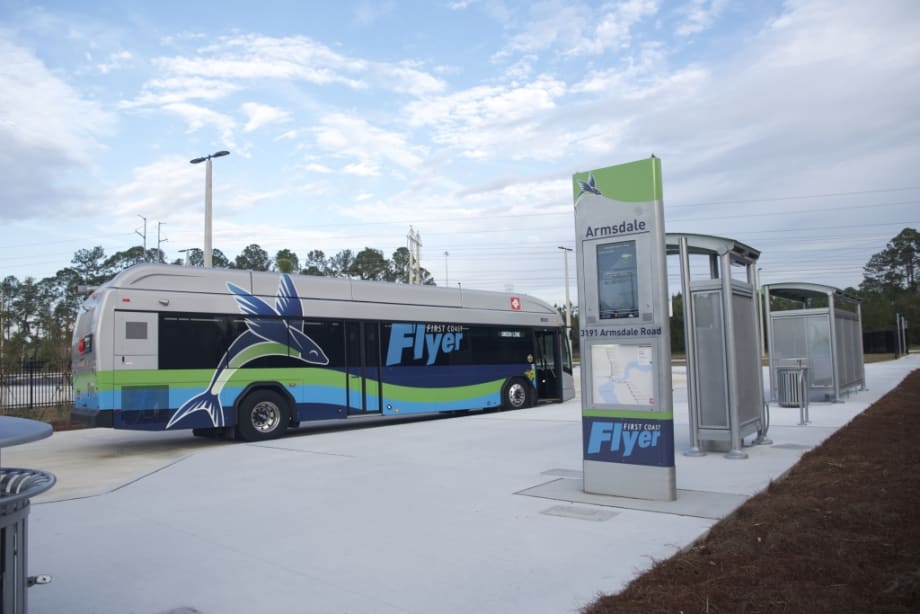
JTA customers rode a total of 64,332,545 miles in 2018, taking more than 12 million trips, according to the report.
JTA
JTA customers rode a total of 64,332,545 miles in 2018, taking more than 12 million trips, according to the report.
JTA
The Jacksonville Transportation Authority (JTA) commissioned a study in partnership with University of North Florida’s Coggin College of Business to look at the impact transit has on Northeast Florida’s economy.
The “Economic Impact Study of Jacksonville Transportation Authority (JTA) Operations, 2018,” report concluded that JTA’s total economic output exceeded $198.8 million in 2018, and that JTA services saved customers more than $23.4 million in transportation-related expenses.
The study was completed by UNF Professor of Economics and Director of the Local Economic Indicator Project at UNF’s Coggin College of Business, Chung-Ping (Albert) Loh. His work is based on figures from the 2018 fiscal year that concluded Oct. 1, 2018.
Loh’s study measured the economic contribution of JTA’s operations to the five-county Jacksonville Metropolitan Statistical Area (MSA), including output, employment, labor, compensation, and tax payments. He also measured several economic benefits of JTA’s operations to JTA customers and other Jacksonville citizens.
Some of the highlights of the report include:
Labor - JTA’s employment roster generated $43.7 million in direct labor income for the area, and $112.5 million in direct economic output. Additionally, JTA’s operations are supported by other industries within the Jacksonville MSA, and their employees. This indirect impact represented more than $14.1 million in labor compensation, and more than $37.3 million in indirect economic output.
The study found that labor earnings by JTA employees and those in related sectors also led to the consumption of more goods and services like groceries, entertainment and retail shopping. This induced impact, due to JTA’s operations, added $15.7 million in labor compensation and $48.8 million in economic output.
Combined, the JTA’s operations led to more than $73.6 million in labor compensation, $118.6 million in total added value, and $198.8 million in economic output.
The study concluded that customers saved more than $23.4 million by using JTA services instead of driving their own vehicle.
JTA
Savings for Customers
JTA customers rode a total of 64,332,545 miles in 2018, taking more than 12 million trips. According to the study, if those customers traveled the same distance in their own vehicles, the cost of doing so would be significantly higher compared to using JTA services.
As a benchmark, Loh used data from a 2017 AAA study, “Your Driving Costs,” which calculated the annual expenses of owning, operating, and maintaining a personal vehicle, based on driving 15,000 miles annually. The AAA data calculated expenses ranging between $6,354, $8,171, and $9,399, depending on the size of the vehicle.
“Based on the unweighted average of costs across these three vehicle types, the cost of operating a car per mile is 53 cents,” Loh writes. “This implies that the total cost of traveling 64,332,545 miles would have amounted to $34,096,249 through passengers driving themselves.”
Compared with the $10.7 million JTA received in FY-2018 from passenger fares and passes, Loh concluded that customers saved more than $23.4 million by using JTA services instead of driving their own vehicle.
Reducing Congestion
Loh utilized data reported in the 2017 and 2018 North Florida TPO Annual Mobility Reports, which indicate traffic delay, traffic congestion, and traffic volume trended upward from 2010 to 2016.
Drivers spent an estimated 37,979 hours in traffic delays in 2016, according to the North Florida TPO. About 10.6 % of their total driving time in 2016 was spent in severely congested traffic situations.
Loh found that about 18% of JTA customers surveyed in 2016 said they would’ve driven their own cars if not for JTA services. Based on that figure, and others, Loh concluded that without JTA services, those additional drivers would’ve increased traffic delays by 20.84 vehicle hours per day.
More Management
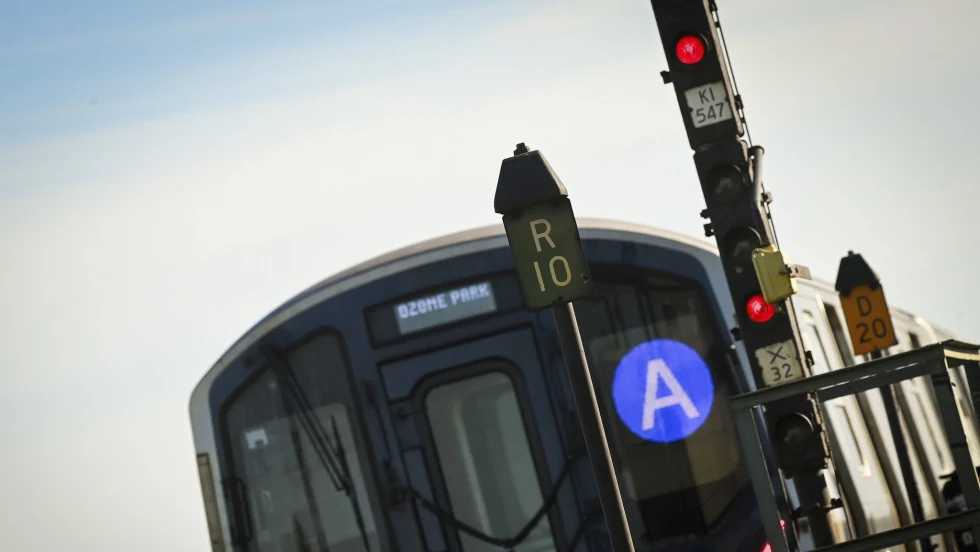
New York MTA Launches Historic $1.9B Signal, Track Modernization Project
Funded in part by congestion pricing revenue, the project will replace nearly century-old signals along the A and C lines in Brooklyn and Queens.
Read More →
Brian Dickson on Building Stronger, More Resilient Transportation Organizations
Bus Business Consultants Founder Brian Dickson discusses the leadership principles, operational discipline, and strategic planning that separate transportation companies positioned for long-term success from those stuck in survival mode.
Read More →
LA Metro Breaks Ground on Vermont BRT Project
The 12.4-mile corridor is projected to serve 66,200 daily riders, reduce travel times by up to 24%, and create the nation's busiest bus rapid transit corridor.
Read More →
Building Stronger Leaders, More Resilient Transit Teams
Dr. Carol Parker Walsh discusses leadership development, employee retention, workplace culture, and preparing transit’s workforce for AI and automation.
Read More →
Roman Cornell on ABC Companies’ Evolution and the Future of Passenger Transportation
The company’s CEO discusses carrying forward a third-generation family legacy, ABC’s continued evolution in passenger transportation, support for increasingly complex fleets, and how technology and continued investment could help operators improve uptime.
Read More →
CATS Launches West Charlotte Microtransit Zone, Expands Transit Services
The new microtransit zone connects residents to key destinations as Charlotte Area Transit System rolls out the first phase of its 2055 Transit System Plan.
Read More →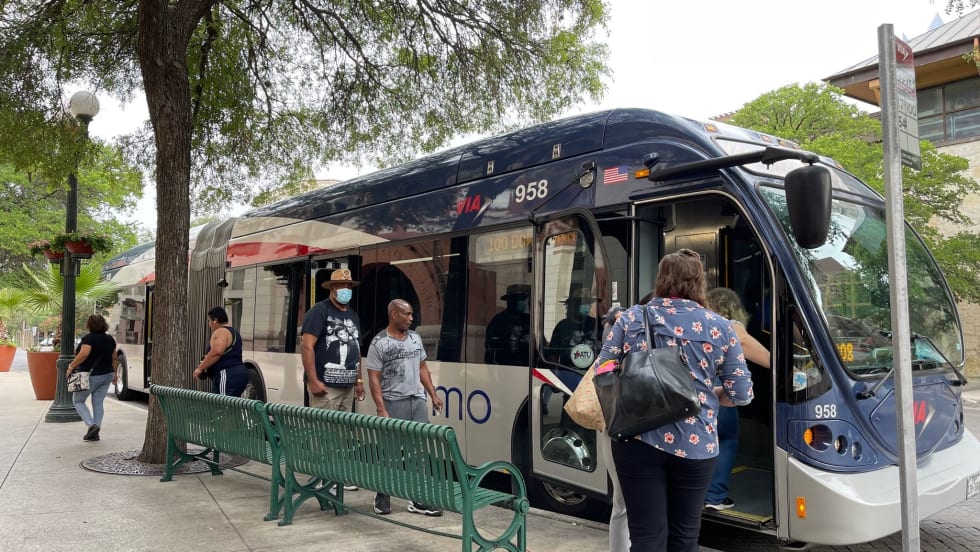
VIA Bus Ridership Grows 10.1% Through August 2026
San Antonio's VIA Metropolitan Transit reported the highest bus ridership growth among major Texas transit systems. Federal Transit Administration data ranked it second among the nation's 50 largest transit systems.
Read More →
CSA Group Releases Climate Resilience Standard for Transit, Passenger Rail
Developed with support from the Standards Council of Canada, CSA D700 guides assessing climate-related risks and planning adaptation measures for transit and passenger rail systems.
Read More →
ETA CEO John Maglio on Transit Technology, Innovation, and Building Agency Trust
ETA founder and CEO John Maglio explores the evolution of transit technology, the importance of reliable systems, and how stronger partnerships can help agencies improve operations and the passenger experience.
Read More →
COTA Launches First Customer Experience Action Plan to Improve Transit Service
The new plan outlines improvements to service reliability, accessibility, communication, and the overall rider experience across Central Ohio's transit system.
Read More →