



Los Angeles Launches Phase II of Mobility Wallet Transportation Subsidy Program
The Mobility Wallet, the largest program of its kind in the nation, aims to address systemic barriers to safe, efficient, and reliable transportation faced by low-income Los Angeles residents.

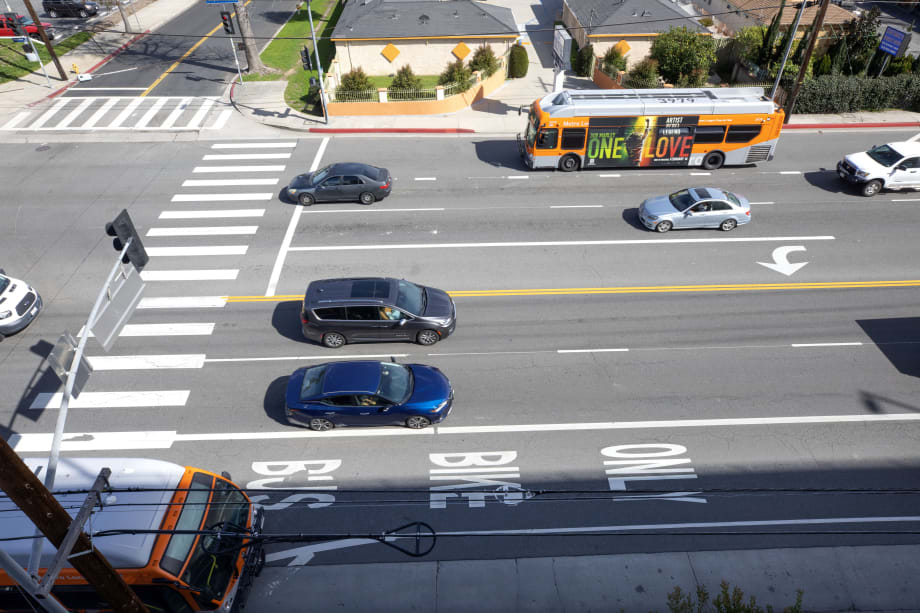
Mobility Wallets provide subsidies that can be used for transportation services including public transit, rideshare, micromobility, taxis, and purchases at bike shops.
Photo: LA Metro
The Los Angeles Department of Transportation (LADOT), in partnership with the Los Angeles County Metropolitan Transportation Authority (Metro), is expanding the Universal Basic Mobility (UBM) pilot with Phase II of the Mobility Wallet program.
The Mobility Wallet, the largest program of its kind in the nation, aims to address systemic barriers to safe, efficient, and reliable transportation faced by low-income Los Angeles residents.
L.A.’s Mobility Wallets
Mobility Wallets provide subsidies that can be used for transportation services including public transit, rideshare, micromobility, taxis, and purchases at bike shops.
Phase I of the program, which ran from May 2023 to April 2024, provided 1,000 low-income residents in the South LA UBM pilot area a prepaid debit card with $150 per month to spend on transportation needs.
Phase II of the Mobility Wallet program will identify 1,000 new, low-income residents within the South LA pilot zone, as well as an additional 1,000 low-income residents across LA County to receive the Mobility Wallet subsidy.
“LADOT is proud to continue advancing mobility equality with a new round of Mobility Wallets as part of our Universal Basic Mobility pilot program,” said LADOT GM Laura Rubio-Cornejo. “Mobility Wallets empower individuals to choose the transportation solutions that work best for them. We’re excited to double participation in South LA — LADOT’s UBM pilot area — and expand this opportunity to residents across the county.”
Mobility Wallet Eligibility
To be eligible for Phase II, applicants must be 18 years old, live in LA County, and may not have participated in Phase I.
The annual household income requirement is based on Metro’s LIFE (Low Income Fare is Easy) program.
Phase I garnered positive feedback from participants, who praised the program’s flexibility and reported that it made it easier to get to work, school, doctor’s appointments, and to explore Los Angeles.
Participants in Phase I purchased over 140,000 trips with their mobility wallets, including 80,800 public transit rides; 60,700 rideshare trips; 2600 scooter or bike share rides; and 169 bike shop purchases.
Increasing Mobility Options in L.A.
The Mobility Wallet is part of a $30 million Universal Basic Mobility pilot program, launched by the City of Los Angeles in 2021 to provide various mobility options to increase mobility, access to opportunity, and transportation equity in South Los Angeles.
The Mobility Wallet Phase II is funded by the City of Los Angeles in combination with a grant from the California Air Resources Board’s Sustainable Transportation Equity Project awarded to the City of LA in 2021, and by a Southern California Association of Governments grant awarded to Metro in 2024.
More New Mobility

From Hardware to Digital Partner: Luminator Charts Its Next Chapter
CEO Magnus Friberg discusses Luminator’s shift toward becoming a digital partner, the growing importance of software and interoperability, and how AI can help agencies improve operations and passenger experience.
Read More →
Biz Briefs: Alstom Lands Canadian Contract, LYT to Supply California TSP, and More
In METRO's latest installment, we take a look at recent news from Complete Coach Works, Beep, FlixBus, and more partnerships making headlines across the transportation sector.
Read More →
CharterUP’s Armir Harris on Technology, AI, and the Future of Group Mobility
In a recent episode of METROspectives, CharterUP Founder/CEO Armir Harris discussed the company’s evolution from an online charter bus marketplace into a technology platform supporting public- and private-sector mobility and much more.
Read More →
Jacksonville’s NAVI Project Charts a New Course for Autonomous Public Transportation
Through its NAVI program, JTA is showing how autonomous vehicles, intelligent infrastructure, and coordinated operations can work together to deliver everyday public transportation.
Read More →
Biz Briefs: Luminator Marks Milestone and More
From manufacturers and suppliers to transit agencies and motorcoach operators, these updates offer a snapshot of the projects, partnerships and business moves driving the industry forward.
Read More →
New Tricks for Old Bureaucracies: Joshua Schank on Making Transit Innovation Stick
Former LA Metro Chief Innovation Officer Joshua Schank discusses why good ideas aren't enough, how transit agencies can overcome resistance to change, and why today's challenges demand more innovation.
Read More →
How DART's GoPass Is Redefining Regional Mobility
Serving 14 transit agencies, GoPass simplifies multimodal travel by allowing riders to plan, pay for, and manage an entire trip through one app.
Read More →
Biz Briefs: OCTA Taps Clean Energy for Hydrogen Station, Stadler to Supply Via Rail Vehicles, and More
From manufacturers and suppliers to transit agencies and motorcoach operators, these updates offer a snapshot of the projects, partnerships and business moves driving the industry forward.
Read More →CharterUP Expands Into New Mobility and Autonomous Transportation
Vice President of New Mobility Stephen Joos discusses how CharterUP is leveraging its nationwide transportation network, technology platform, and autonomous vehicle partnerships to expand into workforce mobility, campus shuttles, and transit solutions.
Read More →
METRO Magazine Announces 2026 Innovative Solutions Awards Winners
Projects Recognized for Advancing Mobility Through Technology, Accessibility, Workforce Innovation, and Operational Excellence
Read More →