



Maryland Transit to enforce light rail fare payment
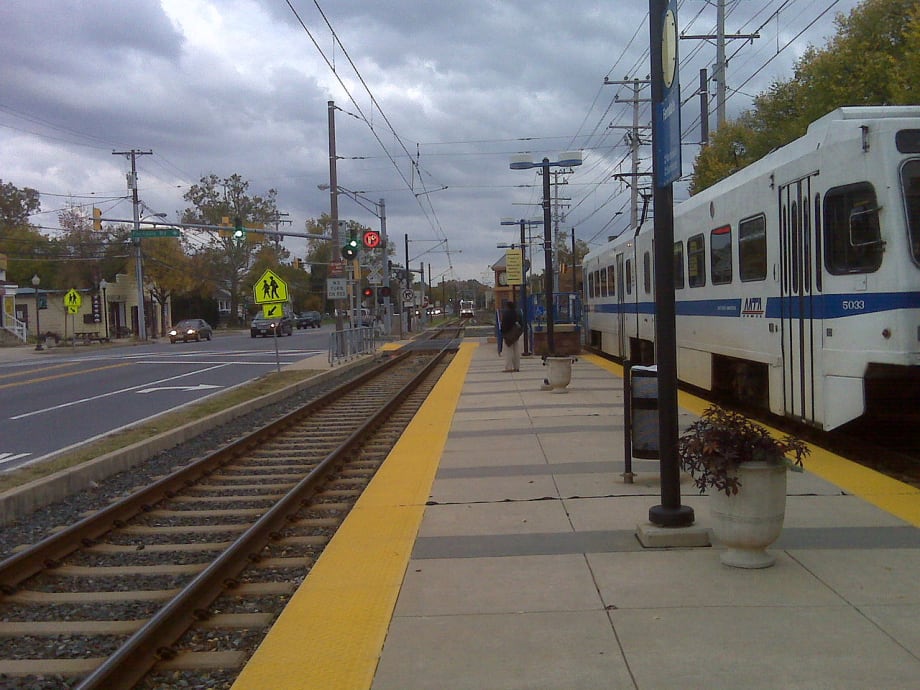
MTA Police, Fare Inspectors and Transit Ambassadors will be out in force on the Light Rail starting from the Hunt Valley Station when they will have a beefed up presence at the Camden Yard station beginning June 9.

Onara Baka Sama
Onara Baka Sama
As one part of an overall focus to increase farebox recovery rates at the Maryland Transit Administration (MTA), the MTA Police will be conducting fare compliance enforcement sweeps beginning June 9 on the light rail system in the Baltimore region. The start of these ongoing sweeps is designed to coincide with Baltimore Orioles home stands against the Boston Red Sox and New York Yankees.
MTA Police, Fare Inspectors and Transit Ambassadors will be out in force on the Light Rail starting from the Hunt Valley Station when they will have a beefed up presence at the Camden Yard station.
During 2014, the MTA conducted approximately 1.9 million light rail fare inspections. And while the resulting light rail fare evasion rate is only about one-half of what it is on a national average (2.2% vs. 4% to 6%), this will be a concentrated effort to ensure light rail customers understand how to pay for fares, and are using fares in the correct manner as required by law. Last year MTA Police issued over 2,400 citations for fare evasion.
This fare compliance initiative is being focused on the light rail because it is an “open” system. This means that while required to pay for fares, customers can get on and off a light rail train without having to run their ticket or multi-fare passes through a scanner, as they would on MTA’s Metro Subway or local bus service.
“The perception of a high fare evasion rate on the light rail doesn’t match up with the reality that the rate is actually pretty low. Part of that is driven by the fact that 74% of our customers have already paid their fare and use multi-fare passes or flash passes. So, many customers who ride pay for single fares may notice other people getting on the train without going to a ticket machine first,” said MTA Administrator Paul W. Comfort. “And, while the MTA Police constantly analyze weekly ridership trends to meet fare evasion head-on, this initiative is as much about educating riders on how to use our system, than is it about the small percentage of people who try and ride for free.”
In addition to enforcement efforts, the MTA will have Transit Ambassadors on the system to help people who don’t normally ride the light rail understand how to pay for fares correctly.
The MTA asks customers to ensure that when riding Light Rail, the correct amount is paid for the ticket and that riders have proof of payment to exhibit upon request by MTA fare inspectors as required.
More Management

METRO Opens Submissions for 2026 Motorcoach Awards
Nominations are now being accepted for METRO Magazine’s Operator of the Year and Innovative Operator of the Year awards.
Read More →
New York MTA Advances Final Contract for Second Avenue Subway Expansion
Contract Four is the largest in the Second Avenue Subway Phase 2 project and includes construction of station infrastructure, tracks, and signals for the subway expansion, MTA officials said. Work on Contract Four will begin in 2027.
Read More →
Transit Agencies Highlight Safety Gains at National Summit
Leaders from 15 major transit systems shared crime-reduction results and safety initiatives while discussing the role of continued federal support.
Read More →

NITA Names New Leadership, Expands Reduced-Fare Program at First Board Meeting
The new regional transit authority appointed its first board chair and interim executive director while extending reduced fares across CTA, Metra, and Pace for eligible riders.
Read More →
Beyond the Checklist: A Structured Approach to Transit Maintenance
Reliability-Centered Maintenance helps transit agencies move beyond routine checklists to focus limited resources on the assets and failures that have the greatest impact on safety, reliability, and service.
Read More →
APTA 2026 Nominating Committee Selects Leadership Slate, Names Chair and Vice Chair Nominees
Leadership changes will help shape the association’s priorities and its representation of the transportation industry during the 2026–2027 term.
Read More →
DART Launches Major Security, Fare Enforcement Initiative
The 90-day demonstration will deploy coordinated security teams at five light rail stations while testing controlled access and gathering data to guide future investments.
Read More →
Advancing Fare Collection Through Technology and Innovation
Learn about delivering 1300 gates at 91 stations while managing fare evasion. Explore the large scale deployment, solution customization and real-world results that affect the region. Prepare for deployment in your region now.
Read More →
Game Day in Motion: Moving Millions During the 2026 World Cup
Between packed transit stations and team motorcoaches, see how agencies and operators across North America tackled the transportation demands of the 2026 FIFA World Cup.
Read More →
Surface Transportation Extension Averts Shutdown, Leaves Transit Funding Gap
The stopgap keeps federal transportation programs moving, but missing advance funding could complicate the transit and rail projects agencies are planning next.
Read More →