




RELATED: Purple Line EIS receives FTA award
Maryland's Purple Line light rail project lands $900M in federal funding
The light rail line will make travel across Montgomery and Prince George’s counties faster and more reliable for thousands of Maryland residents, improving access to major business and activity centers in the state’s most populated counties.
August 29, 2017
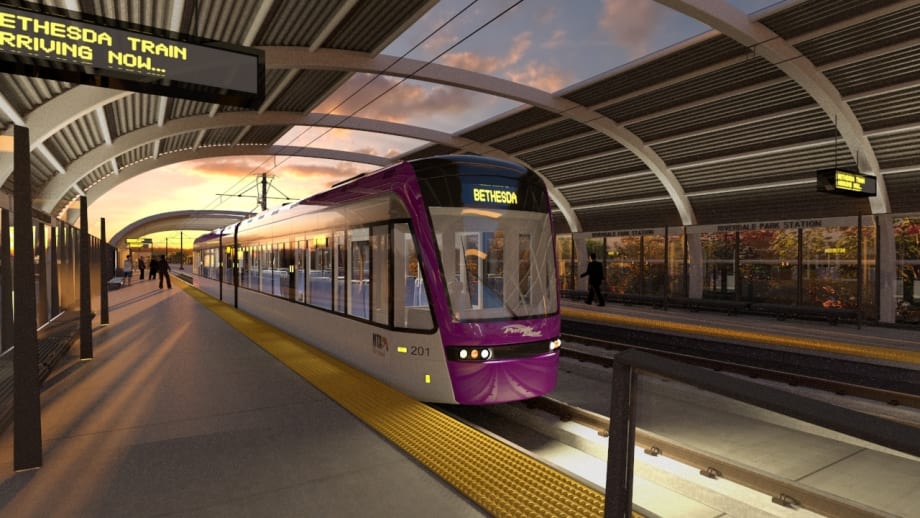
A rendering of the a Purple Line railcar. The project will make travel across Montgomery and Prince George’s counties faster and more reliable for thousands of Maryland residents, improving access to major business and activity centers in the state’s most populated counties.
Md. MTA
3 min to read
A rendering of the a Purple Line railcar. The project will make travel across Montgomery and Prince George’s counties faster and more reliable for thousands of Maryland residents, improving access to major business and activity centers in the state’s most populated counties.
Md. MTA
The Federal Transit Administration (FTA) announced a $900 million federal grant agreement for the Maryland Purple Line Light Rail Project. The light rail line will make travel across Montgomery and Prince George’s counties faster and more reliable for thousands of Maryland residents, improving access to major business and activity centers in the state’s most populated counties.
"The Purple Line is a great example of what can be achieved when federal, state, and private partners work together," said U.S. Transportation Secretary Elaine L. Chao. "Combining U.S. Department of Transportation resources with private funds, this project is well on its way to transforming public transit in urban Maryland."
Secretary Chao made the announcement during a ceremony to commit the funds with Gov. Larry Hogan and several federal officials, as well as representatives from the Maryland Department of Transportation (MDOT), the Maryland Transit Administration, and other local officials.
"The Maryland Purple Line project is an excellent example of leveraging a transit project through a public-private partnership," continued Secretary Chao. "P3s hold great potential for revitalizing our infrastructure and demonstrate how communities’ projects can benefit through access to additional funding resources, which can accelerate project delivery and provide greater innovation."
The 16.2-mile Maryland Purple Line will connect major activity centers in Bethesda, Silver Spring, Takoma-Langley Park, College Park, and New Carrollton to three Washington Metropolitan Area Transit Authority (WMATA) rail lines, all three Maryland Area Regional Commuter (MARC) rail lines, and Amtrak’s Northeast Corridor line. Although the project will provide direct connections with Metrorail and MARC, it will remain physically and operationally separate. When completed, the line will make suburb-to-suburb cross-county travel easier and faster.
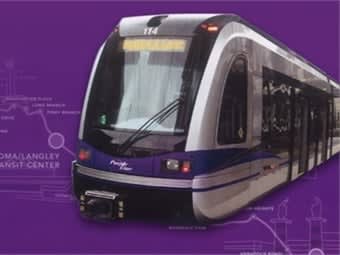
Although the project will provide direct connections with Metrorail and MARC, it will remain physically and operationally separate. When completed, the line will make suburb-to-suburb cross-county travel easier and faster.
"We applaud Montgomery and Prince George’s counties and the State of Maryland for their vision and support to build a safe, efficient, and connected transportation network that will give nearly two million residents a new convenient and reliable alternative to traffic congestion in the Washington region," said FTA Executive Director Matthew Welbes. "The Maryland Purple Line will create a fast and efficient connection for its residents as well as a strong foundation for strategic development along the corridor."
The project includes the construction of 21 stations, two vehicle and maintenance storage yards with shop facilities, and the procurement of 25 articulated light-rail vehicles.
Today is a big day in Purple Line history - @LarryHogan and Sec. @SecElaineChao have signed our funding agreement and we've broken ground! pic.twitter.com/SFNdfJZvJn
— Purple Line (@PurpleLineMD) August 28, 2017
In addition to the $900 million Full Funding Grant Agreement from FTA’s Capital Investment Grants Program, U.S. DOT announced in June 2016, a Transportation Infrastructure Finance and Innovation Act (TIFIA) loan of $874.6 million to Purple Line Transit Partners LLC for construction of the Maryland Purple Line.
MDOT officials signed the $5.6 billion P3 contract in March 2016 with the Purple Line Transit Partners to design, build, finance, operate, and maintain the 16.2-mile light rail system. MDOT will be the owner of the project and its selected private partner, Purple Line Transit Partners, will implement the project on a design-build-finance-operate-maintain basis.
More Management

METRO Opens Submissions for 2026 Motorcoach Awards
Nominations are now being accepted for METRO Magazine’s Operator of the Year and Innovative Operator of the Year awards.
Read More →
New York MTA Advances Final Contract for Second Avenue Subway Expansion
Contract Four is the largest in the Second Avenue Subway Phase 2 project and includes construction of station infrastructure, tracks, and signals for the subway expansion, MTA officials said. Work on Contract Four will begin in 2027.
Read More →
Transit Agencies Highlight Safety Gains at National Summit
Leaders from 15 major transit systems shared crime-reduction results and safety initiatives while discussing the role of continued federal support.
Read More →

NITA Names New Leadership, Expands Reduced-Fare Program at First Board Meeting
The new regional transit authority appointed its first board chair and interim executive director while extending reduced fares across CTA, Metra, and Pace for eligible riders.
Read More →
Beyond the Checklist: A Structured Approach to Transit Maintenance
Reliability-Centered Maintenance helps transit agencies move beyond routine checklists to focus limited resources on the assets and failures that have the greatest impact on safety, reliability, and service.
Read More →
APTA 2026 Nominating Committee Selects Leadership Slate, Names Chair and Vice Chair Nominees
Leadership changes will help shape the association’s priorities and its representation of the transportation industry during the 2026–2027 term.
Read More →
DART Launches Major Security, Fare Enforcement Initiative
The 90-day demonstration will deploy coordinated security teams at five light rail stations while testing controlled access and gathering data to guide future investments.
Read More →
Sponsored•September 9, 2026
Advancing Fare Collection Through Technology and Innovation
Learn about delivering 1300 gates at 91 stations while managing fare evasion. Explore the large scale deployment, solution customization and real-world results that affect the region. Prepare for deployment in your region now.
Read More →
Game Day in Motion: Moving Millions During the 2026 World Cup
Between packed transit stations and team motorcoaches, see how agencies and operators across North America tackled the transportation demands of the 2026 FIFA World Cup.
Read More →
Surface Transportation Extension Averts Shutdown, Leaves Transit Funding Gap
The stopgap keeps federal transportation programs moving, but missing advance funding could complicate the transit and rail projects agencies are planning next.
Read More →