




Planning Ahead: USDOT Releases 5-Year RD&T Strategic Plan
New York MTA Releases Plan to Enhance Access to Facilities
The plan provides a framework to improve integration between the transit system and bicyclists, pedestrians, and users of shared or personal electric-powered bikes or scooters.
January 12, 2023
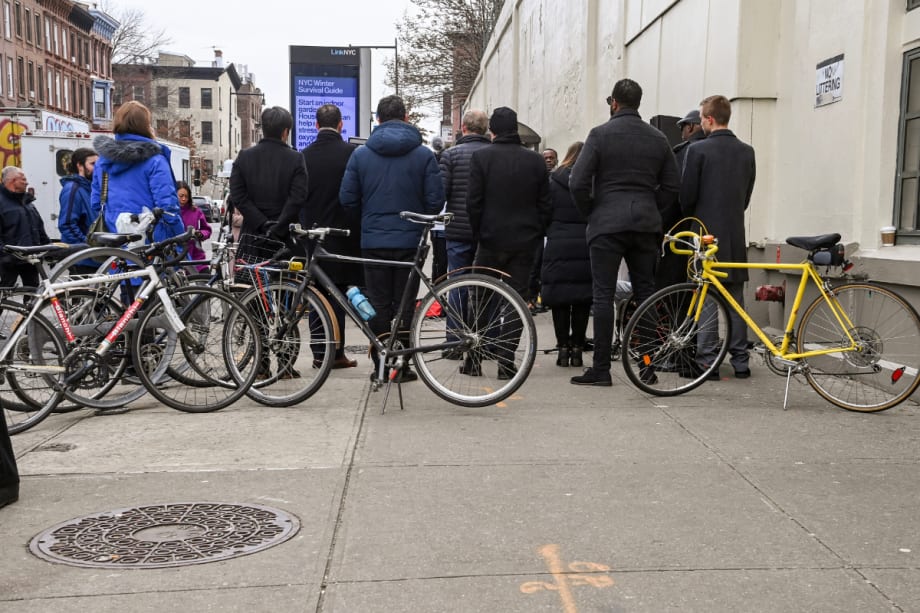
The MTA will install bike racks at 18 suburban commuter rail stations.
Photo: MTA
3 min to read
The Metropolitan Transportation Authority (MTA) announced it has released its strategic action plan, Extending Transit’s Reach.
The plan provides a framework to improve integration between the transit system and bicyclists, pedestrians, and users of shared or personal electric-powered bikes or scooters, according to the agency's news release.
Front-of-bus bike racks will be installed on three Select Bus Service routes, the M60 SBS, S79 SBS, and the Q44 SBS, spanning four boroughs.
Building on the partnership with NYC DOT announced in October to install bike racks near the entrances of the 37 subway stations that do not currently have bike parking, the MTA will install bike racks at 18 suburban commuter rail stations.
The plan also outlines enhancements that will be made to pathways at facilities operated by MTA Bridges and Tunnels.
“It's time for the MTA to fully embrace bicycle, pedestrian, and micromobility access as we plan and expand New York’s transit system,” said MTA CEO Janno Lieber. “Extending Transit’s Reach provides a framework to better integrate MTA subway, bus, and commuter rail service with the ways that New Yorkers are increasingly using to get around. It will enable the MTA to attract new riders to the system, and to harness increasingly popular modes of transportation to essentially expand the transit system.”
Additional actions recommended by the plan include:
Installation of bike racks on three key Select Bus Service routes that cross bridges operated by MTA Bridges and Tunnels: the Q44 SBS which operates between West Farms Square in the Bronx and Jamaica, Queens, via the Bronx-Whitestone Bridge, S79 SBS which operates between New Springfield, Staten Island, and Bay Ridge, Brooklyn, via Hylan Boulevard and the Verrazzano-Narrows Bridge, and M60 SBS, which operates between the Upper West Side of Manhattan and LaGuardia Airport via 125th Street and the Robert F. Kennedy Bridge.
Installation of bike racks at five Long Island Rail Road and 13 Metro-North Railroad stations, filling gaps in bike access across seven suburban counties and bringing the percentage of suburban commuter rail stations in New York with bike parking to 85%.
Construction approved by the MTA Board in November of three ramps at the RFK Bridge that will provide end-to-end connectivity between Randall’s Island, Manhattan, and the Bronx in accordance with the Americans with Disabilities Act (ADA), and details of the plan for the shared use path on the Henry Hudson Bridge. The Authority will replace the north side path of the Queens span with a new ADA-compliant shared-use path that eliminates stairs at the Queens landing at 27th St in Astoria.
“This report is a positive step toward improving transit access for the growing number of New Yorkers who ride bicycles and other micromobility devices,” said Ydanis Rodriguez, NYC DOT commissioner. “DOT has been closely collaborating with the MTA to identify subway stations with a high need for bike parking, particularly at outer-borough, end-of-line stations. We look forward to our continued partnership to support safe, sustainable, and environmentally friendly transportation options.”
More Management

LIT Marks 10-Year Milestone at Annual Summit
Hosted by the COTA from September 10 to 13, the Summit carried the theme “Celebrating 10 Years of Excellence, Leadership, and Impact,” with every part of the program honoring the people, agencies, and partners who built LIT over its first decade.
Read More →
People Movement: Dan Dipert Coaches Adds Third-Generation Leader, Keolis Names New Valley Metro VP/GM, and More
In this edition, we also cover recent appointments and announcements at the Wabtec, SilverRide, HNTB, and more, showcasing the individuals helping to shape the future of transportation.
Read More →
METRO Opens Submissions for 2026 Motorcoach Awards
Nominations are now being accepted for METRO Magazine’s Operator of the Year and Innovative Operator of the Year awards.
Read More →

New York MTA Advances Final Contract for Second Avenue Subway Expansion
Contract Four is the largest in the Second Avenue Subway Phase 2 project and includes construction of station infrastructure, tracks, and signals for the subway expansion, MTA officials said. Work on Contract Four will begin in 2027.
Read More →
Transit Agencies Highlight Safety Gains at National Summit
Leaders from 15 major transit systems shared crime-reduction results and safety initiatives while discussing the role of continued federal support.
Read More →
NITA Names New Leadership, Expands Reduced-Fare Program at First Board Meeting
The new regional transit authority appointed its first board chair and interim executive director while extending reduced fares across CTA, Metra, and Pace for eligible riders.
Read More →
Beyond the Checklist: A Structured Approach to Transit Maintenance
Reliability-Centered Maintenance helps transit agencies move beyond routine checklists to focus limited resources on the assets and failures that have the greatest impact on safety, reliability, and service.
Read More →
APTA 2026 Nominating Committee Selects Leadership Slate, Names Chair and Vice Chair Nominees
Leadership changes will help shape the association’s priorities and its representation of the transportation industry during the 2026–2027 term.
Read More →
DART Launches Major Security, Fare Enforcement Initiative
The 90-day demonstration will deploy coordinated security teams at five light rail stations while testing controlled access and gathering data to guide future investments.
Read More →
Sponsored•September 9, 2026
Advancing Fare Collection Through Technology and Innovation
Learn about delivering 1300 gates at 91 stations while managing fare evasion. Explore the large scale deployment, solution customization and real-world results that affect the region. Prepare for deployment in your region now.
Read More →