




Read More: New York MTA Identifies $427M in 2024 Proposed Budget Savings
New York MTA Makes Progress in Expanding Accessibility, Projects Planned for 2024
In 2023, the MTA launched expanded pilots of multiple features to improve wayfinding in subway stations.
January 2, 2024

Within the current Capital Program, MTA Construction & Development is moving forward with ADA upgrades at nine Long Island Rail Road stations.
Photo: MTA
6 min to read
The Metropolitan Transportation Authority (MTA) announced progress made in expanding accessibility across the transit system in 2023, including the completion of multiple projects and awards for future Americans with Disabilities Act (ADA) station initiatives on the subway and bus system, Long Island Rail Road, and Metro-North Railroad.
“MTA is determined to dramatically increase the accessibility of our system, as evidenced by the incredible pace of improvements over the last few years,” said MTA Chair/CEO Janno Lieber. “More new accessible stations have been opened during the current capital program than the last three programs combined, and we will keep that momentum going into 2024.”
Progress Made in Subways
In 2023, the MTA launched expanded pilots of multiple features to improve wayfinding in subway stations including floor decals on subway platforms that indicate accessible boarding areas, as well as features for customers with visual disabilities such as tactile subway line maps and NaviLens wayfinding signage. NaviLens is an app that uses unique codes to provide audio and visual wayfinding guidance and arrival status information in more than 40 languages.
In December, the MTA replaced an entire fare array at the Sutphin Blvd-Archer Av-JFK Airport station with accessible wide-aisle fare gates following a pilot at Atlantic Av-Barclays Center and Sutphin-Archer in Spring 2023. Continuing that progress, the MTA recently released a Request for Information (RFI), taking the initial step toward secure, accessible, and modern fare gates to better meet the Authority’s goals of promoting fare compliance and improving accessibility and the overall customer experience.
In 2023, the MTA completed ADA upgrades at eight subway stations across all five boroughs and awarded packages for ADA upgrades at 16 more – including a rehabilitation of the Broadway Junction station complex.
In addition, Hoyt Street 23 station in Downtown Brooklyn received a brand-new elevator with costs fully covered by Macy’s. The MTA and Macy’s partnered on this project through the MTA’s Transit Oriented Development group and External Partner Program, which streamlines the MTA's work with private developers impacting stations. Macy's has committed to ensuring the elevator meets the latest MTA reliability standards—at least 96.5% availability.
Two privately funded projects under the Zoning for Accessibility program started construction in 2023: a street-to-mezzanine level elevator and entrance at Queensboro Plaza NW7 and street and platform elevators at the 57 St-6 Av F Station.
The following 15 stations are anticipated to be completed in 2024:
68 St-Hunter College 6
Woodhaven Blvd JZ
Westchester Sq 6
Queensboro Plaza NW7
6 Avenue L
14 Street FM
14 Street 123
Mosholu Parkway 4
Northern Blvd MR
149 Street-Grand Concourse 25
149 Street-Grand Concourse 4
Beach 67 Street A
Lorimer Street L
Metropolitan Avenue G
Tremont Avenue BD
The MTA plans to award contracts for additional ADA stations in 2024, subject to the availability of funding from the Central Business District Tolling Program, which will provide funding for nearly 50% of the remaining 2020-2024 MTA Capital Program.
New elevator cabs are equipped with modern technology features, including security cameras and two-way communication systems that give riders the ability to reach MTA staff at the Operations Control Center in the event of an emergency. Customers can communicate audibly via speakers or visually using a touch screen in the elevator.
MTA's Progress with Buses
In March, the MTA announced the expansion of the Bus Open Stroller pilot program to ease the challenge of traveling with young children on local and SBS buses. Over 1,000 buses on 57 routes across all five boroughs now have one designated area for a single open stroller near the rear door.
In July, the MTA launched a new pilot for customers who use wheelchairs to test a new automated wheelchair securement system on buses. The Quantum system allows passengers to secure themselves on the bus with the touch of a button and minimal operator assistance.
in 2023, hundreds of new and retrofitted buses hit the streets with audio/visual Digital Information Systems (DIS), flexible flip-up seats, and wider doors and ramps, advancing MTA's progress toward making its buses more universally accessible.
The Authority also expanded automated camera enforcement to 600 buses across 80 miles of bus lanes, and secured State approval to begin enforcing blocked bus stops and double-parked vehicles in 2024.
Access-A-Ride
In 2023, Access-A-Ride changed what the MTA considers an on-time pick-up for customers. The Authority is now measuring against a 20-minute window instead of a 30-minute window. Performance has shown continuous improvement since the beginning of 2023, with nearly 90% of customers being picked up within the new pick-up window.
2023 also saw the launch of an upgraded MY AAR app and web-based booking service for AAR customers. Since the updates this spring, Access-A-Ride more than doubled the number of paratransit trips booked through the app, providing an easier and more independent trip booking and tracking option for customers.
Long Island Rail Road
Within the current Capital Program, MTA Construction & Development is moving forward with ADA upgrades at nine Long Island Rail Road stations. New elevators and upgrades are planned for Amityville, Copiague, Laurelton, Lindenhurst, Locust Manor, Massapequa Park, and St. Albans. Earlier in December, the MTA announced it would move forward with upgrades to make Hollis Station accessible as well as improve accessibility at Babylon and Forest Hills. All LIRR stations are advancing in either construction or design for ADA accessibility.
The existing accessibility components at Auburndale and Valley Stream stations will also be upgraded, including new elevators between street and platform levels, modification of canopies, and new sidewalks and curb ramps that are compliant with the Americans with Disabilities Act.
Metro-North Railroad
Metro-North is in the final phase of installing new elevators at Hartsdale, Scarsdale, and Purdy’s on the Harlem line. The work also includes benches, leaning bars, and new lighting at the overpass located in Hartsdale and Scarsdale stations.
Within the current Capital Program, MTA Construction & Development is moving forward with ADA upgrades at three Metro-North stations located in the Bronx. Completely new station platforms and amenities, and two new elevators will be installed at both Woodlawn and Williams Bridge. The Botanical Garden will also be rehabilitated, and the station elevators will be upgraded.
Bridges and Tunnels
MTA Bridges and Tunnels has leveraged MTA’s infrastructure assets to promote walking and cycling and enhance safety across the region. So far, the MTA has completed a new bike/pedestrian ramp connecting the northern walkway of the Manhattan span of the Robert F. Kennedy Bridge that will connect to the future East River Greenway in East Harlem.
The MTA is replacing and widening the Henry Hudson Bridge’s lower-level walkway to build ADA-compliant ramps on both sides of the bridge and provide better connectivity between Spuyten Duyvil in the Bronx and Inwood Hill Park in Manhattan. This is expected to be completed by the end of 2024. Similar work is happening on the Cross Bay Bridge between Broad Channel and Rockaway Beach.
During its December meeting, the MTA Board approved the award of a contract that will create a new bike/pedestrian shared-use path to replace the current walkway across the RFK’s East River suspension and Queens approach structure, providing an ADA accessible connection between Astoria and Wards/Randall’s Island. The MTA will complete this work by the end of 2027.
The MTA is also constructing end-to-end ADA connectivity between Randall’s Island, Manhattan, and the Bronx. This work is expected to be completed by the end of 2024.
More Management

Castro to Lead RTC of Southern Nevada and More in People Movement
In this edition, we also cover recent appointments and announcements at the STV, MCI, and more, showcasing the individuals helping to shape the future of transportation.
Read More →
STraffic Expands North American Presence with Fare Collection Technology
John Moon, Associate Director, Product Strategy at STraffic, discusses the company's growth in North America, its efforts to reduce fare evasion, and more.
Read More →
Study: Denver RTD Generates $2.1 Billion in Annual Economic Activity
An economic impact study finds the agency supports approximately 17,500 jobs, delivers $1.6 billion in annual community and mobility benefits, and generates $2.42 in economic value for every dollar invested.
Read More →
Mark Aesch Nominated to Lead Federal Transit Administration
The former Rochester transit chief and TransPro founder, who has also contributed to METRO Magazine, brings decades of industry experience and a focus on performance, accountability, and financial sustainability to the nomination.
Read More →
Best and Worst U.S. Cities for Public Transportation in 2026
A new analysis of 50 major U.S. urban areas ranks public transit systems based on accessibility, affordability, usefulness, and safety, highlighting where transit performs best and where challenges remain.
Read More →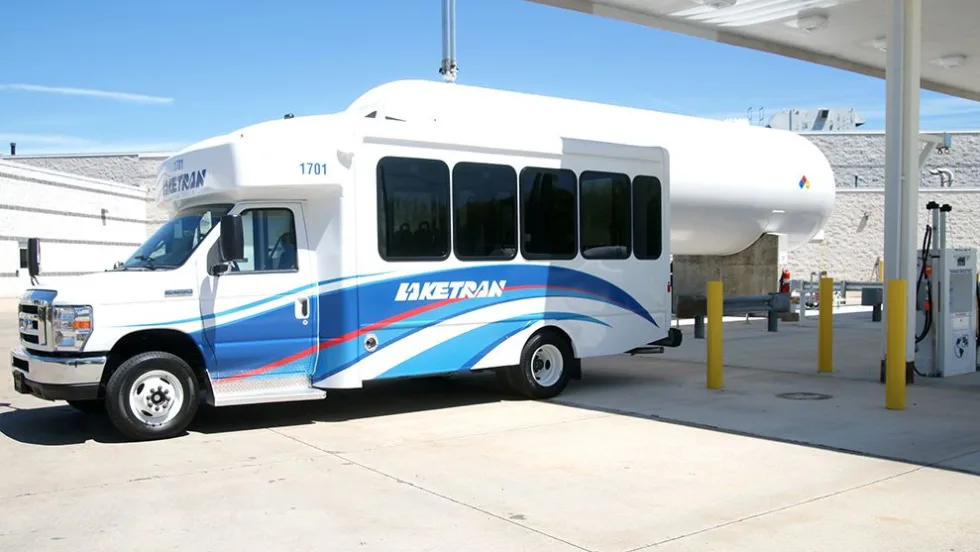
Laketran Cuts Fuel Costs, Boosts Efficiency with Propane-Powered Fleet
The Ohio transit agency is using propane-powered vehicles and on-site fueling infrastructure to cut fuel and maintenance costs while meeting growing demand for paratransit services.
Read More →
Canada’s Public Transit Supports $65.6 Billion in Annual GDP
New research from the Canadian Chamber of Commerce examines transit's economic contributions, including job creation and the financial implications of transportation investment.
Read More →
Pierce Transit Moves to Expand Fleet Following Proposition 1 Approval
The agency authorized the purchase or refurbishment of up to 60 buses to support a 47% service expansion, as voters nationwide approved billions in new transit funding.
Read More →
Right-Sizing Rural Transit: Lessons from North Grenville’s On-Demand Model
A small municipality shows how flexible service, rider needs, and public accountability can expand mobility with limited resources.
Read More →
Transit Ballot Victories Signal Strong Voter Support: What Comes Next?
Voters approved billions in public transportation investments in 2026, giving agencies opportunities to preserve service, expand operations, and strengthen regional connections amid a changing political landscape.
Read More →