



New York MTA Reports $300M in Capital Savings
The report comes as the agency prepares to move forward on a major slate of vital capital projects to be funded by congestion pricing.

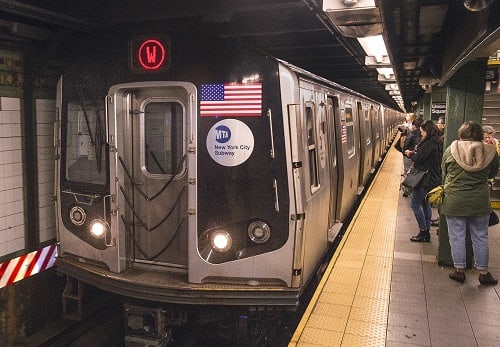
In 2023, the MTA completed more than $7 billion in capital projects, the highest in MTA history.
Photo: MTA/Patrick Cashin
The New York MTA Construction & Development (MTA C&D) outlined details of nearly $300 million in capital program cost savings as part of its 2023 Year in Review and 2024 Strategic Plan, which outlines initiatives to improve the delivery of capital projects and modernize the transit system better, faster, and cheaper.
The report comes as the agency prepares to move forward on a major slate of vital capital projects to be funded by congestion pricing.
MTA Driving Down Costs
The Strategic Plan lays out initiatives for the MTA C&D to drive down costs and deliver the ambitious capital program at scale, including innovative delivery models, bundling projects together, and cutting red tape, and shares results of those efforts.
In 2023, the MTA completed more than $7 billion in capital projects, the highest in MTA history. It also awarded more than $8 billion in new commitments, with those awards coming in 6.2% below the engineer’s estimate, saving nearly $300 million.
The completions represent the full promise of C&D’s new way of delivering projects better, faster, and cheaper, for example the completion of the following projects:
Canarsie L Tunnel rehabilitation phase completed ahead of schedule and under budget.
Resiliency upgrades at the Coney Island Yard, completed on budget.
LIRR Third Track completed on time and $100 million under budget.
LIRR Penn Station 33rd Street Concourse completed on time and under budget.
28 projects completed since 2020 to make stations accessible to all under the Americans with Disabilities Act.
On-time delivery of major projects that bring MTA infrastructure into a state of good repair, including tunnel and infrastructure renewal on the Concourse B, D Line tunnel in the Bronx and a project to upgrade track on the 63rd Street Tunnel under the East River used by the F subway line.
“MTA C&D is developing into a world-class capital delivery organization and has the results to prove it,” said MTA Construction & Development President Jamie Torres-Springer. “This Strategic Plan catalogs the progress we’ve made in the few short years since C&D was created and lays out a plan to accelerate it going forward.”
Continuing to Find Savings
Funding from Congestion Pricing will help continue the agency’s progress.
In addition to reducing traffic and improving air quality, it is also the source of $15 billion for transit and commuter rail projects, representing 30% of the total 2020-2024 Program, and more than 50% of remaining projects in the program.
The funding will pay for vital reliability, accessibility, sustainability, and state of good repair projects throughout the entire transit system.
MTA C&D’s report also provides an update on the recommendations put forward by the consultant firm Crowe, which performed a forensic evaluation of the MTA’s capital planning process in 2019.
Since the audit, which coincided with the creation of MTA C&D as a new unified capital delivery agency, the MTA has doubled down on cost containment, with 90% of 2020-2024 capital projects costs within budget. MTA has also reduced project schedules by an average of four months and accelerated the scale of work in construction, tripling the number of accessibility upgrade projects underway, for example.
Impact on MTA’s Long-Term Planning
In addition to managing projects efficiently, these changes have transformed the long-term planning process.
The 20-Year Needs Assessment released last year was the most comprehensive in MTA history, evaluating nearly six million assets across the entire MTA system. It laid out in detail the urgent need for continued investment and set the stage for the creation of the 2025-2029 Capital Program as the MTA continues to meet the transit system’s needs.
Underscoring MTA C&D’s continuing efforts to transform the way it does business to deliver projects faster, better, and cheaper, the agency recently awarded its first “Progressive Design-Build” (PDB) contract, a type of contract that engages a contractor earlier in the design phase of a project, allowing for greater collaboration, efficiency, and reduced risks later during construction.
More Management

METRO Opens Submissions for 2026 Motorcoach Awards
Nominations are now being accepted for METRO Magazine’s Operator of the Year and Innovative Operator of the Year awards.
Read More →
New York MTA Advances Final Contract for Second Avenue Subway Expansion
Contract Four is the largest in the Second Avenue Subway Phase 2 project and includes construction of station infrastructure, tracks, and signals for the subway expansion, MTA officials said. Work on Contract Four will begin in 2027.
Read More →
Transit Agencies Highlight Safety Gains at National Summit
Leaders from 15 major transit systems shared crime-reduction results and safety initiatives while discussing the role of continued federal support.
Read More →

NITA Names New Leadership, Expands Reduced-Fare Program at First Board Meeting
The new regional transit authority appointed its first board chair and interim executive director while extending reduced fares across CTA, Metra, and Pace for eligible riders.
Read More →
Beyond the Checklist: A Structured Approach to Transit Maintenance
Reliability-Centered Maintenance helps transit agencies move beyond routine checklists to focus limited resources on the assets and failures that have the greatest impact on safety, reliability, and service.
Read More →
APTA 2026 Nominating Committee Selects Leadership Slate, Names Chair and Vice Chair Nominees
Leadership changes will help shape the association’s priorities and its representation of the transportation industry during the 2026–2027 term.
Read More →
DART Launches Major Security, Fare Enforcement Initiative
The 90-day demonstration will deploy coordinated security teams at five light rail stations while testing controlled access and gathering data to guide future investments.
Read More →
Advancing Fare Collection Through Technology and Innovation
Learn about delivering 1300 gates at 91 stations while managing fare evasion. Explore the large scale deployment, solution customization and real-world results that affect the region. Prepare for deployment in your region now.
Read More →
Game Day in Motion: Moving Millions During the 2026 World Cup
Between packed transit stations and team motorcoaches, see how agencies and operators across North America tackled the transportation demands of the 2026 FIFA World Cup.
Read More →
Surface Transportation Extension Averts Shutdown, Leaves Transit Funding Gap
The stopgap keeps federal transportation programs moving, but missing advance funding could complicate the transit and rail projects agencies are planning next.
Read More →