



San Francisco's BART Lands $544M Fed Loan for Railcars
The new railcars are part of a $2.2 billion expansion and upgrade of the entire BART system that operates 48 million passenger trips annually.

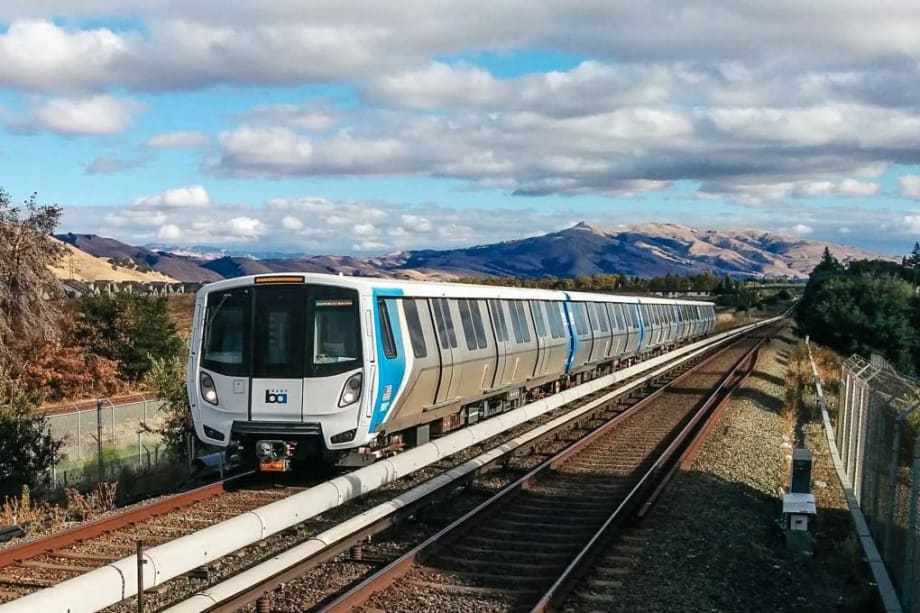
BART's railcars were assembled at the Alstom Manufacturing plant in Plattsburgh, N.Y., supporting the creation of hundreds of new jobs.
Photo: BART
The U.S. Department of Transportation announced a $544.6 million loan through the Build America Bureau (the Bureau) to the San Francisco Bay Area Rapid Transit District (BART) for 775 new passenger railcars.
The new railcars are part of a $2.2 billion expansion and upgrade of the entire BART system that operates 48 million passenger trips annually.
Build America Bureau Funding
By providing Transportation Infrastructure Finance and Innovation Act (TIFIA) loans and other financing, the Bureau helps communities expedite infrastructure projects and reduce project costs.
“Congratulations to BART for implementing the ‘fleet of the future’ that its loyal riders throughout the Bay Area can rely on for the coming decades,” said Deputy Transportation Secretary Polly Trottenberg. “This investment is a game-changer for the community. It will improve riders’ daily commute and contribute to a more efficient, sustainable, and equitable transportation system.”
BART’s New Railcars
The new railcars feature many accessibility and safety improvements; LED screens to provide improved customer information; digital cameras to enhance security and crime prevention; and three doors for entry and exit versus the previous two.
Due to a revised production schedule and accelerated monthly delivery rate of the new railcars, completed in September, the project is expected to save up to $394 million overall compared to original budget estimates.
Additionally, by financing the cost of the railcars, BART is able to use other capital funds to invest in a new Police Department Headquarters.
“BART has set the standard for transit providers by quickly delivering an entirely new fleet of modern rail cars for its riders versus a typical replacement project that can take decades to complete,” said Build America Bureau Executive Director Morteza Farajian. “Utilizing TIFIA and embracing innovative financing enables them to save millions of dollars in the long-term, redeploy some of their funds for other priority projects, and deliver an efficient system-wide upgrade with the modern features and performance upgrades their communities need.”
New Railcars Creating Jobs
The cars were assembled at the Alstom Manufacturing plant in Plattsburgh, N.Y., supporting the creation of hundreds of new jobs.
U.S. companies supplied materials and parts used in the train cars, including the propulsion system, the brakes, raw aluminum used for the body, and electrical wiring.
Locally in the San Francisco Bay Area, jobs were created to support the design, commissioning, warranty, and other activities associated with the project.
The BART cars feature lightweight aluminum exteriors that reduce energy usage, white roofs that deflect heat to lessen the load on the interior cooling system and improved regenerative braking that returns electricity to the power distribution system.
Additionally, 100% of BART’s electric traction power comes from clean hydro and renewable sources.
Since the program was created more than 25 years ago, the U.S. Department of Transportation has closed more than $41 billion in TIFIA financing, supporting more than $138 billion in infrastructure investment across the country.
More Rail

New York MTA Advances Final Contract for Second Avenue Subway Expansion
Contract Four is the largest in the Second Avenue Subway Phase 2 project and includes construction of station infrastructure, tracks, and signals for the subway expansion, MTA officials said. Work on Contract Four will begin in 2027.
Read More →
San Diego MTS Breaks Monthly Trolley Ridership Record
Agency officials said July’s ridership indicates MTS’s continued recovery from the pandemic.
Read More →
Report Examines NJ TRANSIT Reliability, Funding Challenges
The Garden State Initiative analysis examines the roles of Amtrak infrastructure, fleet management, and agency operations while recommending a more performance-based approach to improving reliability.
Read More →
Stadler, CapMetro Sign Long-Term Rail Fleet Support Agreement
Beginning in 2027, Stadler will provide on-site technical expertise, spare parts support, training, and obsolescence management to help extend the reliability and longevity of CapMetro’s GTW fleet.
Read More →
Biz Briefs: Alstom Lands Canadian Contract, LYT to Supply California TSP, and More
In METRO's latest installment, we take a look at recent news from Complete Coach Works, Beep, FlixBus, and more partnerships making headlines across the transportation sector.
Read More →
CATS Gold Line Marks 5 Years of Service, 2.8M Passenger Trips
With a six-mile expansion planned, the Charlotte streetcar is positioned to connect more neighborhoods and major transit hubs across the region.
Read More →
Why Simulating Pedestrian Movement Has Become Essential for Modern Rail Stations
Pedestrian microsimulation is helping rail planners identify bottlenecks, test station designs, and prepare complex transit hubs for growing passenger volumes.
Read More →
Amtrak Begins Major Construction at New York’s Sunnyside Yard
The new maintenance facility will support Amtrak’s Airo trainsets while improving maintenance efficiency and turnaround times in New York.
Read More →
Chicago Leaders Unveil Plans for O’Hare Airport Express Train
The privately developed project would offer a 15-minute trip between downtown and O’Hare’s Terminal 2, with trains operating every 15 minutes on a dedicated track. The service would use battery-electric trains and three existing freight rail rights-of-way.
Read More →
OCTA Maps Out 30-Year Strategy to Protect Coastal Rail Corridor
The draft feasibility report identifies strategies to protect the coastal rail line for decades as the agency continues near-term stabilization and sand placement efforts.
Read More →