



TransLink Launches Full-Motion Videos Inside SkyTrain Tunnel
TransLink Unveils First 10 Years of Transport 2050 Priorities
The proposed 10-Year Priorities is the next step to implement the goals set out in Transport 2050.
by Staff
April 20, 2022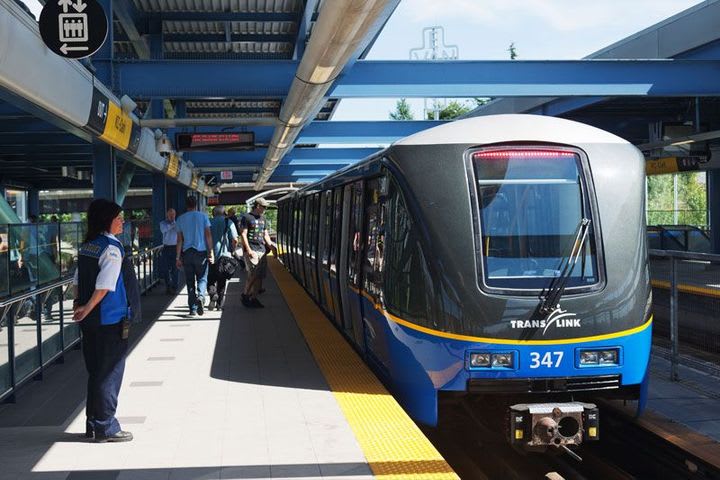
Proposed investments detailed in the 10-Year Priorities include doubling regional bus service levels.
Photo: TransLink
2 min to read
TransLink and the Mayors’ Council on Regional Transportation released Transport 2050: 10-Year Priorities, detailing priority investments to meet the increasing demand for transit and support the transportation needs of Metro Vancouver’s growing population.
The proposed 10-Year Priorities is the next step to implement the goals set out in Transport 2050, Metro Vancouver’s recently approved 30-year Regional Transportation Strategy.
“Transport 2050: 10-Year Priorities is an ambitious and necessary plan that outlines more than double the investments from our previous Mayors’ Vision," said Jonathan Coté, chair, Mayors’ Council on Regional Transportation. "I am confident that with a broadly supported set of priorities and a strong partnership with the Province of BC and the Government of Canada, we can deliver on these shared benefits.”
Proposed investments detailed in the 10-Year Priorities include doubling regional bus service levels and up to 170 kilometres of new rapid transit on up to 11 corridors, including:
Up to nine Bus Rapid Transit (BRT) routes using new zero-emission buses on dedicated, traffic-separated lanes
A rapid transit connection to the North Shore
The Burnaby Mountain Gondola to SFU
The Millennium Line SkyTrain extension from Arbutus to UBC
Exploring other potential SkyTrain extensions, including Newton in Surrey and Port Coquitlam
Building 450 kilometres of new traffic-separated cycling paths
The Transport 2050 Strategy concluded that there is a widespread need to address climate change, housing affordability, and traffic congestion by increasing and improving transit service.
With Transport 2050: 10-Year Priorities, TransLink is proposing an expansion of the SkyTrain network, and introducing high-capacity Bus Rapid Transit. This new zero-emissions bus-based rapid transit could be deployed along high-demand corridors throughout Metro Vancouver.
“It’s critical that we lay the groundwork for achieving the region’s shared goals set out in Transport 2050," said Kevin Quinn, CEO, TransLink. "Our region needs to rapidly invest in transportation improvements to combat climate change, address the housing affordability crisis, and improve congestion in a growing region. Transport 2050: 10-Year Priorities will chart a fast and effective course to quality transportation choices for the people of Metro Vancouver.”
In addition to Transport 2050: 10-Year Priorities, TransLink is also releasing the 2022 Investment Plan, which aims to stabilize funding over the next three years.
More Management

METRO Opens Submissions for 2026 Motorcoach Awards
Nominations are now being accepted for METRO Magazine’s Operator of the Year and Innovative Operator of the Year awards.
Read More →
New York MTA Advances Final Contract for Second Avenue Subway Expansion
Contract Four is the largest in the Second Avenue Subway Phase 2 project and includes construction of station infrastructure, tracks, and signals for the subway expansion, MTA officials said. Work on Contract Four will begin in 2027.
Read More →
Transit Agencies Highlight Safety Gains at National Summit
Leaders from 15 major transit systems shared crime-reduction results and safety initiatives while discussing the role of continued federal support.
Read More →

NITA Names New Leadership, Expands Reduced-Fare Program at First Board Meeting
The new regional transit authority appointed its first board chair and interim executive director while extending reduced fares across CTA, Metra, and Pace for eligible riders.
Read More →
Beyond the Checklist: A Structured Approach to Transit Maintenance
Reliability-Centered Maintenance helps transit agencies move beyond routine checklists to focus limited resources on the assets and failures that have the greatest impact on safety, reliability, and service.
Read More →
APTA 2026 Nominating Committee Selects Leadership Slate, Names Chair and Vice Chair Nominees
Leadership changes will help shape the association’s priorities and its representation of the transportation industry during the 2026–2027 term.
Read More →
DART Launches Major Security, Fare Enforcement Initiative
The 90-day demonstration will deploy coordinated security teams at five light rail stations while testing controlled access and gathering data to guide future investments.
Read More →
Sponsored•September 9, 2026
Advancing Fare Collection Through Technology and Innovation
Learn about delivering 1300 gates at 91 stations while managing fare evasion. Explore the large scale deployment, solution customization and real-world results that affect the region. Prepare for deployment in your region now.
Read More →
Game Day in Motion: Moving Millions During the 2026 World Cup
Between packed transit stations and team motorcoaches, see how agencies and operators across North America tackled the transportation demands of the 2026 FIFA World Cup.
Read More →
Surface Transportation Extension Averts Shutdown, Leaves Transit Funding Gap
The stopgap keeps federal transportation programs moving, but missing advance funding could complicate the transit and rail projects agencies are planning next.
Read More →