



WSP | PB clients win 5 TIGER grants
The awards focus on capital projects that generate economic development and improve access to reliable, safe and affordable transportation for communities, both urban and rural.

UTA photo by vxla/Flickr
UTA photo by vxla/Flickr
WSP | Parsons Brinckerhoff supported five of its clients in preparing successful applications for 2016 TIGER (Transportation Investment Generating Economic Recovery) grants from the U.S. Department of Transportation (USDOT).
Five of the 40 winning applications, represent $66.3 million of the total $484 million awarded, according to John D. Porcari, president of WSP | PB's U.S. advisory services sector.
The highly competitive TIGER grant program supports innovative projects, including multimodal and multi-jurisdictional projects, which are difficult to fund through traditional federal programs. The awards focus on capital projects that generate economic development and improve access to reliable, safe and affordable transportation for communities, both urban and rural. In 2016, 585 applications were submitted requesting more than $9 billion in funds.
“This unique program rewards innovative thinking and collaborative solutions to difficult and sometimes dangerous transportation problems,” said USDOT Secretary Anthony Foxx in announcing the grants on July 29.
WSP | PB clients were awarded TIGER grants as follows:
City of New Haven Connecticut, $20 million for its Downtown Crossing project, which will develop a more livable, walkable downtown area in New Haven by helping transform a highway stub into an urban boulevard with new street connections. This project continues Route 34’s conversion from a limited access highway to an urban boulevard, with new intersections, bike/pedestrian enhancements, and streetscape improvements.
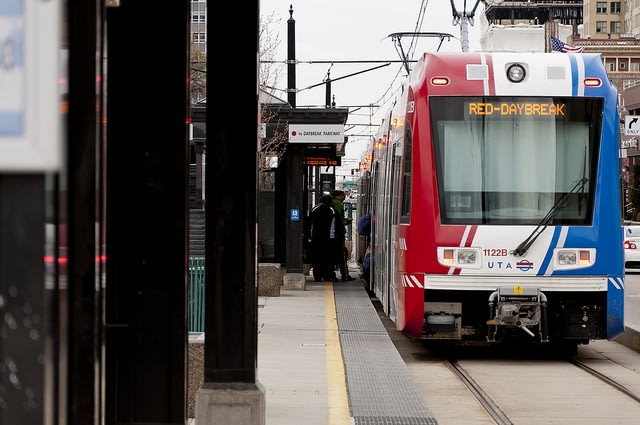
Utah Transit Authority (UTA), $20 million for its First/Last Mile Connections: Improving Community Access to Regional Opportunities project, which will improve connectivity and access of the UTA’s transit system. The project includes building network connections including crosswalks, trail connections, sidewalks, bike lanes, and filling non-motorized network gaps.
Maryland Department of Transportation, $10 million for its North Avenue Rising project, which will improve approximately five miles of North Avenue in Baltimore with dedicated bus lanes, roadway repaving, transit signal priority installation, enhanced bus stops, sidewalk improvements, bike share stations, bike lanes, shared bus/bike lanes, safety and access improvements, a subway station improvement, and an intersection.
Delaware Transit Corp., $10 million for its Claymont Regional Transportation Center, which will replace the existing Southeastern Pennsylvania Transportation Authority (SEPTA) rail station in Claymont, Delaware. The new SEPTA station will be integrated with a transit-oriented development located one mile north of the existing station. The project includes high-level platforms, Americans with Disabilities Act-compliant facilities, improved transit and pedestrian connectivity, and increased parking.
San Francisco Bay Area Rapid Transit (BART) District $6.32 million for its Gateway to Oakland Uptown project, which will upgrade the 19th Street/Oakland BART station and enhance the bicycle and pedestrian infrastructure between the station and the Uptown area of Oakland, including new Americans with Disabilities Act-compliant elevators linking the station concourse with the street level and the installation of LED street lights and wayfinding in the vicinity of the station.
More Management

METRO Opens Submissions for 2026 Motorcoach Awards
Nominations are now being accepted for METRO Magazine’s Operator of the Year and Innovative Operator of the Year awards.
Read More →
New York MTA Advances Final Contract for Second Avenue Subway Expansion
Contract Four is the largest in the Second Avenue Subway Phase 2 project and includes construction of station infrastructure, tracks, and signals for the subway expansion, MTA officials said. Work on Contract Four will begin in 2027.
Read More →
Transit Agencies Highlight Safety Gains at National Summit
Leaders from 15 major transit systems shared crime-reduction results and safety initiatives while discussing the role of continued federal support.
Read More →

NITA Names New Leadership, Expands Reduced-Fare Program at First Board Meeting
The new regional transit authority appointed its first board chair and interim executive director while extending reduced fares across CTA, Metra, and Pace for eligible riders.
Read More →
Beyond the Checklist: A Structured Approach to Transit Maintenance
Reliability-Centered Maintenance helps transit agencies move beyond routine checklists to focus limited resources on the assets and failures that have the greatest impact on safety, reliability, and service.
Read More →
APTA 2026 Nominating Committee Selects Leadership Slate, Names Chair and Vice Chair Nominees
Leadership changes will help shape the association’s priorities and its representation of the transportation industry during the 2026–2027 term.
Read More →
DART Launches Major Security, Fare Enforcement Initiative
The 90-day demonstration will deploy coordinated security teams at five light rail stations while testing controlled access and gathering data to guide future investments.
Read More →
Advancing Fare Collection Through Technology and Innovation
Learn about delivering 1300 gates at 91 stations while managing fare evasion. Explore the large scale deployment, solution customization and real-world results that affect the region. Prepare for deployment in your region now.
Read More →
Game Day in Motion: Moving Millions During the 2026 World Cup
Between packed transit stations and team motorcoaches, see how agencies and operators across North America tackled the transportation demands of the 2026 FIFA World Cup.
Read More →
Surface Transportation Extension Averts Shutdown, Leaves Transit Funding Gap
The stopgap keeps federal transportation programs moving, but missing advance funding could complicate the transit and rail projects agencies are planning next.
Read More →