



Agencies must step up to achieve transportation equity
In the course of researching my book Better Buses, Better Cities, I was proud to see agencies taking the challenge head on.

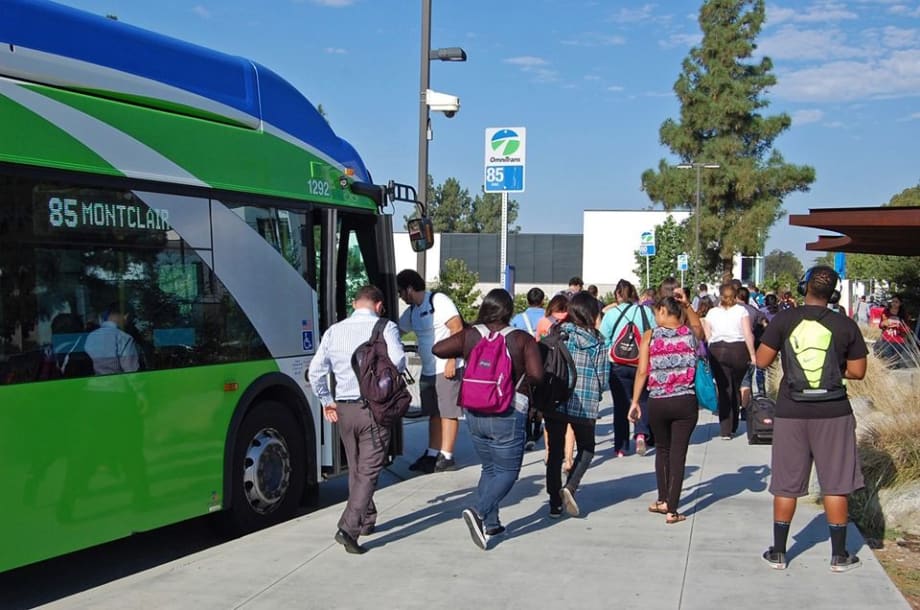
It is up to local leaders to plan public transit in ways that further racial and social equity.
Omnitrans
It is up to local leaders to plan public transit in ways that further racial and social equity.
Omnitrans
In the minds of many, public transportation is linked to civil rights. The Montgomery bus boycott is a seminal moment in U.S. history. Kafui Attoh, a professor at the City University of New York, describes the right to mobility as underpinning our other rights. In his book Rights in Transit, Attoh cites a bus rider, Karen Smulevitz, who says that of all the rights that exist, “whether it is food security, housing, healthcare, or education, the right to transportation is the most integral to each.” The Community Transportation Association of America declares that “mobility is a basic human right.”
Federal law — Title VI of the Civil Rights Act of 1964 — requires that transit agencies mitigate harm to low-income and non-white communities when making service and fare changes. But in U.S. cities that have been shaped by inequitable politics, preventing further harm is not enough to achieve transportation equity. It is up to local leaders to plan public transit in ways that further racial and social equity.
In the course of researching my book Better Buses, Better Cities, I was proud to see how many transit agencies have stepped up to face this challenge. Three lessons:
Leaders must set clear goals to improve service for marginalized riders
Advancing equity means concentrating attention and funding in neighborhoods and on customers who have been left out, which means less attention to privileged neighborhoods —which tend to be the most politically connected ones. Because of this, many discussions of equity founder at the implementation level.
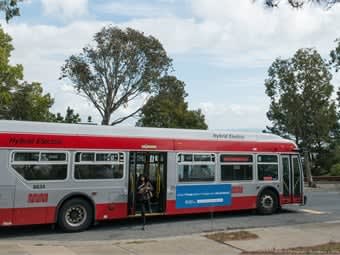
The San Francisco Municipal Transportation Authority’s “service equity strategy” commits the agency to improving transit in eight neighborhoods with high concentrations of non-white, senior, and low-income residents.
SFMTA
Agencies are more likely to make ambitious changes when their leaders show a strong commitment to equity. For example, the San Francisco Municipal Transportation Authority’s (SFMTA) “service equity strategy” commits the agency to improving transit in eight neighborhoods with high concentrations of non-white, senior, and low-income residents. Rather than discussing equity in general terms; SFMTA’s strategy identifies specific recommendations: Bigger buses for the 9R route, actively managing headways on the 10 route in Chinatown, and more service on the 44.
Examine fare policy and understand riders’ experience of paying the fare
In many cities, low-income riders end up paying more for transit than high-income riders, because they have trouble affording multi-day passes. Transit agencies like Portland’s TriMet and Connecticut’s CTtransit have adopted “fare capping” — capping the monthly cost of transit for anyone, regardless of whether they pay by the ride or buy a pass.
Higher-income riders are also more likely to have discounted transit through employers or business associations. In response, Denver’s Regional Transportation District launched a low-income fare program in 2018 — joining counterparts like the New York MTA and Seattle’s King County Metro.
Transit agencies also need to understand how their riders pay the fare, to prevent avoidable harm. In Chicago, the Ventra farecard launched with predatory banking features that led to community outcry. Bus fare evasion tends to correlate with inconvenient payment systems and poverty. Instead of enforcement crackdowns, transit agencies can improve their fare retail networks and enroll riders in discount fare programs.
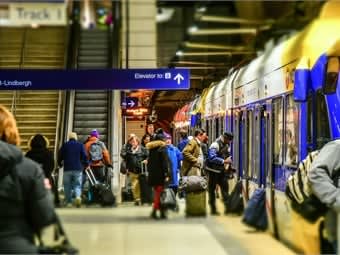
Metro Transit planners set aside 10% of a federal grant for public engagement and hired 11 community-based organizations to collect rider input.
Metro Transit
Engage riders — and view them as allies
Rather than thinking about equity near the end of a service change or project (as is typical in Title VI analysis), transit agencies should embed it early — by engaging riders to understand how they use transit. Minnesota’s Metro Transit did this in its “Better Bus Stops” program, an initiative aimed at building bus shelters in underserved neighborhoods and overhauling old shelter guidelines. Metro Transit planners set aside 10% of a federal grant for public engagement and hired 11 community-based organizations to collect rider input. As a result, agency survey respondents were representative of bus riders’ income and race, a rarity in public engagement efforts.
More profoundly, transit agencies can work with marginalized communities in ways that help them use their own power. When community-based groups advocate for transit improvements in their neighborhoods, they provide political cover for agencies to take action. In Los Angeles, for example, local advocates played a major role in convincing LA Metro to adopt an equity platform. Metro Transit’s Better Bus Stops program came about in part because advocates for low-income communities saw that regional transit investments were prioritizing wealthier suburbs. Agency leaders and advocates often have different styles of working – but by coordinating their actions, they can do more together to realize equitable transit than either can alone.
Steven Higashide (@shigashide) is an urban planner, author of Better Buses, Better Cities (Island Press, 2019), and director of research for TransitCenter, a foundation which works to make cities more sustainable and just through better public transit.
More Blog Posts
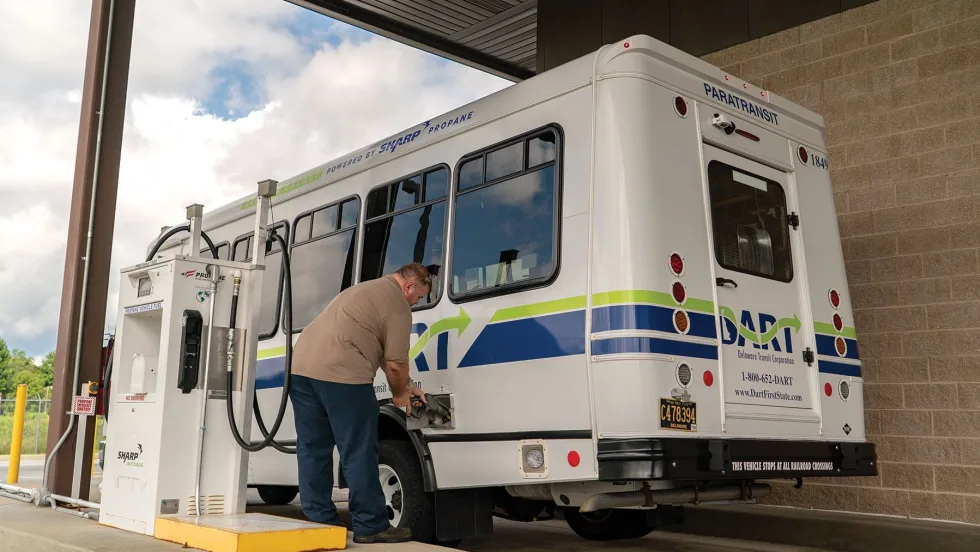
Building a Winning FTA Grant Proposal: Why Propane Autogas is the Pragmatic Choice for Fleet Resilience
With $610 million available through the FY 2026 Buses and Bus Facilities Competitive Program and the Low or No Emission Grant Program, agencies must build a compelling case before the September 21 deadline that balances environmental compliance with operational feasibility.
Read More →
Velo-city Conference 2026: Latest Trends in Cycling as Part of Urban Mobility
The global cycling conference highlighted how cities are integrating bicycles into multimodal transportation networks, expanding cycle tourism and reshaping urban mobility.
Read More →
Kindness Isn’t Soft...It’s Strategic.
Mike Bismeyer — often known as “The Kindness Guy” — has spent more than 17 years in public transit and mobility, serving in industry leadership roles, speaking across North America, and advocating for stronger workplace cultures. But his message doesn’t come from theory. It comes from lived experience.
Read More →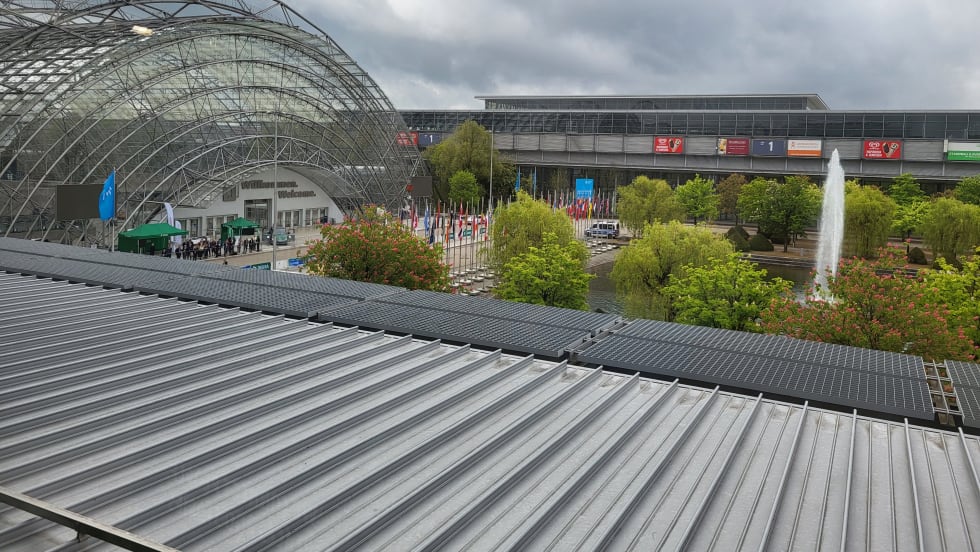
Inside ITF 2026: Transport Reacts to A Challenging World
Transport leaders from around the world gathered in Leipzig, Germany, for the 2026 International Transport Forum to discuss resilience, climate impacts, supply chains and the future of sustainable mobility.
Read More →
Every Ride Tells a Story — But You’re Not Just Selling the Ride
You’re selling the moment, the meaning, and the emotion behind it.
Read More →
How Digital Signage is Reshaping the Traveler Experience at Transportation Hubs
What was once a landscape of static signs has evolved into a responsive, immersive environment powered by real-time visual communication.
Read More →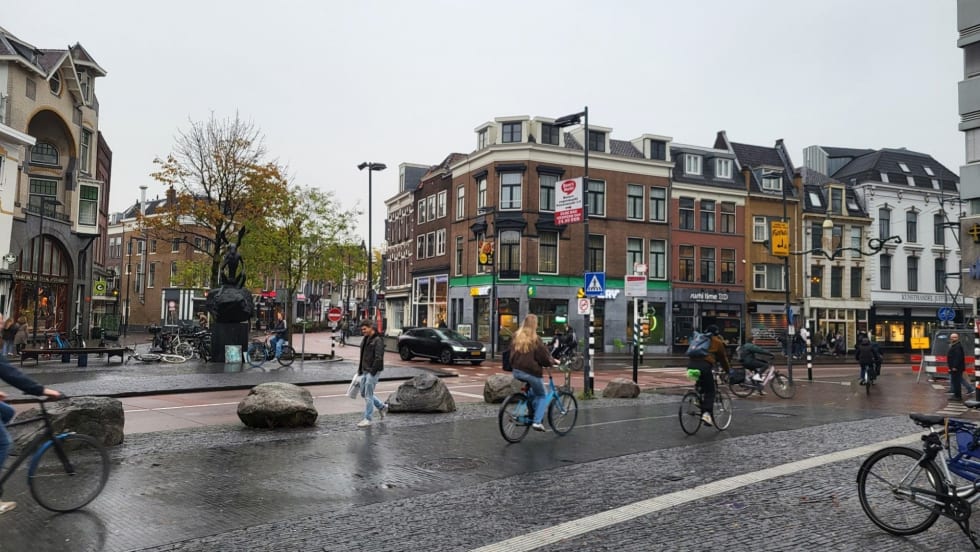
Latest Trends in Urban Mobility from Polis Conference 2025
Polis comprises cities and regions, as well as corporate partners, from across Europe, promoting the development and implementation of sustainable mobility. This year’s event had over a thousand attendees across various policy forums and an exhibition.
Read More →
Why Transit Leaders Require Better Tools for Operational Clarity In Today’s Tech-Fragmented Environment
Across North America and beyond, transit agency officials are contending with a perfect storm of operational headaches and strategic challenges that hamper daily service and long-term progress.
Read More →
The Powerless Brokers: Why California Can’t Build Transit
It is no secret that transit in the U.S. is slow and expensive to build.
Read More →
Why Transport Sustainability Should Focus on People Instead of Cars
Simply incentivizing electrification is not enough to make a meaningful impact; we must shift our focus toward prioritizing public transportation and infrastructure.
Read More →