



OCTA Marks 30th Anniversary
In June 1991, the Orange County Transportation Authority was formed through the consolidation of seven different agencies that focused on various aspects of transportation across the county.
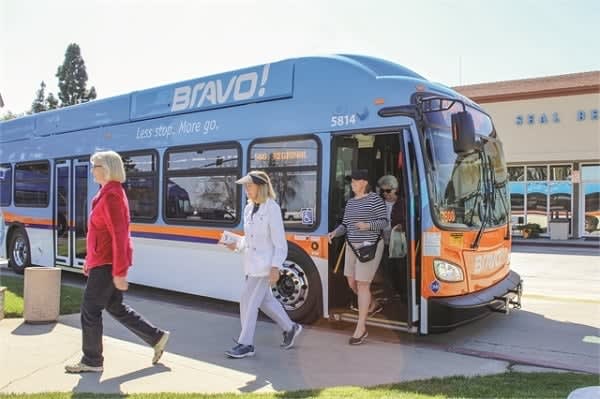
OCTA was formed in 1991 through the consolidation of seven different agencies that focused on various aspects of transportation across the county.
OCTA
The Orange County Transportation Authority is celebrating 30 years of improving the region’s transit, streets, and freeways.
In June 1991, OCTA was formed through the consolidation of seven different agencies that focused on various aspects of transportation across the county. The move to streamline efforts into a single agency allowed for coordination of transportation planning for the county’s growing population, greatly increasing efficiency and saving millions of dollars in taxpayer money by eliminating duplication of efforts.
“When you look back at the 30 years OCTA has been in existence, we can take pride in so many accomplishments to improve Orange County’s freeways and streets, provide reliable transit, protect the environment, and so much more,” said OCTA Chairman Andrew Do, also the county’s First District Supervisor. “With the strong support of the public, who overwhelmingly voted to approve Measure M to fund many of those improvements, we will continue to have a bright future with a balanced and sustainable transportation network.”
OCTA’s successes would not be possible without the vision and support of local voters, who passed the Measure M half-cent sales tax for transportation improvements in 1990 and then renewed it with 70% of the vote in 2006.
Since then, funds from Measure M, also known as OC Go, have led to a wide range of transportation improvements, with funding help from OCTA’s state and federal partners. Those improvements included:
Major expansions of Orange County freeways, improving traffic flow on Interstate 5, widened from six to 10 lanes, and improvements to State Routes 55, 22 and 91, among others.
Metrolink commuter rail was added to Orange County. Prior to 1991, Amtrak was the only passenger rail service, operating one train daily between Los Angeles and San Juan Capistrano. Now OCTA works with Metrolink to fund 54 weekday and 16 weekend trains serving the county.
Bus transit was expanded and tailored to fit the county’s needs, including nearly 60 routes and 5,400 stops, as well as paratransit. OCTA also piloted microtransit with the OC Flex service and works with cities to provide shuttle services.
In 2003, OCTA purchased and began operating the 91 Express Lanes, 10 miles of tolled express lanes between Anaheim and Riverside County that give commuters a reliable time-saving transportation option and have led to improvements throughout the 91 freeway corridor.
More than $1 billion in OC Go funds have gone back to cities and the county for street improvements and local transportation needs.
More than 3,000 traffic signals have been synchronized, leading to more green lights and more efficient travel.
While taking time to mark the accomplishments of the past 30 years, OCTA, is also working towards future projects, including a 16-mile, $2 billion improvement to the I-405 between Costa Mesa and the county’s border with Long Beach, which is scheduled to be completed in 2023, and the OC Streetcar, the county’s first modern, electric streetcar along a 4.1-mile route in Santa Ana and Garden Grove, which is also set to open in 2023.
More Management

METRO Opens Submissions for 2026 Motorcoach Awards
Nominations are now being accepted for METRO Magazine’s Operator of the Year and Innovative Operator of the Year awards.
Read More →
New York MTA Advances Final Contract for Second Avenue Subway Expansion
Contract Four is the largest in the Second Avenue Subway Phase 2 project and includes construction of station infrastructure, tracks, and signals for the subway expansion, MTA officials said. Work on Contract Four will begin in 2027.
Read More →
Transit Agencies Highlight Safety Gains at National Summit
Leaders from 15 major transit systems shared crime-reduction results and safety initiatives while discussing the role of continued federal support.
Read More →

NITA Names New Leadership, Expands Reduced-Fare Program at First Board Meeting
The new regional transit authority appointed its first board chair and interim executive director while extending reduced fares across CTA, Metra, and Pace for eligible riders.
Read More →
Beyond the Checklist: A Structured Approach to Transit Maintenance
Reliability-Centered Maintenance helps transit agencies move beyond routine checklists to focus limited resources on the assets and failures that have the greatest impact on safety, reliability, and service.
Read More →
APTA 2026 Nominating Committee Selects Leadership Slate, Names Chair and Vice Chair Nominees
Leadership changes will help shape the association’s priorities and its representation of the transportation industry during the 2026–2027 term.
Read More →
DART Launches Major Security, Fare Enforcement Initiative
The 90-day demonstration will deploy coordinated security teams at five light rail stations while testing controlled access and gathering data to guide future investments.
Read More →
Advancing Fare Collection Through Technology and Innovation
Learn about delivering 1300 gates at 91 stations while managing fare evasion. Explore the large scale deployment, solution customization and real-world results that affect the region. Prepare for deployment in your region now.
Read More →
Game Day in Motion: Moving Millions During the 2026 World Cup
Between packed transit stations and team motorcoaches, see how agencies and operators across North America tackled the transportation demands of the 2026 FIFA World Cup.
Read More →
Surface Transportation Extension Averts Shutdown, Leaves Transit Funding Gap
The stopgap keeps federal transportation programs moving, but missing advance funding could complicate the transit and rail projects agencies are planning next.
Read More →