



CATS Expanding & Integrating Transit Services for Diverse, Thriving City
Providing over 25 million customer trips each year, CATS has added light rail and streetcar service, which has increased ridership exponentially.

CATS' new mobile app, "CATS See Say" app, which rolled out in February, allows riders to quickly submit reports of suspicious or criminal activity.
Photo: CATS
Named famously after Queen Charlotte of Mecklenburg-Strelitz, Charlotte, N.C., is one of the nation’s fastest-growing cities. The Queen City’s thriving and diverse population, in conjunction with its booming economy, has created a transit-supportive community for the Charlotte Area Transit System (CATS).
The largest transit system between Atlanta and Washington, D.C., CATS operates over 316 buses on over 70 local, express and regional bus routes. Providing over 25 million customer trips each year, CATS has expanded beyond a bus-only transit agency. In recent years, CATS has added light rail and streetcar service, which has increased ridership exponentially.
In 2007, CATS opened the LYNX Blue Line — N.C.’s first light rail. Upon opening, projected ridership was exceeded and continues to grow. With a fleet of over 24 light rail vehicles, travelers and residents alike can travel 9.6 miles south via rail from Charlotte’s city center. In the years since it’s opening, Charlotte has seen nearly $1.4 billion in transit-oriented development along the Blue Line corridor. Areas such as the South End neighborhood are continuing to expand today as new restaurants, shopping centers and housing is developed.
In July 2015, the CityLYNX Gold Line opened, bringing streetcar back to Charlotte after a 77-year hiatus. The streetcar travels 1.5 miles from Charlotte’s city center to one of its most historic neighborhoods.
CATS’ daily operations also include vanpool service, as well as door-to-door paratransit services.
To accommodate the quickly growing population and need for mobility in the Charlotte metropolitan area, CATS aims to provide more transit options than ever before. “CATS is determined to advance the vision of the Metropolitan Transit Commission’s 2030 Transit Corridor System Plan,” noted CATS CEO John Lewis.
CATS will soon open an extension of the LYNX Blue Line, a second phase of the CityLYNX Gold Line, and has made great strides in the future development of a multimodal union station called the Charlotte Gateway Station.

CATS will soon open an extension of the LYNX Blue Line and has made great strides in the development of a multimodal station -- the Charlotte Gateway Station.
Photo: CATS
Blue Line Extension
The LYNX Blue Line Extension (BLE) is a 9.3-mile extension of the Blue Line that extends from 7th Street Station in Center City through the NoDA (North Davidson) and university areas, terminating on the UNC Charlotte campus. Since construction began in 2013, the City of Charlotte has already begun to see development occur along the corridor making the initial estimate of $350 million in TOD a conservative one.
CityLYNX Gold Line
Construction is set to begin this fall on CityLYNX Gold Line Phase 2. Phase 2 will extend the Phase 1 segment by 2.5 miles on the east and west ends of the line, creating a four-mile system. With the addition of 11 new stops, the Phase 2 project will also replace the current replica Gomaco trolleys with modern streetcar vehicles.
With an anticipated opening of December 2019, Phase 2 will serve as an engine for economic growth by connecting key neighborhoods and maximizing Charlotte’s development opportunities.

Over the next 12 months, CATS will embark on an overall fare collection system upgrade, which will include new fareboxes that support contactless payment, mobile app tickets, barcoding, manetic passes and cash.
Photo: CATS
Charlotte Gateway Station
In fall 2015, the U.S. Department of Transportation (U.S. DOT) awarded the City of Charlotte and the North Carolina Department of Transportation a $25 million federal grant to assist in building a union station — the Charlotte Gateway Station in center city.
This comprehensive multimodal transportation center will bring together transportation services, such as CityLYNX Gold Line Streetcar, CATS bus service, LYNX Red Line Commuter rail, and intercity transportation, including Amtrak trains and Greyhound service. Expected to be operational in 2021, the project is currently in preliminary phases.
Blue Line Expansion
In conjunction with the extension, CATS has also been awarded a TIGER III grant from the U.S. DOT for capacity enhancements along the current LYNX Blue Line.
This project, the Blue Line Capacity Expansion Project, will lengthen four existing light rail station platforms to accept three-car trains and power supply substations to operate longer, more frequent trains.

The CityLYNX Gold Line, launched July 2015, is the first 1.5-mile segment of a 10-mile streetcar system.
Photo: CATS
A New Safety App
CATS recently launched a mobile app to further enhance safety on CATS trains, buses, and at facilities and bus stops. The “CATS See Say” app, which rolled out in February, allows riders to quickly submit reports of suspicious or criminal activity containing photos, video, text descriptions and GPS maps, pinpointing the problem area.
Reports submitted via the app are submitted directly to CATS Safety and Security team and law enforcement, which is staffed 24 hours-a-day.
Bus Integration
Prior to the LYNX Blue Line opening in 2007, CATS worked diligently to connect neighborhoods beyond walking distance to the new light rail line. CATS added 12 bus feeder routes, to neighborhoods beyond walking distance to the Blue Line, which tremendously benefitted system connectivity.
As progress is made on the LYNX Blue Line Extension, CATS has started considering the same opportunity. CATS Bus Operations is currently conducting the 2017-2022 Countywide Transit Services Plan study. Through this study, CATS aims to better connect the City’s northern neighborhoods to the future LYNX Blue Line Extension light rail stations.
Fare Collection
Over the next 12 months, CATS will embark on an overall fare collection system upgrade. The fareboxes on CATS buses are over 18 years old and frequently experience outages. The new Genfare fareboxes will support contactless payment, mobile app tickets, barcoding, magnetic passes and cash.
In addition, Genfare’s Venstar Ticket Vending Machines will be installed on the LYNX Blue Line Extension and replace the TVMs on the existing Blue Line.
More Management
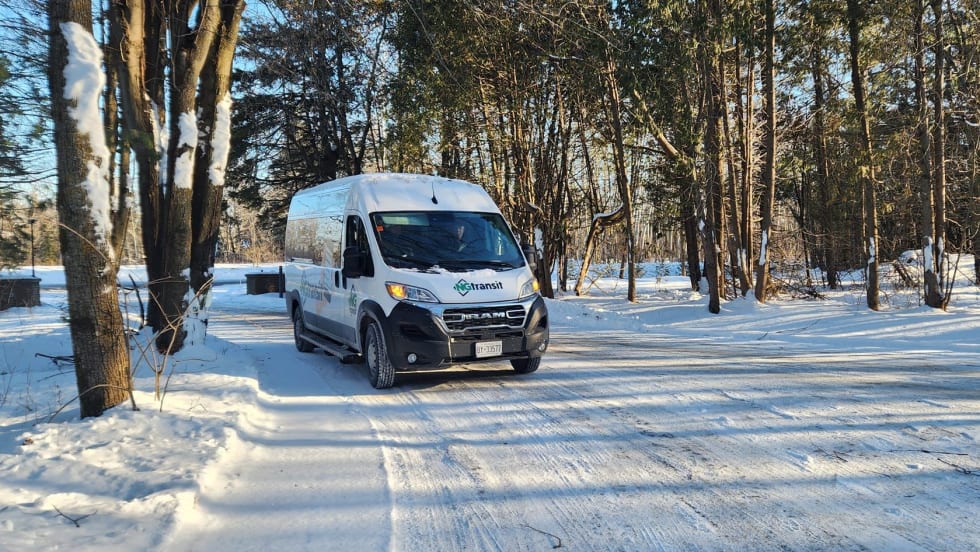
Right-Sizing Rural Transit: Lessons from North Grenville’s On-Demand Model
A small municipality shows how flexible service, rider needs, and public accountability can expand mobility with limited resources.
Read More →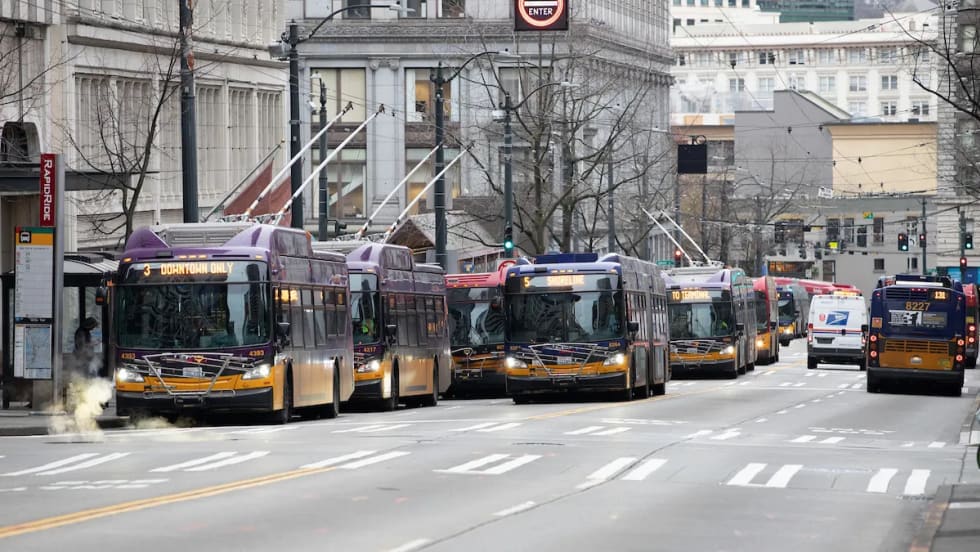
Transit Ballot Victories Signal Strong Voter Support: What Comes Next?
Voters approved billions in public transportation investments in 2026, giving agencies opportunities to preserve service, expand operations, and strengthen regional connections amid a changing political landscape.
Read More →
Transit Expands Agency Partnerships, Reaching 200 Official App Partners
COO Jake Sion discusses Transit’s growth, the success of its Transit Royale program, and how technology is helping agencies improve the rider experience.
Read More →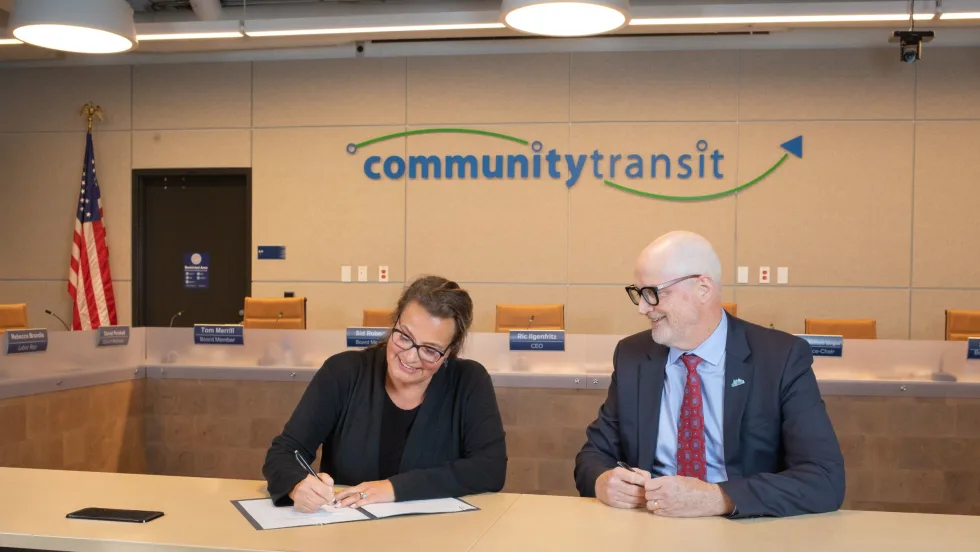
Everett Transit, Community Transit Approve Consolidation of Services
The agreement will bring Everett Transit into Community Transit’s network in April 2027, with plans to increase bus service by 50% by 2031 and expand regional connections.
Read More →
NITA Proposes $5B Operating Budget, $9.7B Capital Program for 2027
The proposed budget includes funding for expanded transit service, safety initiatives, fleet upgrades, and infrastructure improvements across CTA, Metra, and Pace.
Read More →
Financing, Fleet Replacement Requires a More Strategic Approach
Executives from ABC Companies and MCI discuss how rising costs, changing market conditions, and post-pandemic challenges are prompting motorcoach operators to rethink financing strategies, fleet replacement cycles, and long-term planning.
Read More →
Bringing Austin’s First Light Rail System to Life
Austin Transit Partnership CEO Greg Canally discusses the city's nearly 10-mile light rail project, its collaborative approach to project delivery, the importance of community engagement, and the milestones ahead as construction approaches in 2027.
Read More →
ETA CEO John Maglio on Transit Technology, Innovation, and Building Agency Trust
ETA founder and CEO John Maglio explores the evolution of transit technology, the importance of reliable systems, and how stronger partnerships can help agencies improve operations and the passenger experience.
Read More →
Metra Draft Plan Outlines Costs, Service Improvements for Regional Rail
The Systemwide Network Plan identifies infrastructure needs and potential investments to expand all-day, bidirectional rail service across the Chicago region.
Read More →
New Orleans RTA Names Augustine III as New CEO
In this edition, we also spotlight recent personnel moves at HDR, PATH, STV, and more, highlighting the people taking on new roles across the transportation industry.
Read More →