



Environmental Justice: A Holistic, Integrated Approach to Advance Equity in Transportation
Today, advancing new transportation infrastructure requires that everyone involved understand our collective history and work to avoid mistakes of the past.
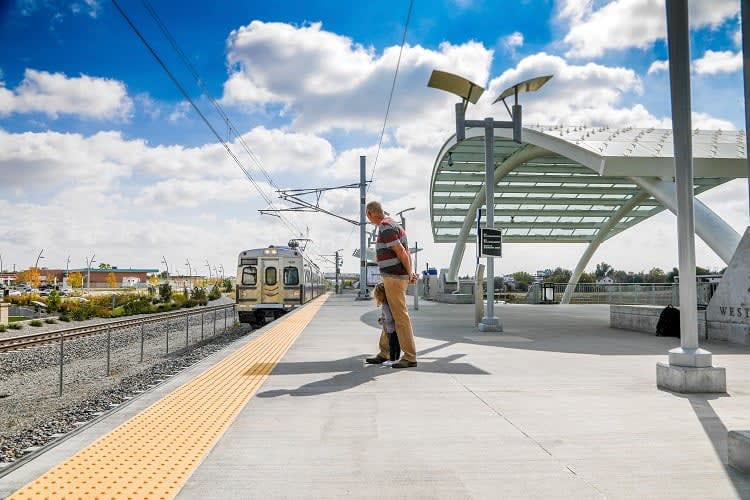
A new or updated transit infrastructure project can improve community well-being by providing equity through access to education, healthcare, essential employment, and more.
HDR
As communities across the U.S. developed in the post-World World II era, transportation infrastructure created divides in many communities that remain today. Major transit systems built prior to the National Environmental Policy Act becoming law in 1970, and particularly prior to the advent of environmental justice in 1994, often separated communities or displaced lower-income residents and businesses. In many cases, underserved and underrepresented communities, those who needed public transportation most, were impacted significantly. And it was often due to the fact that they did not have a seat at the table or were not represented in the decision-making process.
Today, advancing new transportation infrastructure requires that everyone involved understand our collective history and work to avoid mistakes of the past. With many communities in the U.S. in the middle of a reckoning on equity issues, people are asking civic leaders to view their infrastructure and funding priorities through an equity lens. This is most critical for public transportation, which is at the heart of leveling a community’s playing field and ensuring equity through access to economic opportunities, essential needs, and services.
An equitable public transportation system ensures that communities will evolve, grow successfully, and continue to sustain their quality of life for generations to come. This requires understanding the needs of the communities for whom a system is being built.
A holistic environmental justice approach involves a partnership between project sponsors and communities and their leaders to better comprehend the issues of the past, their impact on current perceptions, and how best to collaborate on solutions that do not repeat wrongdoings.
Avoiding past mistakes
A new or updated transit infrastructure project can improve community well-being by providing equity through access to education, healthcare, essential employment, food, and other critical human needs. Or, it can leave behind a community that is already underserved or underrepresented, reinforcing historical inequities.
The environmental justice process is intended to ensure fair treatment and meaningful involvement of all people, regardless of race, ethnicity, origin, or income, in project development and implementation. It is much more than just a part of the NEPA process. It should be at the core of a project’s framework to make sure public leaders, owners, developers, designers, and all those engaged in the development and implementation process understand who the project burdens and benefits.
Elevating voices
Those engaged in advancing projects have an opportunity and a responsibility to improve the quality of life for broad swaths of people. It is not enough to conclude that a project burdens or benefits anyone; environmental justice considers if there are disproportionately high and adverse project burdens or denial of benefits to those who may not historically have been represented in the process.
By facilitating an effective two-way dialogue that is authentic to each community, members of the target audience are more likely to feel comfortable expressing their concerns and their needs, and we as facilitators are better able to elevate voices that might have otherwise been ignored throughout project development. As a result, both potential burdens and benefits can be better understood for everyone’s benefit, creating a better project.
An effective environmental justice effort embodies three key principles: Start early. Listen to people. Respect culture.

An equitable public transportation system ensures that communities will evolve, grow successfully, and continue to sustain their quality of life for generations to come.
HDR
Start early
Environmental justice is most impactful when it is applied to the decision-making process from the beginning. Often, a project is launched prior to incorporating input from affected communities. Once the project is in motion, it is almost too late — environmental justice becomes about mitigating damage rather than finding beneficial and inclusive solutions.
Incorporating environmental justice principles should start with the initial long-term planning efforts, when a blank slate means there are no predetermined solutions to transportation problems. Engage directly with underserved and underrepresented communities from the start and go directly to them rather than ask them to come to you to get basic but critically valuable information such as:
How do you travel now?
What is important to you?
What improvements would you like to see?
Gathering early insights can help to frame transportation plans.
Public transportation agencies generally have public participation plans and procedures in place to comply with Title VI of the Civil Rights Act, which prohibits discrimination on the basis of race, color, and national origin in programs and activities receiving federal financial assistance. These procedures can form the roadmap for the outreach conducted by project sponsors and their partners.
As projects advance, early outreach and engagement with communities might reveal that anticipated project benefits wouldn’t be available to everyone or that additional project elements are necessary to offset potential burdens. For example, a proposed transit station might not be accessible by bicycle because of the condition of nearby roads or connecting bus routes do not link employment locations to potential workers.
An outreach plan will help identify all interested, impacted, influential, and invisible audiences; assess their needs and concerns early in the process; establish clear and effective communications tools and tactics; and implement timely engagement to build awareness. Seeking informed input and ultimately understanding and support will bridge the communication and relational divide between owner agencies and their constituents.
Listen to people with respect
It is imperative to gather substantive community feedback. This both creates a more successful project and allows the community to understand how to spend money thoughtfully, wisely, and equitably. This kind of engagement doesn’t come from a typical public meeting. It comes from a strategic engagement and analysis effort based on inclusion and collaboration. Here are a few considerations and tips based on our experience in communities across the U.S.:
The heart of a successful outreach and engagement program is to go to people where they are. Make it easy for them to engage and provide feedback; don’t force people to choose between dinner with their family and contributing to your project. Try to mitigate barriers to attending events such as a potential lack of childcare.
Understand your audience — how do they engage and communicate? Where do they get their information? Who do they trust? Identify and use trusted communications tools and methods to open the conversation. Good places to start include community leaders, both formal and informal; alternative and ethnic media outlets; community service organizations; faith-based organizations; schools; and public events.
It is imperative that all communications, materials, and presentations or engagement opportunities are accessible. This means communications are produced in languages the audience understands and are easily accessible for those with physical disabilities. It also means considering audiences who do not have access to technology. Effectively reaching your target audiences can include both traditional boots-on-the-ground outreach along with digital tools that offer convenient options for people to become informed and provide valuable input.
Specific outreach strategies may look different for different demographics. In some neighborhoods, the best places to go are farmer’s markets, swap meets, or the local grocery mart. For others, going to senior centers, bingo nights, and school districts to help reach multicultural and generational audiences may work. Advertisements, promotions, and public service announcements within ethnic media provide direct links while business, civic, and residential organizations offer a chance to use established mediums for presentations or information distribution via newsletter.
Partner with local community-based organizations and potentially even hire them to help gather information. Trusted community resources with deep roots within the community can aid in creating a deeper connection to the community. They can become the voice of the project, initiative, or program as well as relay concerns that the community doesn’t feel comfortable conveying to a planning agency. There is no better way to deliver project messaging then through community ambassadors talking about a project.
Formalize feedback and contributions by establishing community liaison groups or committees made up of diverse representatives of the community. These committees come together at critical milestones in the planning process to learn about the project, share information and ideas, and identify issues and concerns so they can be addressed within the process and shared back out to members. This level of engagement takes time and monetary resources, but can prove to be the most effective way of obtaining informed consent and support while reducing social and political risks.
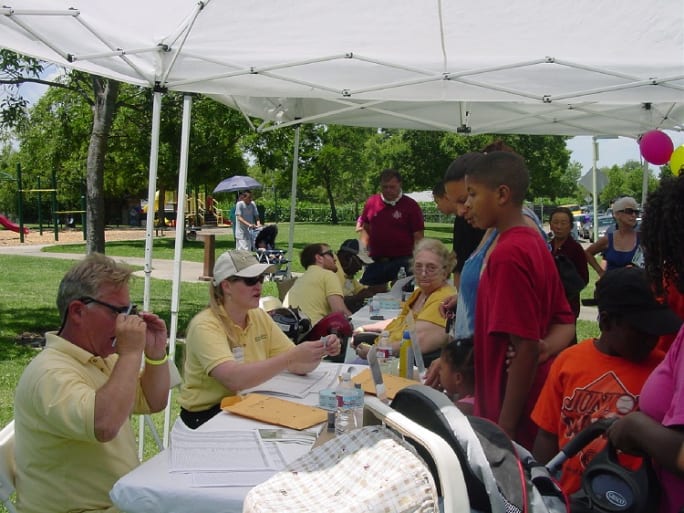
By facilitating an effective two-way dialogue that is authentic to each community, members of the target audience are more likely to feel comfortable expressing their concerns.
HDR
Outreach is still possible
In a pandemic and other major events, it is even more critical than ever to be relevant, to understand the audience, and to be sensitive to their needs while still continuing to engage them in planning for their future mobility and way of life.
This is a delicate time in transportation planning. In some parts of the U.S., governmental or public agency distrust and political polarization is at an all-time high, and health mandates restrict our ability to engage safely in person. However, by retooling our traditional methods and deploying virtual tactics with equity in mind, we can still seek valuable participation and engagement in infrastructure projects.
Crossing the digital or technological divide might mean partnering with schools or community centers that are offering essential services to provide access to computers, tablets, or other smart devices for internet access. Making online virtual meetings mobile-friendly or live streamed on social media can help engage multi-generational, low-income, or culturally diverse residents. Leveraging tools like telephone townhalls can help engage hard-to-reach communities.
Getting creative to grab attention in a time when the public is focused on survival, job security, and health risks, is challenging. Translating messages into visual format like video, infographics, and animation helps people quickly learn about a project. Look for ways to push that visual content out to the masses to reach all audiences; consider multiple tactics including traditional media, social media, and direct mail. One newer option is to utilize postcard mailers that include direct website links to project videos.
Build trust, elevate the community
An equitable transportation solution benefits the lives of as many people as possible, including those who need it most. Communities will lose trust in civic leadership if their concerns are not incorporated early in the process and it can take years to rebuild that trust. Advancing a project through an environmental justice lens provides not only a defensible environmental review but helps to develop a better project that elevates the community.
Equally important is that we embrace the opportunity to enhance quality of life by respecting all people at the core of the process, those who may be affected the most, to uncover solutions that bring the most value and create stronger, more resilient communities such that the community helps to shape the infrastructure rather than the other way around.
That is exactly the heart of environmental justice.
Janet Gonzalez Tudor, is director, transportation operational resiliency; Cathy LaFata is a sr. transportation planning manager; and Kim Pallari is director of strategic communications for transportation, at HDR.
More Management

METRO Opens Submissions for 2026 Motorcoach Awards
Nominations are now being accepted for METRO Magazine’s Operator of the Year and Innovative Operator of the Year awards.
Read More →
New York MTA Advances Final Contract for Second Avenue Subway Expansion
Contract Four is the largest in the Second Avenue Subway Phase 2 project and includes construction of station infrastructure, tracks, and signals for the subway expansion, MTA officials said. Work on Contract Four will begin in 2027.
Read More →
Transit Agencies Highlight Safety Gains at National Summit
Leaders from 15 major transit systems shared crime-reduction results and safety initiatives while discussing the role of continued federal support.
Read More →

NITA Names New Leadership, Expands Reduced-Fare Program at First Board Meeting
The new regional transit authority appointed its first board chair and interim executive director while extending reduced fares across CTA, Metra, and Pace for eligible riders.
Read More →
Beyond the Checklist: A Structured Approach to Transit Maintenance
Reliability-Centered Maintenance helps transit agencies move beyond routine checklists to focus limited resources on the assets and failures that have the greatest impact on safety, reliability, and service.
Read More →
APTA 2026 Nominating Committee Selects Leadership Slate, Names Chair and Vice Chair Nominees
Leadership changes will help shape the association’s priorities and its representation of the transportation industry during the 2026–2027 term.
Read More →
DART Launches Major Security, Fare Enforcement Initiative
The 90-day demonstration will deploy coordinated security teams at five light rail stations while testing controlled access and gathering data to guide future investments.
Read More →
Advancing Fare Collection Through Technology and Innovation
Learn about delivering 1300 gates at 91 stations while managing fare evasion. Explore the large scale deployment, solution customization and real-world results that affect the region. Prepare for deployment in your region now.
Read More →
Game Day in Motion: Moving Millions During the 2026 World Cup
Between packed transit stations and team motorcoaches, see how agencies and operators across North America tackled the transportation demands of the 2026 FIFA World Cup.
Read More →
Surface Transportation Extension Averts Shutdown, Leaves Transit Funding Gap
The stopgap keeps federal transportation programs moving, but missing advance funding could complicate the transit and rail projects agencies are planning next.
Read More →