



How Agencies Are Improving Rail Accessibility
It’s been a long time coming. Transit agencies are now receiving the necessary funding and here’s a look at their respective journeys to repair age-old infrastructure.

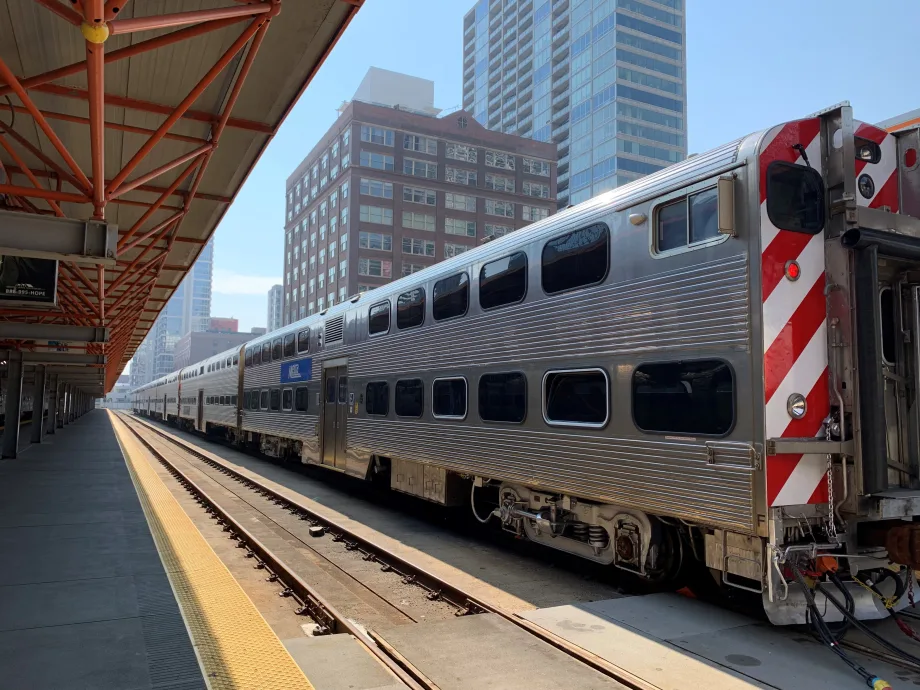
In Metra’s current five-year capital program or previous programs, station renovations and/or design work will make 20 more stations fully accessible.
Photo: Metra
Metra, the New York Metropolitan Transportation Authority, and Chicago Transit Authority (CTA) are a few examples of transit agencies doing their part to make rail stations more accessible.
The focus to improve rail accessibility dates back to 1990 when the Americans with Disabilities Act (ADA) was passed. The ADA prohibits discrimination and ensures equal opportunity and access for persons with disabilities.
More than 30 years later, the Bipartisan Infrastructure Law established a new All Stations Accessibility Program (ASAP) to provide federal competitive grants to assist eligible entities in financing capital projects to upgrade the accessibility of rail fixed guideway public transportation systems for people with disabilities.
The Federal Transit Administration (FTA) then announced 15 grants in nine states to help make it easier for people with disabilities and mobility needs to access rail transit systems through upgrades, such as elevators.
Funded by President Biden's Bipartisan Infrastructure Law, the approximately $686M in grants represents the first round of funding from the ASAP.
This indicates there is more focus on improving accessibility at rail stations.
The Spotlight on Metra
Chicago’s Metra is one of the many agencies actively working to improve accessibility.
The agency announced in April that its board approved a contract of up to $20 million to purchase video monitors that will be installed at every station to provide up-to-the-minute travel information to customers from its new train tracking and communications system.
Metra currently has 185 fully accessible stations, 13 partially accessible stations, and 44 inaccessible stations.
“One of the priorities of our capital program each year is to set aside funding for making the remaining inaccessible stations accessible,” said Michael Gillis, director, communications, at Metra. “We did prioritize making the busiest stations accessible, and at this point, 96% of all systemwide boardings occur at accessible stations. We also made all our trains accessible. “
Many of the remaining inaccessible stations are along the Metra Electric Line, the sole line in the Metra system that is elevated above roadways along its entire route. Other inaccessible stations are similarly elevated, according to Gillis.
“It’s expensive to make elevated stations accessible, as it requires elevators or ramps or both, and due to the tight spaces available within the existing infrastructure,” Gillis said. “Other work to make stations accessible are audio and visual related, tactile strips, ADA parking (if parking is provided), etc.”
In Metra’s current five-year capital program or previous programs, station renovations and/or design work will make 20 more stations fully accessible, including 10 on the Metra Electric Line.
Gillis added that the agency is building two new stations that will be fully ADA-accessible, and they should be open within two years.
“To fund this work, we rely on a mix of local, state, and federal subsidies. That funding is mostly allocated by formulas,” Gillis said. “We get a predetermined percentage of whatever funding is available from the RTA, Springfield, and Washington each year, but we did apply for and receive two significant federal discretionary grants to help fund a major part of the work at two stations.”
The grants to help fund the work came from the FTA’s ASAP:
$37.6M to renovate and make ADA accessible to 59th-60th St./University of Chicago Station on the Metra Electric Line.
$29M to renovate and make ADA accessible to 95th St./Chicago State University Station on the Metra Electric Line.
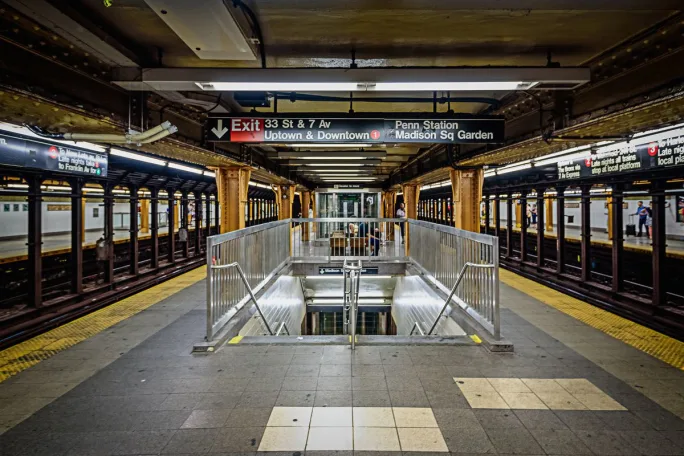
New York MTA has committed to making the NYC Subway 95% accessible.
Photo: New York MTA
Rail Accessibility Projects Being Funded
The FTA’s ASAP Is funding the following recent projects:
Connecticut Department of Transportation: The agency will receive funding to retrofit three stations on its Metro-North Railroad Waterbury Branch commuter rail line, which provides service to New York City, to make them fully accessible to passengers with disabilities.
Northeast Illinois Regional Commuter Railroad Corporation: Metra, will receive funding to improve its 95th Street-Chicago State University station to make it fully ADA accessible, allowing safe and convenient travel.
It will also receive funding to improve its 59th/60th Street Station on the Metra Electric line to improve accessibility and accommodate new riders from the University of Chicago expansion.
Chicago Transit Authority: The CTA will receive funding to modernize its Irving Park, Belmont, and Pulaski stations to make them fully ADA accessible and provide safe and convenient travel to all users.
Massachusetts Bay Transportation Authority: The MBTA will receive funding to retrofit an 80-year-old light rail station with elevators, improved pathways, lighting features, and raised platforms for accessible boarding.
Maryland Department of Transportation/Maryland Transit Administration: The agency will receive funding to develop plans and complete environmental work for the future renovation of the Martin Airport station on its Penn commuter rail line to make it safer and fully accessible.
Metropolitan Transportation Authority: The New York MTA will receive funding to make its Myrtle Avenue, Norwood Avenue, and Avenue I subway stations in Brooklyn and the Burnside Avenue subway station in the Bronx fully ADA accessible, allowing safe and convenient travel to and through the stations.
Along with the City of Seattle, agencies receiving funding include the Southeastern Pennsylvania Transportation Authority, Pittsburgh Regional Transit, Greater Cleveland Regional Transit Authority, Port Authority Trans-Hudson Corporation, and New Jersey Transit Corporation.
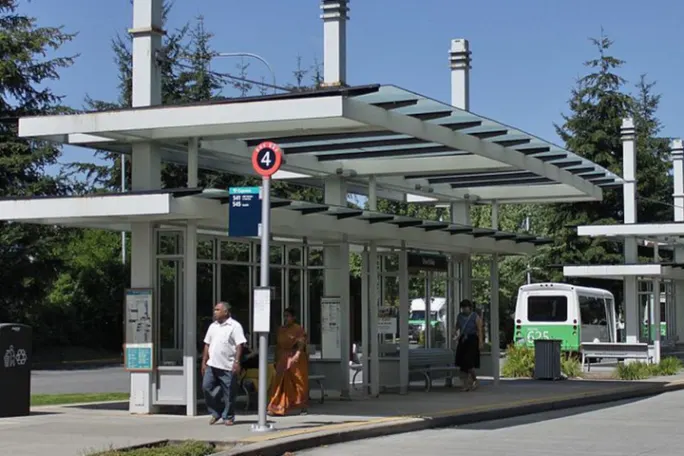
The future of rail station improvements is bright in Chicago, as the CTA also announced that 29 rail stations will receive repairs and improvements in 2023.
Photo: CTA
Furthering Rail Accessibility Across the U.S.
New York MTA has committed to making the NYC Subway 95% accessible, and in February, it announced the 17 stations scheduled for contract award in 2023.
The 2020-2024 Capital Program is the most ambitious accessibility program in MTA history, according to the agency, with $5.2B to make 67 stations accessible.
In May, the agency detailed a phased rollout of subway service enhancements, which are expected to begin in the summer.
With the passage of the FY 2024 New York State Budget, the MTA will receive an additional $35M for subway service enhancements. These planned enhancements will start with the first phase in July 2023, with the fourth phase expected to be implemented in July 2024.
New York MTA recently announced crews have completed the renovation of the 21 St-Queensbridge F subway station.
With 13 station “re-NEW-vations” announced for Q2 2023, NYC Transit is on track to complete 34 stations by the end of June, with a goal of 50 re-NEW-vated stations by the end of 2023. So far in 2023, NYC Transit has completed 17 re-NEW-vations.
As construction continues at previously awarded stations, the New York MTA also projected that accessibility upgrades will open at 12 new stations in 2023.
Meanwhile, rail accessibility is improving in Chicago.
The CTA announced in February it will soon begin a renovation of the Racine Blue Line station, which includes the addition of an elevator and other improvements to make the station fully accessible. This is one of the projects to advance as part of the CTA’s ASAP.
The Chicago Transit Board approved the awarding of a contract not to exceed $75.4M to FH Paschen, S.N. Nielsen & Associates LLC, following a competitive procurement process.
The future of rail station improvements is bright in Chicago, as the CTA also announced that 29 rail stations will receive repairs and improvements in 2023 as part of its ongoing station improvement program Refresh & Renew, an initiative of the “Meeting the Moment” Action Plan.
From Seattle to Chicago to New York, agencies are receiving funding to improve rail stations and their projects are progressing in part to the focus on accessibility by both transit agencies and their local, state, and federal funding partners.
More Rail
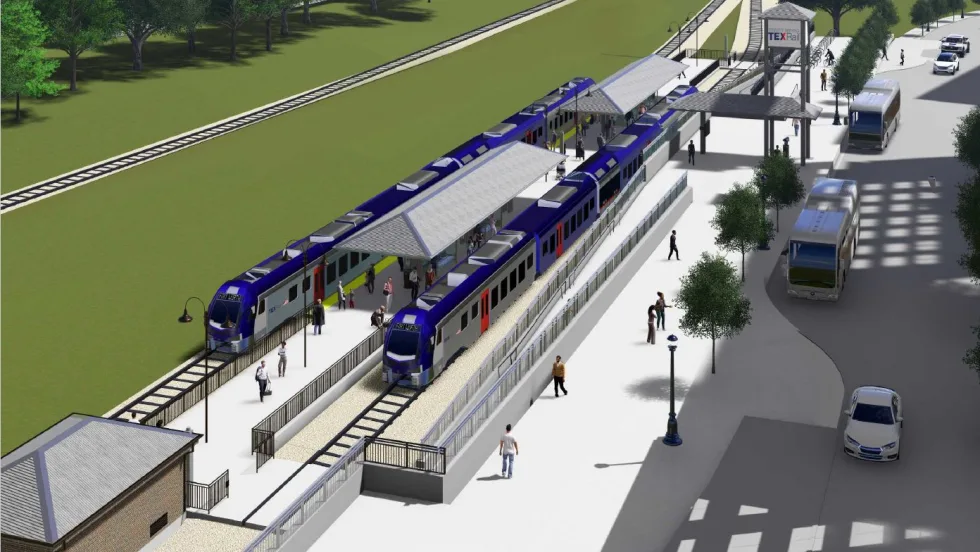
Trinity Metro Breaks Ground on $270M TEXRail Extension
The 2.1-mile extension will connect Fort Worth’s Medical District and Near Southside to downtown, surrounding communities, and Dallas-Fort Worth International Airport.
Read More →
Bringing Austin’s First Light Rail System to Life
Austin Transit Partnership CEO Greg Canally discusses the city's nearly 10-mile light rail project, its collaborative approach to project delivery, the importance of community engagement, and the milestones ahead as construction approaches in 2027.
Read More →
Metra Draft Plan Outlines Costs, Service Improvements for Regional Rail
The Systemwide Network Plan identifies infrastructure needs and potential investments to expand all-day, bidirectional rail service across the Chicago region.
Read More →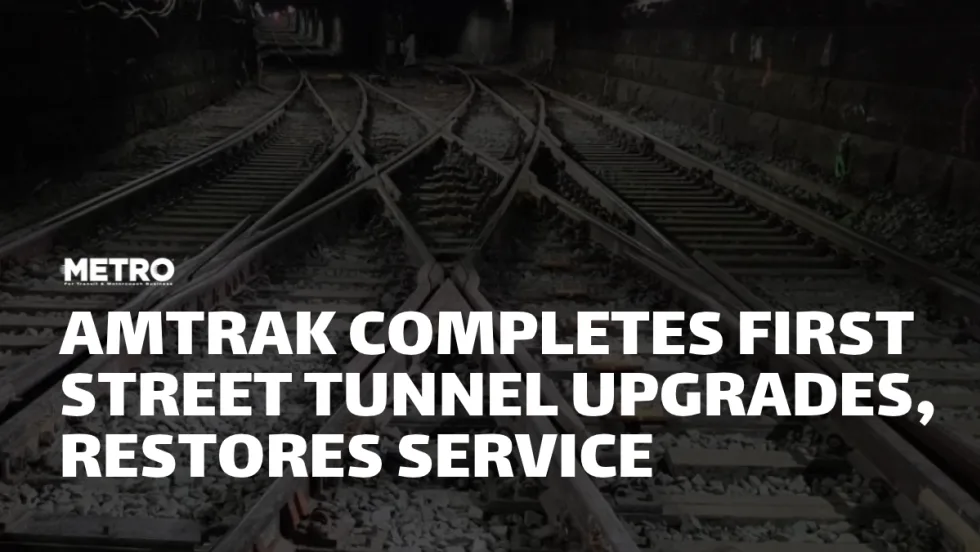
Amtrak Completes First Street Tunnel Upgrades, Restores Service
The nine-day construction project included replacing aging track infrastructure and modernizing switch systems near Washington Union Station.
Read More →
FRA Announces $2.3B for Passenger, Freight Rail Projects Nationwide
The CRISI Grant Program funding will support rail infrastructure improvements, safety upgrades, and projects aimed at improving freight and passenger rail service across 45 states and Washington, D.C.
Read More →
Caltrain’s Electrification Drives a New Era of Ridership Growth
The railroad’s shift to electric service has brought more frequent trains, stronger customer satisfaction, and increased ridership, earning it APTA’s Outstanding Public Transportation System award.
Read More →
FTA Advances $164M Broward County Commuter Rail Project
The proposed 10.5-mile commuter rail extension would connect Fort Lauderdale and Aventura, expanding passenger rail options in South Florida.
Read More →
New York MTA Launches Historic $1.9B Signal, Track Modernization Project
Funded in part by congestion pricing revenue, the project will replace nearly century-old signals along the A and C lines in Brooklyn and Queens.
Read More →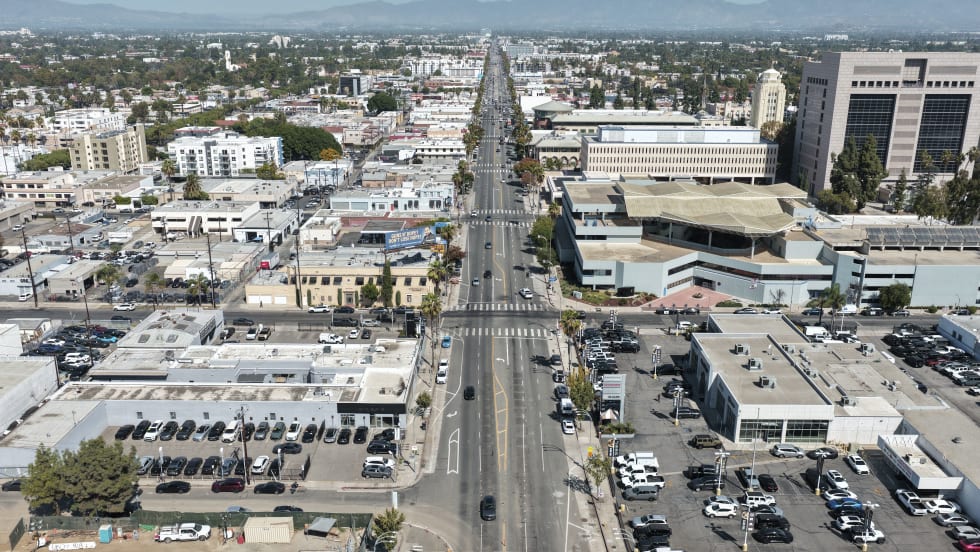
LA Metro Breaks Ground on East San Fernando Valley Light Rail Project
The 6.7-mile line will add 11 stations along Van Nuys Boulevard, expand access to jobs and regional transit connections, and support Metro’s broader efforts to improve mobility as rail ridership grows.
Read More →
CSA Group Releases Climate Resilience Standard for Transit, Passenger Rail
Developed with support from the Standards Council of Canada, CSA D700 guides assessing climate-related risks and planning adaptation measures for transit and passenger rail systems.
Read More →