How Small Cities Can Optimize Transit to Support Sporting Events, Holiday Crowds
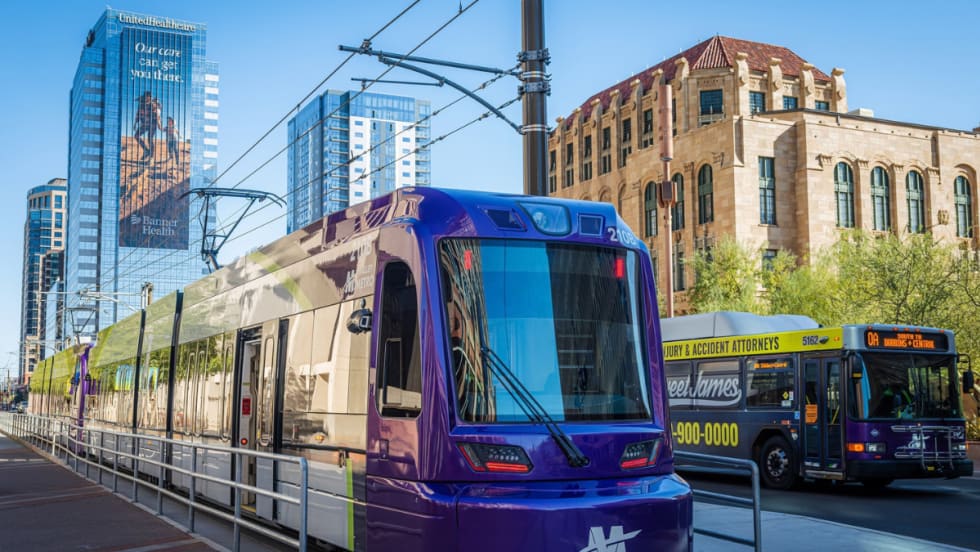
Compared to regular transit service planning, services for special events pose a unique set of challenges to cities of smaller sizes, as well as service providers because they’re non-recurring events without a predictable transit demand.
by Konstantin Spasov
December 20, 2023
Diverting people from their cars and getting them to use public transit when there’s an event happening in town can be difficult.
Photo: San Joaquin RTD
7 min to read
Special events like sports games, concerts, festivals, and holiday celebrations are important for transit providers as they often lead to fundamentally different ridership patterns, bringing in significant fare revenues for agencies. These events can serve as a catalyst for attracting new groups of non-regular riders, presenting a distinctive opportunity to market an agency’s services to a larger community.
The challenges with accommodating special events come down to handling an influx of large crowds, which cause surges in demand for transportation as well as heavy traffic and congestion on roads.
Ad Loading...
Compared to regular transit service planning, services for special events pose a unique set of challenges to cities of smaller sizes, as well as service providers because they’re non-recurring events without a predictable transit demand. These special events often lead to increased emissions, overcrowding in transit systems, and a lot of frustration and bad customer experience. This can be particularly true for smaller cities that struggle to meet this increase in demand and capacity.
It’s crucial that city officials and transit providers understand the impact of such events and how to effectively collaborate with the help of new transit technologies and services on potential ways to mitigate disruptions, delays, and negative impacts on the environment and fare revenues.
Digital Solutions for Special Events
Public transit providers can better support traffic surges during special events by implementing more efficient technologies to increase ridership, improve traffic congestion, conserve energy, and reduce pollution and carbon emissions caused by these types of events.
The goal is to ensure that systems operate smoothly and efficiently, the waiting times are reasonable, and vehicles are not too crowded to maintain a satisfactory user experience and attract additional recurring ridership.
Bus and light-rail services are often crucial for special event management, as they can carry large passenger loads, as well as remove a substantial number of vehicles from the road. By implementing a smarter approach to mobility, fare collection, and planning during special events, agencies and cities of small sizes can achieve great results in handling larger crowds. Passengers on their end want an efficient, technology-driven fare payment and ticketing experience that’s seamless.
Ad Loading...
The challenges with accommodating special events come down to handling an influx of large crowds, which cause surges in demand for transportation as well as heavy traffic and congestion on roads.
Photo: KCATA
How Smart Tech can Modernize Fare, Collection Infrastructure
In recent decades, modern fare collection systems have played a fundamental role in making public transit more accessible, affordable, efficient, and convenient for the general public.
An account-based, automatic fare collection system provides agencies with a straightforward process when it comes to the purchasing and validation of fare media. Different passengers have different needs and preferences, so agencies need to provide different options to attract new riders as well as improve procedures for current ones. For example, some passengers might prefer to use their smartphones, while others are used to their smart cards.
AFC (automatic fare collection) systems typically come with a feature-rich, user-friendly back office where the agency can seamlessly adjust fares, monitor ridership, and receive reports.
Passengers who have an existing account with a transit agency can choose their preferred validation media, or even a combination of several types, so that they can tailor their journey in accordance with their needs. Riders can simply reload their accounts with funds and use them for validation.
Account-based fare collection further enables the use of contactless validations and innovative fare policies, which open the door to a new realm of opportunities for agencies who are looking to digitize legacy systems and move into newer and smarter fare collection systems.
Ad Loading...
Building A Network with Real-Time Information and More
Diverting people from their cars and getting them to use public transit when there’s an event happening in town can be difficult.
For smaller cities, this can mean heavily congested roads filled with cars and people trying to reach the event or everyone sprinting toward transit stops leading to overcrowded stations, transit vehicles, and a lot of frustration and chaos.
AFC systems have the potential to fundamentally reshape the way transit agencies operate, as well as how they handle and apply data with the help of technology, improving their readiness to adapt, and meet the evolving needs of passengers, as well as enhance their capabilities of successfully accommodating any type of event.
Since automated fare collection systems remove the need for cash and human interaction from the boarding process, this can significantly speed up boarding in case of large crowds and events, meaning there will be less dwell times and more punctual services as a result.
Also, by implementing a comprehensive mobility solution, agencies can benefit from technologies, such as AVL (Automatic Vehicle Location) systems, which have become an indispensable component of any modern transit agency.
Ad Loading...
AVL technology can be applied for the tracking of vehicles in real-time, logging on-time performance in reporting, or aiding computer-aided dispatch (CAD) operations. Additionally, AVL can be used to inform Real-time Passenger Information (RTPI) systems about arrival and departure times which can be displayed at transit stops, or through mobile apps.
The goal is to ensure that systems operate smoothly and efficiently, the waiting times are reasonable, and vehicles are not too crowded to maintain a satisfactory user experience and attract additional recurring ridership.
Photo: Sun Metro
Using Data, Analytics to Create More Inclusive Transit Systems
A comprehensive and integrated urban mobility system provides critical insights regarding usage, including historical GPS data on vehicles, along with sales and validation data.
This information can be leveraged by agencies to adjust schedules and routes in real-time, further optimizing the system’s operational costs, as well as making sure they provide the best services and fares possible to their customers. This includes fares based on distance and time calculations, which improves inclusivity of transportation services, making them more accessible to all members of society.
By offering the best available fares, agencies can attract new groups of travelers who were previously reluctant to use public transportation due to its cost or inconvenience.
Allocating Services to Where They are Needed Most
The analytics and reports from sophisticated AFC systems add additional value for agencies by ensuring there is transit service in all of the areas that need it most. This can further boost efficiency in operations as it will be possible to tailor routes according to passenger needs, as well as improve and adjust schedules in real-time during special events to meet potential increases in demand and capacity.
Ad Loading...
Another benefit that comes from the increase in efficiency centers around the reduction in fuel usage, additional cost savings and a significant decrease in CO2 emissions.
An integrated approach is considered one of the best solutions for optimizing transit services in small cities. Establishing an ecosystem of CAD, AVL, fare collection, and micromobility solutions based on usage insights can drastically improve public transportation systems' performance and user satisfaction rates.
Streamlining Fare Purchase, Enhancing the User Experience
Automated fare collection systems allow agencies to effectively reduce their spending on disposable fare media. In the case of smart cards, they can be reused and last a long time, which is better for the environment.
Furthermore, thanks to mobile ticketing and contactless payments, the need for physical fare media can be eliminated, enabling riders to gain access to transportation services through fares on their phone or by using a contactless card to purchase a fare and validate it at the same time. This makes the entire process of traveling more streamlined and seamless, with user experience being drastically improved.
The environmental impact that comes as a result of removing physical tickets from transit altogether can be substantial in an event of any size, which can generate a long paper trail of disposable tickets that will be used just once.
Ad Loading...
Scaling AFC Systems
Another important feature of modern automatic fare collection systems is their scalability, meaning transit agencies have the opportunity to scale without having to make huge investments in new technologies. They can essentially be used in any city operating public transit, regardless of whether the provider has several or hundreds of vehicles in operation. This can accelerate the transition to more sustainable models that go beyond public transportation and can be used to create a MaaS (Mobility as a Service) infrastructure to support a city’s development and decarbonization efforts.
The future of transportation in urban areas is gradually turning toward smarter, more digitized, and sustainable practices with the help of innovations in technology and various trends in the smart mobility sector.
We’re sure to see many exciting developments in the years to come as cities of all sizes take advantage of the numerous opportunities that come from upgrading their public transportation networks. As a result, we can expect cities with intelligent transportation ecosystems that thrive on sustainable practices as well as improved mobility for all residents to enjoy special events in their community.
About the Author: Konstantin Spasov is VP of Modeshift, a technology company bringing intelligent transportation to small- and mid-size transit agencies.
Dr. Carol Parker Walsh discusses leadership development, employee retention, workplace culture, and preparing transit’s workforce for AI and automation.
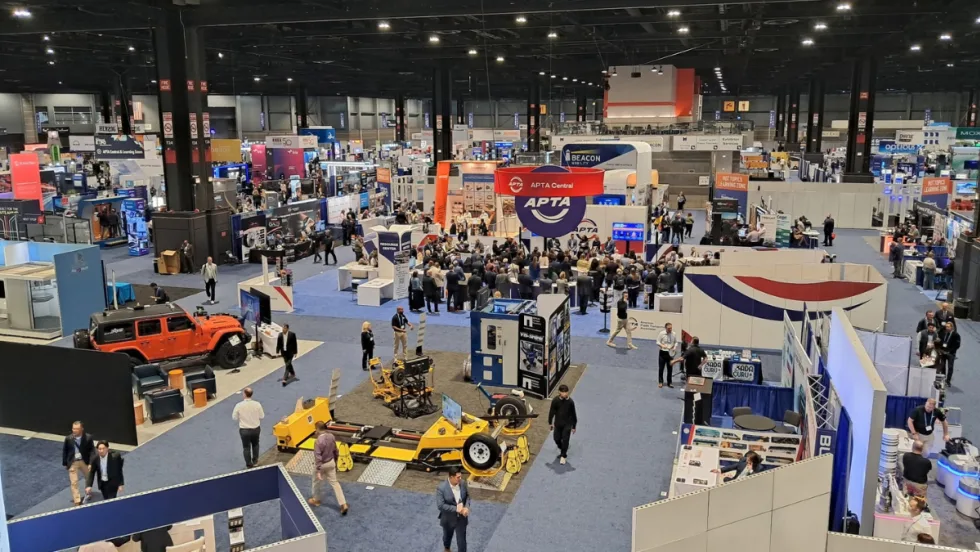
After 45 years, APTA returns to Chicago with a focus on next-generation fleets, AI, connected transit networks, and the funding strategies shaping public transportation’s future.
The agency said tariffs on specialized imported components could reduce the purchasing power of its $23 billion investment in new subway cars, railcars, and buses.
Follow the latest product launches, partnerships, technology updates, and transit industry announcements coming out of APTA TRANSform & EXPO in Chicago.
The APTA award-winning agency is pairing rapid system expansion with investments in workforce, safety, technology, and the fundamentals of transit service.
In this episode of Bus Tech Talk, Complete Coach Works’ Business Development Manager Mark Hollenbeck and METRO’s Executive Editor Alex Roman sit down with Obed Mejia, Senior Technical Trainer for Bus Maintenance, at LA Metro to discuss how rapidly evolving bus technology is changing the maintenance shop — and the skills technicians need to keep pace.
The longtime transportation executive will help Paslay Group grow its advisory and program management work across transit, highway, and other infrastructure sectors.
In this edition, we also spotlight recent personnel moves at Burns, UZURV, and more, highlighting the people taking on new roles across the transportation industry.
The Delaware River Port Authority and PATCO have transformed their internship program into a hands-on professional development experience that introduces students to the breadth of transportation careers — and creates a pipeline for future employees.
The contract, which is the largest base award of battery-electric buses by a U.S. transit agency, will be built in Southern California, sustaining good jobs as LA prepares to welcome the world in 2028