Statewide Procurement: Simplifying Zero-Emission Bus Purchasing
As the industry landscape changes with new technology innovations in propulsion systems, software developments, and what “transit service” means, another aspect of the overall ecosystem has evolved: contract purchasing of zero-emission buses.
by Jared Schnader and Hannah Hamilton
October 7, 2020
Zero-emission bus statewide contracts (synonymous with state cooperative purchase contract) have been released or are underway in California, Georgia, Virginia, and the state of Washington.
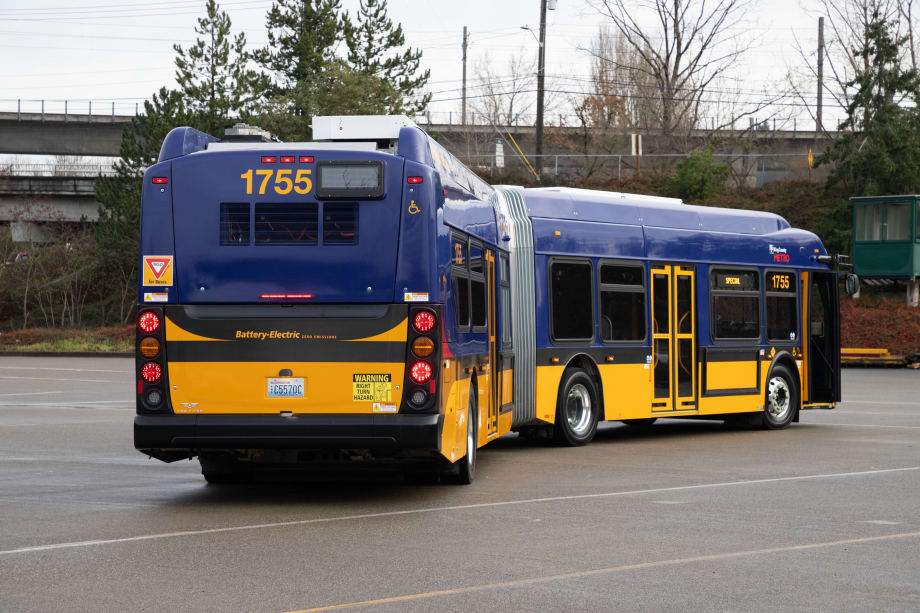
Credit:
New Flyer
4 min to read
Contract development for the purchase of new vehicles is time and resource demanding, and with advances in zero-emission bus technology, these new technologies further attenuate resources. Couple this with the incremental costs for the asset over conventional technologies and the task of procurement can become daunting.
As the transit industry landscape changes with new technology innovations in propulsion systems, software developments, and what “transit service” means, another aspect of the overall ecosystem has evolved: contract purchasing of zero-emission buses. This development has brought about greater price transparency, stronger buying power, and an enormous savings in time and energy for transit agencies attempting to purchase vehicles.
Ad Loading...
Stepping In to Help
Zero-emission bus statewide contracts (synonymous with state cooperative purchase contract) have been released or are underway by California’s Department of General Services (DGS), Georgia’s Department of Administrative Services (DOAS), Virginia’s Department of General Services (DGS) and Washington state’s Department of Enterprise Services (DES).
For the purposes of this article, the four different state agencies will be generally referred to as the “contracting agencies.”
If you are unfamiliar with statewide contracts, here’s what you need to know:
The procurement process is completed by a state’s contracting agency.
Intrastate purchases are allowed.
Vehicle prices are transparent, which can be especially helpful to small transit operations, for example the state of California is realizing a base bus price reduction of 10% to 11%.
There are no maximum or minimum purchase requirements.
With a zero-emission statewide contract, purchasing agencies are free to select a bus from a menu of vehicles and proceed with the vehicle purchase without the process of procurement and contract negotiations.
Ad Loading...
The work leading up to a purchase agreement — research, request for proposal, proposal evaluation, and negotiations — are completed by the state contracting agencies, relieving transit agencies of this burden.
Even though contracting agencies have done the preliminary contracting work to develop the specifications, RFP, and awards to OEMs, transit agencies are still able to customize the vehicles with a transparent base price of the vehicle.
Contracts in California, Georgia, and Virginia offer an “a la carte” approach to selecting vehicle features in addition to the basic unit.
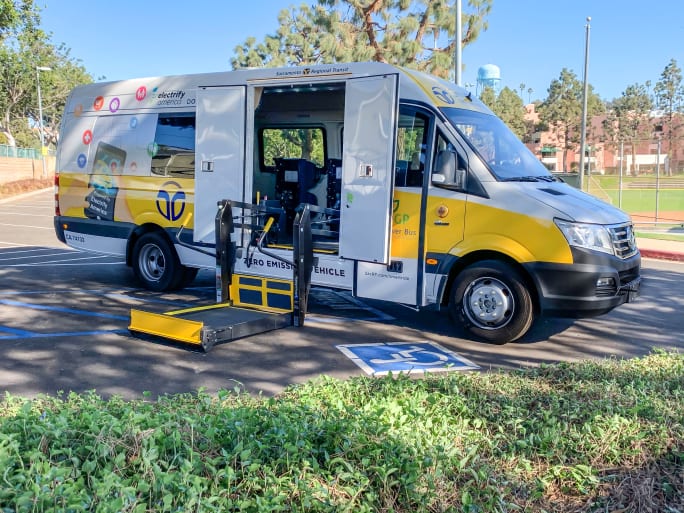
Credit:
GreenPower
Why it Works
As experts in contract execution, state contracting agencies needed technical assistance from the experts — transit agencies, OEMs, and state Departments of Transportation (DOT). A coalition of transit agencies and DOTs provided input on specifications, performance criteria, and unwanted items to develop the RFPs.
Washington state went as far as to include DOTs from surrounding states to incorporate geographic and climatic similarities for a regionally favorable statewide contract.
Contracts in California, Georgia, and Virginia offer an “a la carte” approach to selecting vehicle features in addition to the basic unit. Purchasers also have the ability to tailor the contract terms and conditions as they see fit. To grant agencies the best deal, California’s contracting agency bolstered a bidder’s standing during procurement if they offered additional vehicle features at low or no cost.
Ad Loading...
Statewide contracts are free from minimum or maximum vehicle purchases, unlike a contract developed by a state’s DOT. The Federal Acquisition Regulations (FAR) and Federal Transit Administration (FTA) Regulations and Policies provide deference to the contracting agencies, as their basic mission is to provide contracts on an enterprise level. The state contracting agencies carryout a thorough process focused on running a clean procurement to satisfy the FTA requirements and abide by all regulatory guidelines.
Statewide contracts are free from minimum or maximum vehicle purchases, unlike a contract developed by a state’s DOT.
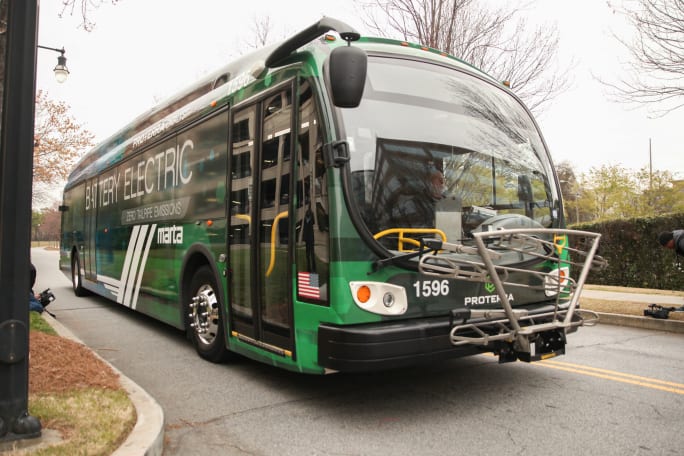
Credit:
Proterra
How it Works
Prior to the FAST Act, an agency could only use a state contract to purchase buses if the agency was located within that state. However, after the passage of the FAST Act in 2015, transit agencies can use statewide contracts located outside of the state they are in according to Section 3019 (Innovative Procurement).
To comply with the Fast Act, a statewide contract must be managed by a state and no other entity, permit purchases from out of state agencies, and experience an initial term of no more than two years and may extend three additional one-year terms. Due to the FAST Act, any agency exterior to the states exhibiting a statewide contract may utilize the contract so long as their residing state and local regulations allow it.
Looking Ahead
Four states have laid the groundwork for future statewide contracts. As we look forward to future statewide contracts, there is probability for regional contracts to be developed. Regions of similar climate and terrain, regardless of state lines, could see a statewide contract that supports the technological needs of that area.
State contracting agencies now have price lists from California, Georgia, and Virginia to drive competitive agreements, if they wish to pursue their own statewide contract.
Ad Loading...
There have also been discussions of a nationwide procurement that focuses on the standardization of a transit bus. While this approach may not specifically target a region, it would likely be a scaled down contract that would standardize certain components and operational elements.
What could be thought of as a “base model bus” would become a national standard for those not needing to operate within certain extreme climates and fringe cases. This would further drive down costs for both transit agencies and the FTA, and ultimately, save taxpayers money.
For a copy of the full whitepaper on this topic; SIMPLIFYING Zero-Emission Transit Bus Procurement: Lessons from Statewide Procurements where you will have access to California, Georgia, and Virginia’s statewide contracts, please contact Hannah Hamilton or Jared Schnader.
See how three Gillig battery-electric buses powered festival stages while the agency’s new Park & Ride service carried approximately 1,000 attendees, demonstrating another potential use for transit agencies’ electric fleets.
The new name represents a renewed vision for the nonprofit focused on advancing clean, equitable, and affordable transportation solutions that move people and goods.
John Hroncich discusses BAE Systems’ modular and scalable approach, lessons learned from decades of real-world operations, and how agencies can identify electrification strategies that fit their fleets.
UB, transportation solutions provider WeDriveU, and fleet electrification specialist Zenobē marked the deployment in the presence of students, university administrators, and local officials.
From manufacturers and suppliers to transit agencies and motorcoach operators, these updates offer a snapshot of the projects, partnerships and business moves driving the industry forward.
The agency’s maintenance chief discusses leadership, workforce development, zero-emission technology, and preparing technicians for the future of public transportation.
The firm will work with CTDOT and RVT to define the facility layout, operational requirements, and long-term flexibility for RVT’s growing electric fleet.
The fast-charging infrastructure will help extend electric bus range, improve fleet utilization, and support DASH's goal of transitioning to a fully zero-emission fleet.