



Track deaths force BART to change protocol, explore options
The deaths of two track workers forced BART to end its “simple approval” method that allowed workers to walk along the tracks in pairs, with one person serving as the lookout.
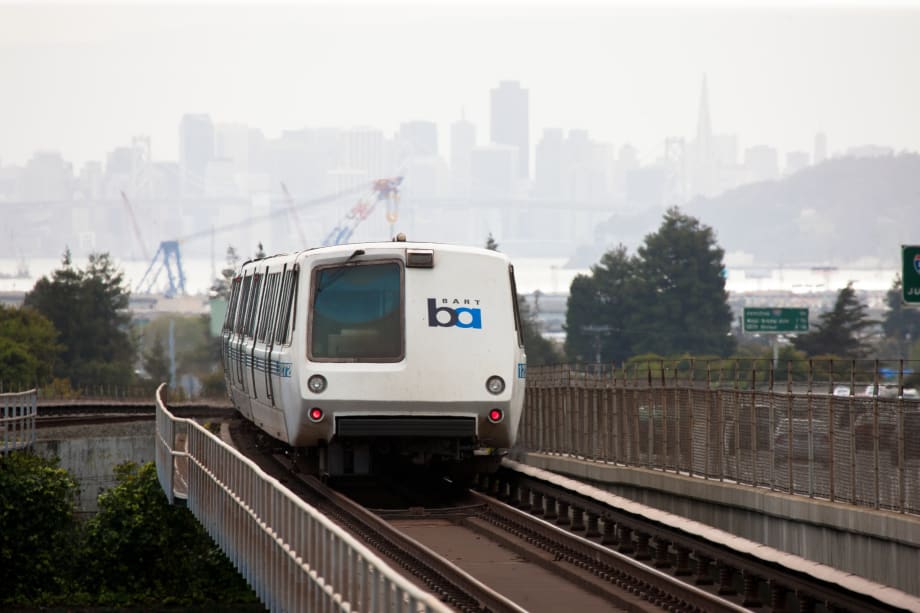
Following the deaths of two workers in an October accident, Oakland, Calif.-based Bay Area Rapid Transit District (BART) suspended a decades-old practice that made workers solely responsible for their own safety on the tracks.
The practice, called “simple approval,” allowed workers to walk along tracks in pairs, with one person serving as the lookout as the other inspected tracks.
“Beginning after the accident, all way-side work that is going to take place has to be done with work clearance, meaning trains will either have to stop, single track or go into ‘road manual,’ which is no faster than 25 miles per hour,” explained James K. Allison, spokesman for BART.
Although fatal accidents had occurred on BART tracks before, the agency felt “simple approval” gave workers the primary responsibility for their own safety, and therefore, they would be more vigilant while on the tracks, Allison added.
Following the accident, BART continues to explore all options to ensure rail worker safety in the future, said Allison.
In the wake of the accident, the California Public Utilities Commission established a set of new regulations to improve rail transit worker safety on public transit systems, making California the first state in the nation to adopt such comprehensive transit safety rules.
The decision will strengthen safety rules to protect roadway workers by adopting a series of strict requirements on rail transit agencies, including implementing a safety training program with a series of strict requirements to ensure workers are well-versed in the methods required to work safely and effectively; maintaining written flagging procedures to enhance safety on railway tracks; ensuring industry standard personal protective clothing for workers; and ordering the rail transit agencies to research and plan/implement additional roadway worker technologies such as early warning alarm technology, back-up alarms and positive train control.
Around the nation, some transit agencies have already begun exploring worker safety technologies that work in tandem with their existing protocols.
The Metropolitan Atlanta Rapid Transit Authority (MARTA) partnered with Bombardier Transportation for a demonstration project testing its TrackSafe solution, which creates improved location awareness for track workers and train operators through Radio Frequency Identification (RFID) and other advanced technologies.
“As the workers walk along the track, they tag in using an RFID chip embedded inside their badge, which notifies the system where they are along the right-of-way,” said Mark Willer, product & development manager for Bombardier. “There are also sensors that detect where the trains are, so when they are a certain distance away from the area workers have tagged into, the system alerts track workers that there is a train approaching by sounding a siren and flashing strobe lights.”
The Federal Transit Administration (FTA)-approved test project was conducted between the Ashby and Bankhead stations along MARTA’s Green Line and completed in summer 2012.
“One of the key objectives of the study was to understand how TrackSafe would impact rail operators, some of our central controllers and folks who work in our right-of-way,” said Abhay Joshi, project manager at MARTA. “The concept itself was whether or not folks exposed to the system were getting additional alerts early in the process and that’s essentially what it did.”
Additionally around 2008, the Maryland Transit Administration’s (MTA) Metro subway system teamed with Protran Technology, the FTA and the Transportation Research Board to develop a system that would give an advanced warning to track workers of an approaching train and also give advanced warning to the train operator of workers ahead.
“Protran Technology developed a system that fit into our operating procedures and required no wayside fixed equipment, meaning trains could operate while the system was implemented,” said Paul Shepard, spokesman for MTA.
The Protran ProTracker Train Device (TD) is mounted in the cab of a train and alerts, both audibly and visually, the train operator of personnel near the train tracks who are wearing the Protracker Personal Alert Device (PAD). A message can also be sent to the control center and display the worker location in real time.
While Shepard explained the MTA hadn’t experienced a recent accident before implementing the Protran solution, the agency has been pleased with the extra layer of protection it has provided for track workers.
“Since the implementation of the Pro-tran TD and PAD systems, the MTA has had zero close calls and zero fatalities while the system is in use,” he said.
More Management

FTA Ends Direct Oversight of MBTA Safety Actions
The federal agency closed its remaining special directive to the Massachusetts Department of Public Utilities following a safety review that began in 2022.
Read More →
Report: Transit Bus Manufacturing Supports 34,100 Jobs, $5.1B in GDP
The “Buses Mean Business” report examines the transit bus manufacturing industry’s economic footprint, supply chain, and rising demand for vehicle replacements.
Read More →
LIT Marks 10-Year Milestone at Annual Summit
Hosted by the COTA from September 10 to 13, the Summit carried the theme “Celebrating 10 Years of Excellence, Leadership, and Impact,” with every part of the program honoring the people, agencies, and partners who built LIT over its first decade.
Read More →

People Movement: Dan Dipert Coaches Adds Third-Generation Leader, Keolis Names New Valley Metro VP/GM, and More
In this edition, we also cover recent appointments and announcements at the Wabtec, SilverRide, HNTB, and more, showcasing the individuals helping to shape the future of transportation.
Read More →
METRO Opens Submissions for 2026 Motorcoach Awards
Nominations are now being accepted for METRO Magazine’s Operator of the Year and Innovative Operator of the Year awards.
Read More →
New York MTA Advances Final Contract for Second Avenue Subway Expansion
Contract Four is the largest in the Second Avenue Subway Phase 2 project and includes construction of station infrastructure, tracks, and signals for the subway expansion, MTA officials said. Work on Contract Four will begin in 2027.
Read More →
Transit Agencies Highlight Safety Gains at National Summit
Leaders from 15 major transit systems shared crime-reduction results and safety initiatives while discussing the role of continued federal support.
Read More →
NITA Names New Leadership, Expands Reduced-Fare Program at First Board Meeting
The new regional transit authority appointed its first board chair and interim executive director while extending reduced fares across CTA, Metra, and Pace for eligible riders.
Read More →
Beyond the Checklist: A Structured Approach to Transit Maintenance
Reliability-Centered Maintenance helps transit agencies move beyond routine checklists to focus limited resources on the assets and failures that have the greatest impact on safety, reliability, and service.
Read More →
APTA 2026 Nominating Committee Selects Leadership Slate, Names Chair and Vice Chair Nominees
Leadership changes will help shape the association’s priorities and its representation of the transportation industry during the 2026–2027 term.
Read More →