FOMO is No Way to Plan the Future of Transportation
What if there is a great new technology just around the corner? Should we wait a little longer to see how this new technology develops? How should we manage this risk? Can we ever be certain in our evaluation of large transportation projects?
Steven Harrod・Associate Professor, Transportation Management and Technology, at the Technical University of Denmark
Today, transportation proposals are plagued by a fear of missing out (FOMO).
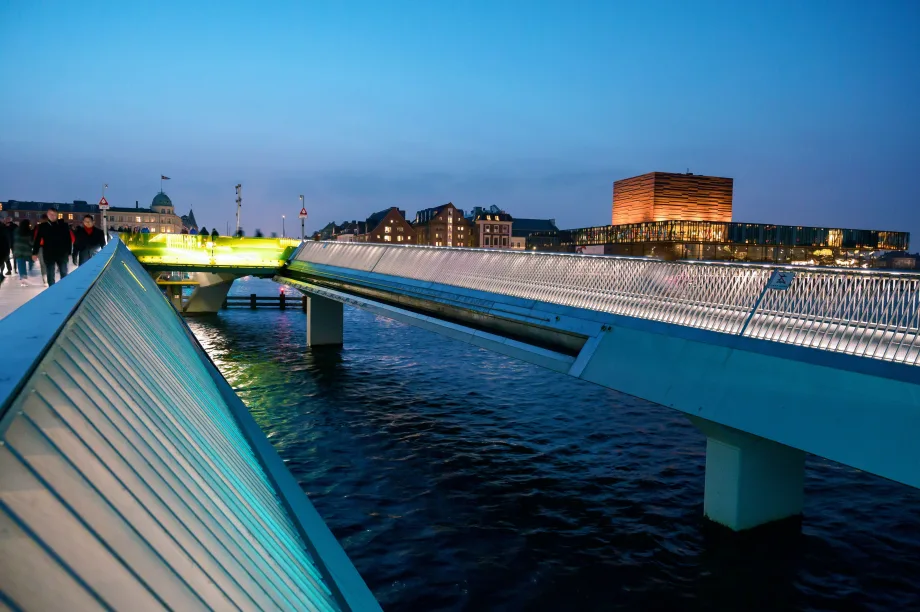
Photo: Pexels/MatteoAngeloni
5 min to read
Something remarkable happened last year. A mega-project bridge in Denmark changed status from climate positive to climate negative without any changes in the project proposal itself, and thus the project itself again became mired in doubt and delay.
The Kattegat bridge, named after the same sea that separates east and west Denmark, would provide a nearly straight-line transport route between Denmark’s two largest cities, Copenhagen, and Aarhus. It would reduce a nearly three-hour train journey to one-hour, binding Denmark together like never before, and actually making it possible to live in one city and work in the other. Like the TGV high-speed railway in France in the 1980’s, it would make domestic airline service irrelevant.
Ad Loading...
And this is the source of the latest doubt about the project. The environmental impact study calculated a saving in greenhouse gases by the elimination of domestic airline traffic, and the resulting saving in jet fuel. However, simultaneously the Danish government is supporting research in “Power-to-X,” a technology to take electric power from solar cells and windmills and create synthetic liquid fuel for aviation.
Theoretically, this Power-to-X fuel would be climate neutral, and thus the termination of domestic airline traffic in Denmark would no longer have a climate benefit. And just like that, a technology that does not exist, and has no clear introduction date, has set a question-mark over a transportation infrastructure project that could be in the same class as the Channel Tunnel.
Such a conflict between today’s known and the future unknown is quite common in large transportation projects. Transportation proposals are plagued by a fear of missing out (FOMO).
What if there is a great new technology just around the corner? Should we wait a little longer to see how this new technology develops? How should we manage this risk? Can we ever be certain in our evaluation of large transportation projects?
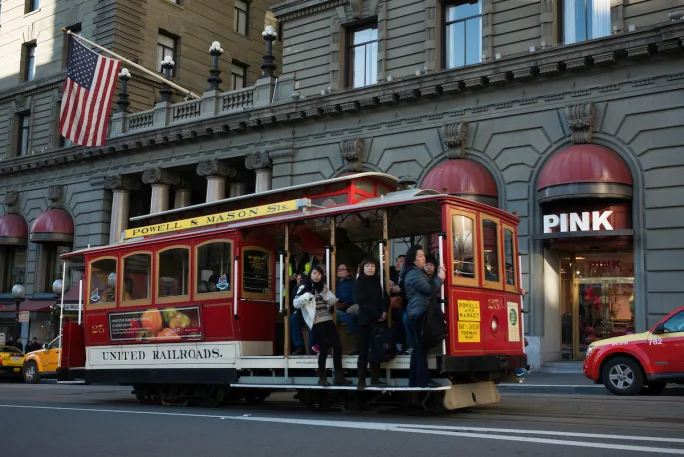
The cable car exists today only in San Francisco.
Photo: SFMTA
History Illustrates the Attraction, Flaws of FOMO
The history of transportation is replete with examples of transportation infrastructure that became obsolete shortly after completion. New Orleans constructed a grand new railroad passenger station in 1954, only to see nearly all passenger train traffic evaporate 10 years later.
Ad Loading...
The Chesapeake and Ohio Canal began construction in 1828 but was completed just in time to see most traffic overtaken by new railroads. However, one of the more extreme examples of technological obsolescence was the cable car.
The cable car exists today only in San Francisco. It consists of a vast underground network of continuously moving cables that the street railway car (tram) can grip and release at will. In the 1870s this was revolutionary, replacing horse-drawn streetcars that were the norm, but life was hard for the horses, and they spread disease and manure throughout the city.
A busy transit line required up to 10 horses for every vehicle. They didn’t live long under their working conditions. A single transit line on Eighth Avenue in New York City required 1,116 horses.
There is no surprise then that most of the major cities in the U.S. constructed enormous cable car networks in the 1880s. The cable car traveled at a faster speed than horses, eliminated all the disease, filth, and animal cruelty of horse traction, and paid a 20% annual return on investment. Several cities embraced cable cars, but there were alternatives under development.
In the same period, inventors were developing the electric streetcar. The Gross Lichterfelde Tramway opened in Germany in 1881 but had a very dangerous habit of giving electric shocks to pedestrians and horses. It would be another 10 years before Frank J. Sprague would resolve these technical problems and launch the electric streetcar revolution, but once proven, the electric streetcar immediately replaced nearly all cable cars.
Ad Loading...
Like the horse-to-cable car transition before it, the electric streetcar offered yet another quantum factor in efficiency over the cable car. A 10-mile transit line with cable technology would cost $840,000 to build, and travel at six miles per hour. The same line built as electric would cost $190,000, and could travel at 20, 30, or 40 miles per hour.
By 1895 cable car lines that were barely 10 years old were ripped out and replaced with electric streetcars. Should these cable lines never have been built?
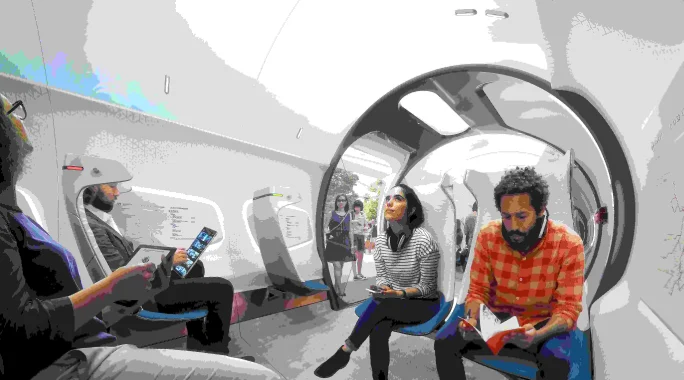
Hyperloop, maglev, monorails, underground Tesla tunnels, personal aircraft, and more, are frequently raised as alternatives to conventional transit systems and high-speed rail.
Photo: HARDT
Are We Asking the Right Questions?
FOMO infects many of our strategic technology decisions.
In the late 1980s, I was a young engineer and a fervent promoter of the Apple Macintosh. I was invited to interview at the Traveler’s Insurance Company in Hartford, Conn., and had lunch with one of their IT executives. During our lunch, I extolled the virtues of the Macintosh, and after a pause, the executive said to me, “Yes, but I hear Steve Jobs is developing an even more advanced computer called NeXT.” And that was that.
Travelers would not invest in Macintosh because an even better computer system was just over the horizon. By the time Apple purchased NeXT and integrated it into their systems, Microsoft dominated the personal computer market with Windows XP.
Hyperloop, maglev, monorails, underground Tesla tunnels, personal aircraft, and more, are frequently raised as alternatives to conventional transit systems and high-speed rail. None of these technologies has been demonstrated to be cost-benefit positive with respect to conventional transport, and some of them do not even exist as proven technologies. Yet, they attract funding and delay infrastructure projects with the claim that, “the technology is going to be market ready in just a few years.”
Avoiding FOMO, Taking Charge of Your Future
Our transportation needs and climate challenges are known and real today. Transportation modes and infrastructure to respond to these challenges are also known and proven today. Could there be even better, climate-friendly technology in the future? Maybe. But the right question is, “How bankable is the arrival of this new solution, and when can we count on it?” Any uncertainty is no answer.
It's not a matter of whether we should wait for something better to come along. We know that today’s systems, in the future, will be improved or replaced. But if history teaches us anything, it’s that waiting for that day is not an option. The time to act is now.
With $610 million available through the FY 2026 Buses and Bus Facilities Competitive Program and the Low or No Emission Grant Program, agencies must build a compelling case before the September 21 deadline that balances environmental compliance with operational feasibility.
The global cycling conference highlighted how cities are integrating bicycles into multimodal transportation networks, expanding cycle tourism and reshaping urban mobility.
Mike Bismeyer — often known as “The Kindness Guy” — has spent more than 17 years in public transit and mobility, serving in industry leadership roles, speaking across North America, and advocating for stronger workplace cultures. But his message doesn’t come from theory. It comes from lived experience.
Transport leaders from around the world gathered in Leipzig, Germany, for the 2026 International Transport Forum to discuss resilience, climate impacts, supply chains and the future of sustainable mobility.
Polis comprises cities and regions, as well as corporate partners, from across Europe, promoting the development and implementation of sustainable mobility. This year’s event had over a thousand attendees across various policy forums and an exhibition.
Across North America and beyond, transit agency officials are contending with a perfect storm of operational headaches and strategic challenges that hamper daily service and long-term progress.
Simply incentivizing electrification is not enough to make a meaningful impact; we must shift our focus toward prioritizing public transportation and infrastructure.