



How to Host a 'Super' Travel Day on Transit for Fans
As one of the biggest cities in the country, Philadelphia is often selected to host events that attract national and international audiences, most recently the 2013 U.S. Open Championship, the 2015 World Meeting of Families and papal visit by Pope Francis, the 2016 Democratic National Convention, and the 2017 NFL Draft. But until February 7, 2018, the city had never hosted a Super Bowl champions parade.

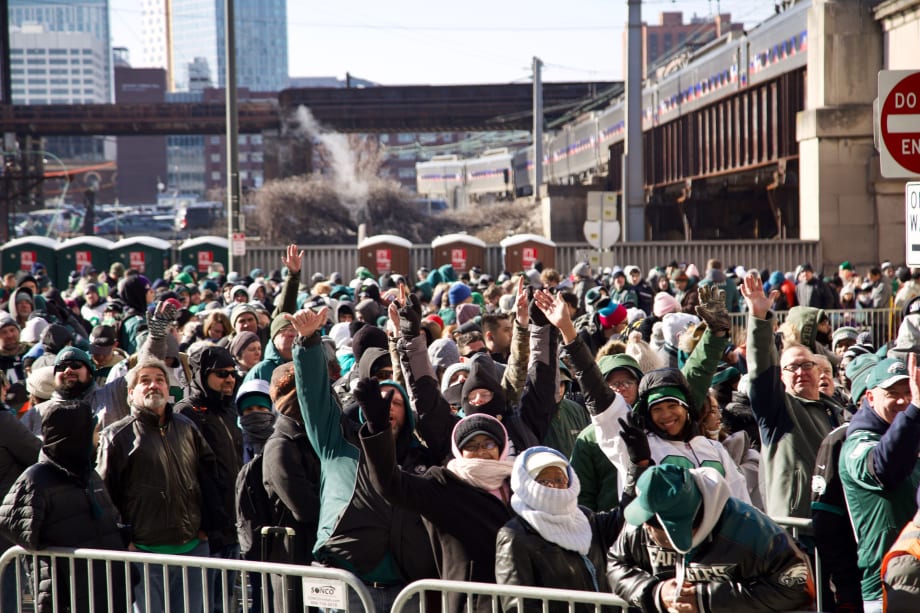
After the parade and ceremony, fans wait in lines at 30th Street Station to make the trip home. Photo: SEPTA
After the parade and ceremony, fans wait in lines at 30th Street Station to make the trip home. Photo: SEPTA
As one of the biggest cities in the country, Philadelphia is often selected to host events that attract national and international audiences, most recently the 2013 U.S. Open Championship, the 2015 World Meeting of Families and papal visit by Pope Francis, the 2016 Democratic National Convention, and the 2017 NFL Draft. But until February 7, 2018, the city had never hosted a Super Bowl champions parade. How would the Philadelphia region handle an event described as “epic”? How would the Southeastern Pennsylvania Transportation Authority (SEPTA) handle transporting the masses to parade route?
“Transit has had a big role in all of the recent events hosted in the Philadelphia region. Those strategies have been based on what happened in 2008 and modified along the way.” said SEPTA GM Jeffrey Knueppel. “Although this was the Eagles’ first Super Bowl win, we’ve been preparing for the celebration for 10 years. “When the Phillies won the World Series in 2008, we attempted to run a regular day of service on all of our modes to take all of the fans to downtown Philadelphia and the Sports Complex area in South Philadelphia. The system was overwhelmed by people heading to the parade, and we stranded thousands of parade goers, especially Regional [commuter] Rail riders coming from the suburbs.”
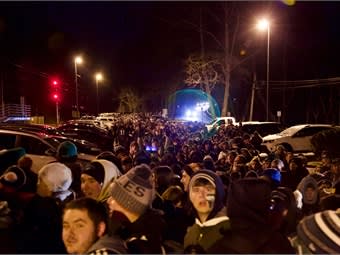
Eagles fans lined up at SEPTA stations before dawn to travel to downtown Philadelphia for the Super Bowl celebration. Photo: SEPTA
Key for the Super Bowl parade transportation plan was figuring out how many riders SEPTA would be able to carry and being upfront with the public. “We knew we could successfully carry 70,000 riders across our Regional Rail network,” said Knueppel. “With many businesses, including city offices closing for the day, we estimated 20,000 of our regular weekly and monthly trailpass holders would use the system. We made having a pass required to ride the trains, so that we would be able to accommodate the additional 50,000 riders.” Riders were able to purchase specially-priced $10 passes at rail stations — the passes sold out in just over 24 hours.
In addition to limiting the number of Regional Rail riders, SEPTA also ran a special schedule — inbound service with select stops only to Philadelphia from about 5 a.m. to 9:30 a.m., with outbound service resuming at approximately 2 p.m., until about 9:30 p.m. “During the break in the schedule, we were able to get crews in place for the afternoon rush after the celebration,” said Knueppel. The limited schedule also allowed SEPTA to run extra trains where crowds were heavier, both in the morning and the evening. Riders were also pushed to its other modes — Market-Frankford and Broad Street subway-elevated lines, city and suburban trolleys, and Norristown High Speed Line — where rush hour service levels would be offered all day.
“The Market-Frankford and Broad Street Lines are the workhorses of our system,” said Knueppel. “We knew we would be able to transport 65,000 riders per hour on those lines with four- to six-minute headways. The ‘el’ and subway also provides access to Center City from many suburban communities via the Norristown High Speed Line, our trolleys, and multiple bus routes,” he added.
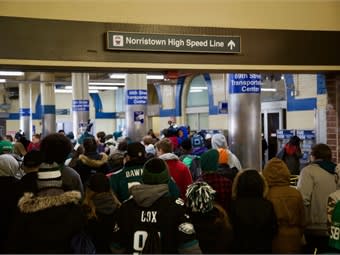
Suburban trolley riders head to the Market-Frankford Line at 69th Street Transportation Center for trains to Center City. Photo: SEPTA
Limited stops on the Market-Frankford and Broad Street Lines allowed for more frequent service with added capacity. From a safety standpoint, it helped with crowd control.
“Holding passengers at the fare lines, limited station stops, and predictable train times is what kept our platforms from overcrowding," said Subway/Elevated Chief Rail Transportation Officer Leslie Hickman. “It was also the dedication that our managers, train and bus operators, and our 600 ambassadors showed in moving people so quickly and safely throughout our system.”
To celebrate the Eagles win, Independence Blue Cross partnered with SEPTA, sponsoring free rides on the Market Frankford and Broad Street Lines on parade day.
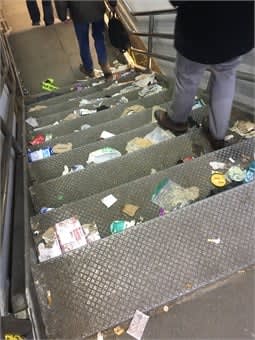
Trash left behind by thousands of parade goers at SEPTA stations, like the 13th Street Market-Frankford Line Station, was completely clear by 4 a.m. the next day, for the start of service. Photo: SEPTA
Once the confetti had cleared, SEPTA had carried some 500,000 riders — without incident — on all of its modes to and from the parade. “The public listened to and followed our plan,” said Knueppel. “They headed to stations early, in most cases to the outermost lying points. And, they were prepared for the lines at night.”
“It’s not just about the planning during these big events, it’s also about the execution,” said Chief Surface Transportation Officer Mike Liberi, who was appointed by Knueppel to coordinate the parade. “With no time to spare, the maintenance custodians had every station cleaned by 4 a.m. the following morning for the next day’s train service, because that was really important to our general manager.”
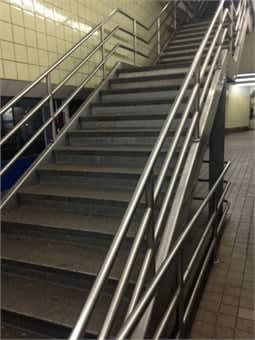
A stairwell at the 13th Street Market-Frankford Line Station after it was cleaned. Photo: SEPTA
Knueppel added, “Transporting that many people, many of whom aren’t regular transit riders, without injury or incident was challenging, but our employees were up to the task, and I continually thank them for doing an amazing job.”
SEPTA is reviewing how it did on parade day and preparing for the next parade — hopefully next year.
Heather Redfern is the Public Information Manager for the Southeastern Pennsylvania Transportation Authority.
More Blog Posts
Building a Winning FTA Grant Proposal: Why Propane Autogas is the Pragmatic Choice for Fleet Resilience
With $610 million available through the FY 2026 Buses and Bus Facilities Competitive Program and the Low or No Emission Grant Program, agencies must build a compelling case before the September 21 deadline that balances environmental compliance with operational feasibility.
Read More →
Velo-city Conference 2026: Latest Trends in Cycling as Part of Urban Mobility
The global cycling conference highlighted how cities are integrating bicycles into multimodal transportation networks, expanding cycle tourism and reshaping urban mobility.
Read More →
Kindness Isn’t Soft...It’s Strategic.
Mike Bismeyer — often known as “The Kindness Guy” — has spent more than 17 years in public transit and mobility, serving in industry leadership roles, speaking across North America, and advocating for stronger workplace cultures. But his message doesn’t come from theory. It comes from lived experience.
Read More →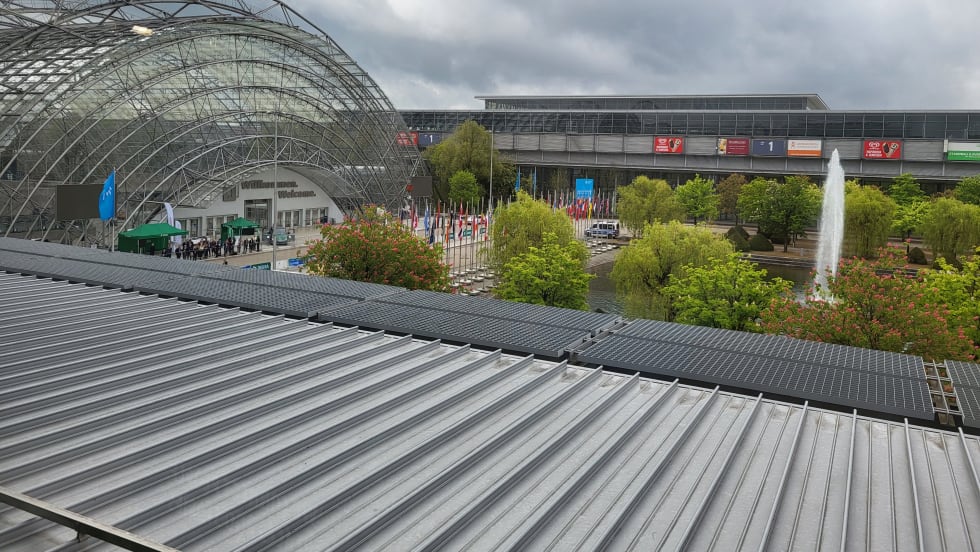
Inside ITF 2026: Transport Reacts to A Challenging World
Transport leaders from around the world gathered in Leipzig, Germany, for the 2026 International Transport Forum to discuss resilience, climate impacts, supply chains and the future of sustainable mobility.
Read More →
Every Ride Tells a Story — But You’re Not Just Selling the Ride
You’re selling the moment, the meaning, and the emotion behind it.
Read More →
How Digital Signage is Reshaping the Traveler Experience at Transportation Hubs
What was once a landscape of static signs has evolved into a responsive, immersive environment powered by real-time visual communication.
Read More →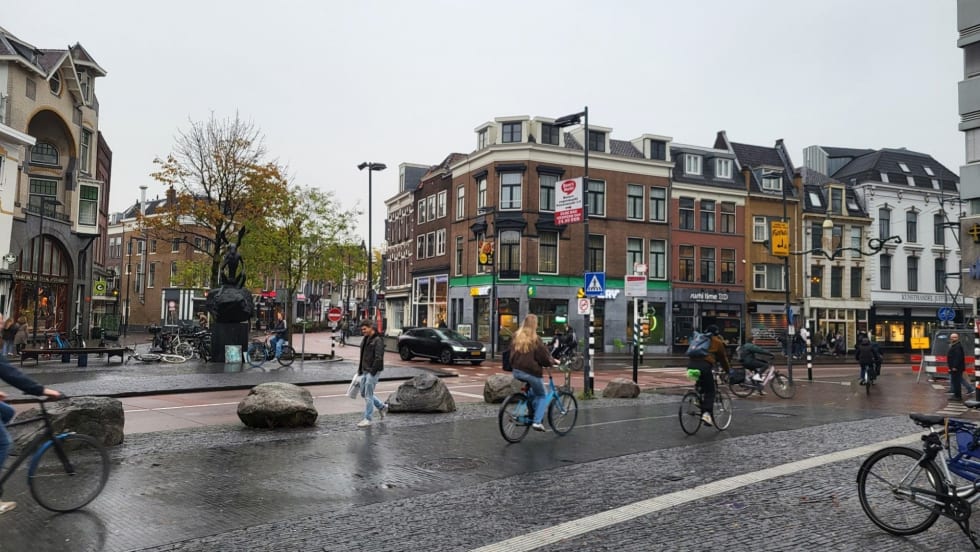
Latest Trends in Urban Mobility from Polis Conference 2025
Polis comprises cities and regions, as well as corporate partners, from across Europe, promoting the development and implementation of sustainable mobility. This year’s event had over a thousand attendees across various policy forums and an exhibition.
Read More →
Why Transit Leaders Require Better Tools for Operational Clarity In Today’s Tech-Fragmented Environment
Across North America and beyond, transit agency officials are contending with a perfect storm of operational headaches and strategic challenges that hamper daily service and long-term progress.
Read More →
The Powerless Brokers: Why California Can’t Build Transit
It is no secret that transit in the U.S. is slow and expensive to build.
Read More →
Why Transport Sustainability Should Focus on People Instead of Cars
Simply incentivizing electrification is not enough to make a meaningful impact; we must shift our focus toward prioritizing public transportation and infrastructure.
Read More →