




RELATED: Rising SoCal car ownership linked to ridership decline
Lyft and Uber Can Save Transit — if Transit Gets on Board
Bad news for transit keeps rolling in. Transit ridership declined in 34 of the 40 largest metropolitan areas over the past three years. While ridership routinely fluctuates in response to economic upturns and downturns and other trends, this decline seems more profound.
March 22, 2018
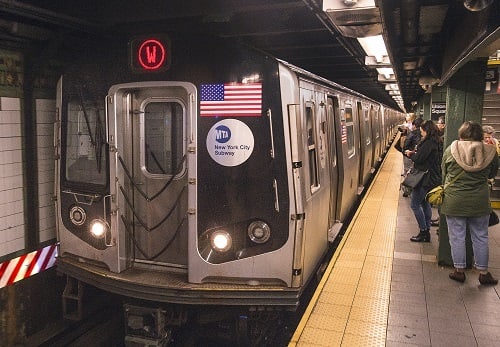
Transit ridership declined in 34 of the 40 largest metropolitan areas over the past three years. Photo: NY MTA/Patrick Cashin
4 min to read
Transit ridership declined in 34 of the 40 largest metropolitan areas over the past three years. Photo: NY MTA/Patrick Cashin
This post is co-authored by Daniel Sperling and Steven Polzin
Bad news for transit keeps rolling in. Transit ridership declined in 34 of the 40 largest metropolitan areas over the past three years. New York’s subway woes continue, Washington Metro struggles with funding and maintenance, and even In Los Angeles, with its massive rail system buildout supported by $120 billion in tax increases over 40 years, ridership is declining. Explanations for declining ridership include low gasoline prices, economic growth, increasing car ownership, immigrants’ fear of using transit, homeless loitering, and safety and security concerns.
While ridership routinely fluctuates in response to economic upturns and downturns and other trends, this decline seems more profound. Increased communication (e-commerce, telecommuting, distance learning) and new technologies and business models (bikeshare, carshare, app-based ride-hailing) suggest a more pronounced challenge for public transportation. This decline seems likely to accelerate once vehicle automation takes hold. More automation means the cost of mobility services by private companies — not just Uber, Lyft, and Via, but likely GM, Ford, and many others — will fall. Can public transit survive?
Yes — but an entirely fresh approach is needed. Ridesharing services like Uber and Lyft have the potential to be a boon to transit, but only if we reimagine transit as mobility. To encourage ridership, the silos between transit, taxis, on-demand app-based services, and bikesharing need to be removed. Transit must be integrated, or at least coordinated, with other expanding mobility services.
What would such a hybrid system look like? It would include traditional trunk line transit for major corridors where limited curb space and large passenger flows favor larger vehicles.
These high-volume services would be supplemented with on-demand automated ridesharing in suburbs and small cities — subsidized for low-income riders and perhaps those making connections to transit hubs. These other services would also provide first/last mile access to rail and major bus routes, feeding the efficient trunk lines. It means a single integrated app for information and payments. A public entity such as the transit operator would play a major role in oversight and governance, ensuring safety, equity and integration of services. Mechanisms would be needed to assure low-income riders are served. The mix of vehicle types and technologies, and the party(ies) responsible for ownership and operation could vary from one area to another.
In this new transportation world, traditional transit would need to refocus on what it is good at — serving dense traffic corridors and dense cities. It would remain the most economically efficient means of moving large numbers of travelers, but it needs to reimagine strategies for less dense suburban areas where its current costs and service are far inferior to those of new private on-demand services.
This refashioning of mobility is radical in many ways. It requires public funding — which now subsidizes 80% of all transit costs — to be restructured. It may involve extracting resources from those users and land owners that most benefit, charging full costs in some cases, providing subsidies directly to low-income travelers regardless whether the service is provided by government or business. Or in places where transit use is high, it may be priced low and subsidized through progressive general revenue sources. It will require collaboration and cooperation between public and private companies. If transit integrates effectively with services like Uber and Lyft, the result could be an increase in public transportation from current 2-3% of trips to 20 to 30%, or more. And, it would generate new jobs — many of them high quality — to manage and staff these new mobility service companies.
This is the future. Today’s transit operators can be part of the solution, or they can wither under the onslaught of technology and competition.
Dr. Daniel Sperling is the author of Three Revolutions: Steering Automated, Shared, and Electric Vehicles to a Better Future (Island Press, February 2018) and founding director of the Institute of Transportation Studies at the University of California, Davis.
Steven Polzin, Ph.D., is the Program Director for Mobility Policy Research at the Center for Urban Transportation Research, University of South Florida.
Links:
http://islandpress.org/book/three-revolutions
https://www.its.ucla.edu/2018/01/31/new-report-its-scholars-on-the-cause-of-californias-falling-transit-ridership/
“Just Around the Corner: The Future of U.S. Public Transportation”, Journal of Public Transportation, 21 (1): 43-52. http://scholarcommons.usf.edu/jpt/vol21/iss1/5/, February 2018.
Subscribe to Our Newsletter
More Blog Posts
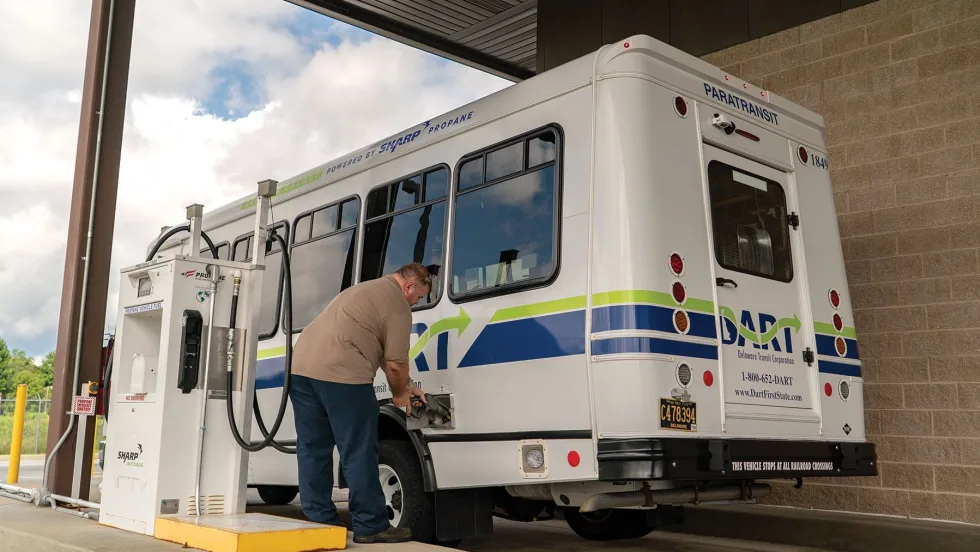
Building a Winning FTA Grant Proposal: Why Propane Autogas is the Pragmatic Choice for Fleet Resilience
With $610 million available through the FY 2026 Buses and Bus Facilities Competitive Program and the Low or No Emission Grant Program, agencies must build a compelling case before the September 21 deadline that balances environmental compliance with operational feasibility.
Read More →
Velo-city Conference 2026: Latest Trends in Cycling as Part of Urban Mobility
The global cycling conference highlighted how cities are integrating bicycles into multimodal transportation networks, expanding cycle tourism and reshaping urban mobility.
Read More →
Kindness Isn’t Soft...It’s Strategic.
Mike Bismeyer — often known as “The Kindness Guy” — has spent more than 17 years in public transit and mobility, serving in industry leadership roles, speaking across North America, and advocating for stronger workplace cultures. But his message doesn’t come from theory. It comes from lived experience.
Read More →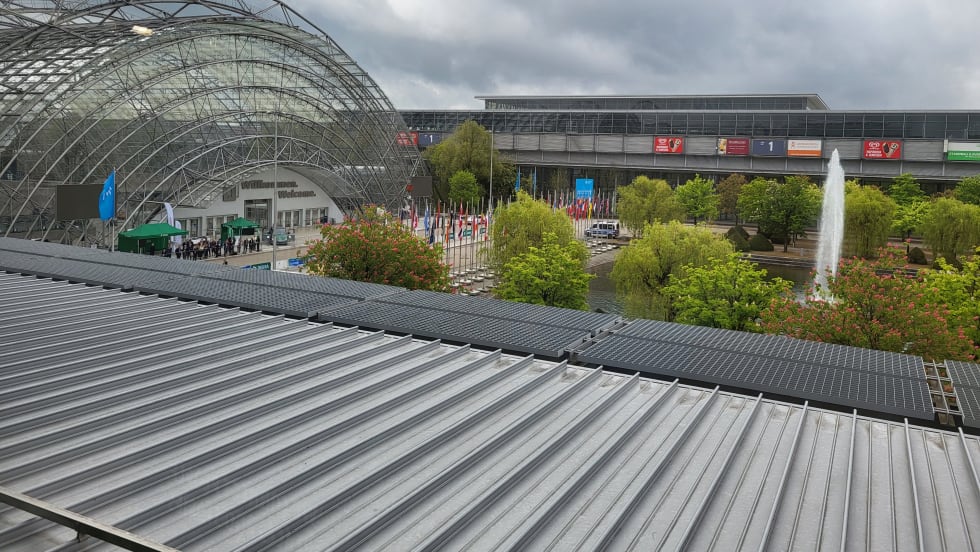
Inside ITF 2026: Transport Reacts to A Challenging World
Transport leaders from around the world gathered in Leipzig, Germany, for the 2026 International Transport Forum to discuss resilience, climate impacts, supply chains and the future of sustainable mobility.
Read More →
Every Ride Tells a Story — But You’re Not Just Selling the Ride
You’re selling the moment, the meaning, and the emotion behind it.
Read More →
How Digital Signage is Reshaping the Traveler Experience at Transportation Hubs
What was once a landscape of static signs has evolved into a responsive, immersive environment powered by real-time visual communication.
Read More →
Latest Trends in Urban Mobility from Polis Conference 2025
Polis comprises cities and regions, as well as corporate partners, from across Europe, promoting the development and implementation of sustainable mobility. This year’s event had over a thousand attendees across various policy forums and an exhibition.
Read More →
Why Transit Leaders Require Better Tools for Operational Clarity In Today’s Tech-Fragmented Environment
Across North America and beyond, transit agency officials are contending with a perfect storm of operational headaches and strategic challenges that hamper daily service and long-term progress.
Read More →
The Powerless Brokers: Why California Can’t Build Transit
It is no secret that transit in the U.S. is slow and expensive to build.
Read More →
Why Transport Sustainability Should Focus on People Instead of Cars
Simply incentivizing electrification is not enough to make a meaningful impact; we must shift our focus toward prioritizing public transportation and infrastructure.
Read More →