Polis Conference 2023 Focuses on Latest Trends in Urban Mobility
The annual POLIS mobility conference was held in Leuven, Belgium Nov. 29 to 30. The conference is the largest event held by the Brussels-based POLIS group, which is composed of cities and regions, as well as some corporate partners from across Europe, promoting sustainable transport solutions.
The POLIS conference is an excellent opportunity to examine and gauge the direction and issues being faced by a range of European cities in terms of developing and delivering the sustainable transport agenda.
Photo: Giles Bailey
6 min to read
The annual POLIS mobility conference was held in Leuven, Belgium Nov. 29 to 30. The conference is the largest event held by the Brussels-based POLIS group, which is composed of cities and regions, as well as some corporate partners from across Europe, promoting sustainable transport solutions.
This year’s event had over 900 attendees in various policy forums, as well as an exhibition.
Ad Loading...
The POLIS conference is an excellent opportunity to examine and gauge the direction and issues being faced by a range of European cities in terms of developing and delivering the sustainable transport agenda.
The Rise of Micromobility
A theme has been developing for a number of years in Europe and was again amplified by this conference — that is the rise in importance of micromobility in delivering effective and sustainable mobility in cities. This theme was reinforced by the conference hosts, the City of Leuven, as well as the Belgian region of Flanders.
The subtleties of this debate were illustrated by the deputy mayor of the Belgian city of Antwerp who highlighted the current message that “car users will increasingly need to park on private space throughout the city to free up public space for other active mobility users, as well as classic public transport.”
The conference was opened by the Mayor of Leuven, as well as representatives of Flanders and the Belgian federal government. In addition, the conference goals were welcomed by a representative of the European Union.
The Mayor highlighted the importance of “quality of life” and “connecting people” in his address and that the city was organizing public space in a new way that prioritized public encounters, well-being, walking, and cycling.
Ad Loading...
This was all part of the 2030 Leuven Mobility Model and the city’s ambition to become climate neutral by 2030. Cycling is already the largest mode for travel to work in the city and amongst the highest in Belgian cities.
Leuven is about 16 miles from Brussels and a 20-minute express train ride between the city centers.
The city’s two largest employers are KU Leuven — the country’s largest university, who also welcomed the conference as well as AB InBev — the multinational drinks business, which is headquartered in the city and has a major local brewery.
Leuven has rapidly evolved over the last 20 years from a car focused industrial and academic city, to a much more contemporary sustainable mobility city based on technology, learning, and innovation.
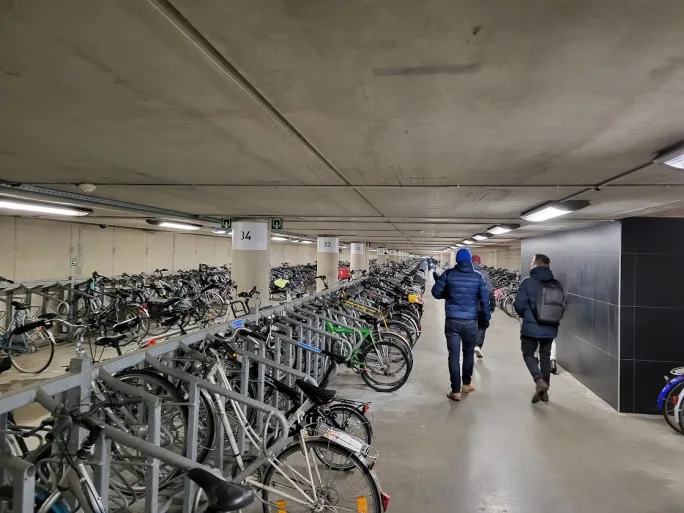
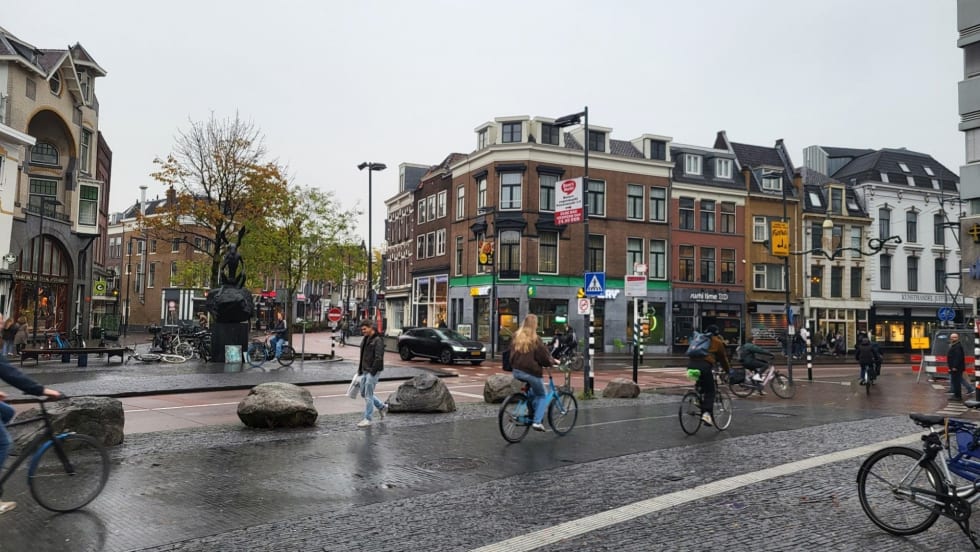
Cycling is now a core part of the solution within Leuven’s mobility plan. Quality infrastructure is being developed throughout the city. This includes a new 10,000-space cycle parking lot underground and adjacent to the main train station.
Photo: Giles Bailey
A Boost to Cycling
Belgium is overall, however, still a very car-based country, albeit with excellent coverage of public and sustainable transport. Train connections are frequent and well used.
Ad Loading...
However, terribly busy roads/motorways and intensive personal and commercial traffic seems to never be far away.
Cycling is now a core part of the solution within Leuven’s mobility plan. Quality infrastructure is being developed throughout the city. This includes a new 10,000-space cycle parking lot underground and adjacent to the main train station.
In practice, Flanders is taking many of the mobility lessons from the neighboring Netherlands and rolling them out in a Belgian context.
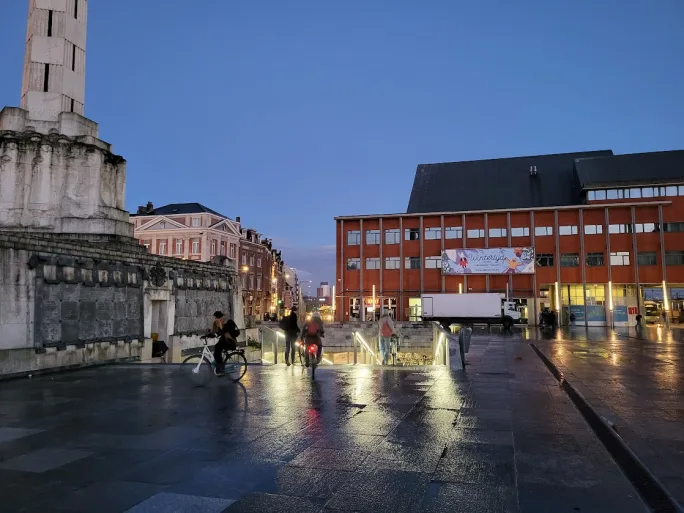
As part of the conference, this author had a cycle tour of some of the local improvements to the cycling infrastructure around the city. This included dedicated inter-urban cycleways, cycling facilities around the main railway station, and space reclamation from cars within the core urban area to create safe, and quite busy, cycle routes that suppress car traffic and speeds.
The need for strong and comprehensive space rebalancing was promoted as a core part of a robust sustainable mobility plan.
Ad Loading...
Belgium is overall, however, still a very car-based country, albeit with excellent coverage of public and sustainable transport. Train connections are frequent and well used.
Photo: Giles Bailey
Public Transit’s Role
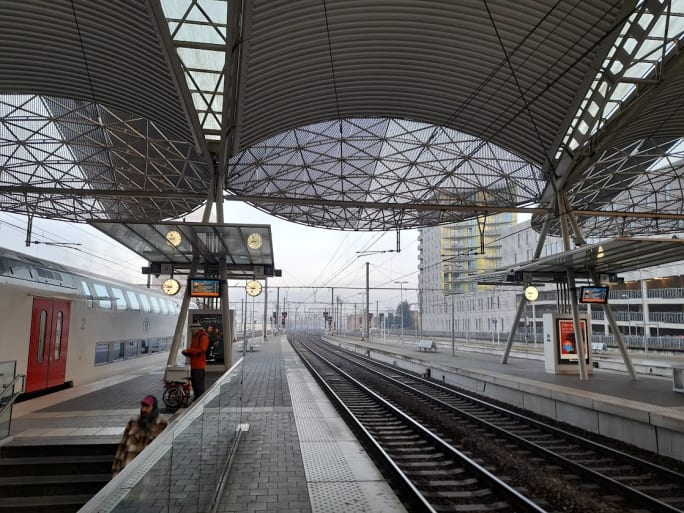
Leuven does not have a light rail system and only one main rail hub, which has been thoroughly modernized. There is a comprehensive and frequent bus network across the city, into the neighboring towns and providing connections to nearby Brussels.
The bus service in Flanders is managed at the regional level. De Lijn runs comprehensive urban and inter-urban buses across northern Belgium. A similar type of model is applied in Wallonia in southern Belgium, with STIB/MIVB operating public transport services in Brussels itself.
The conference included plenaries and parallel sessions that deepened the mobility discussion.
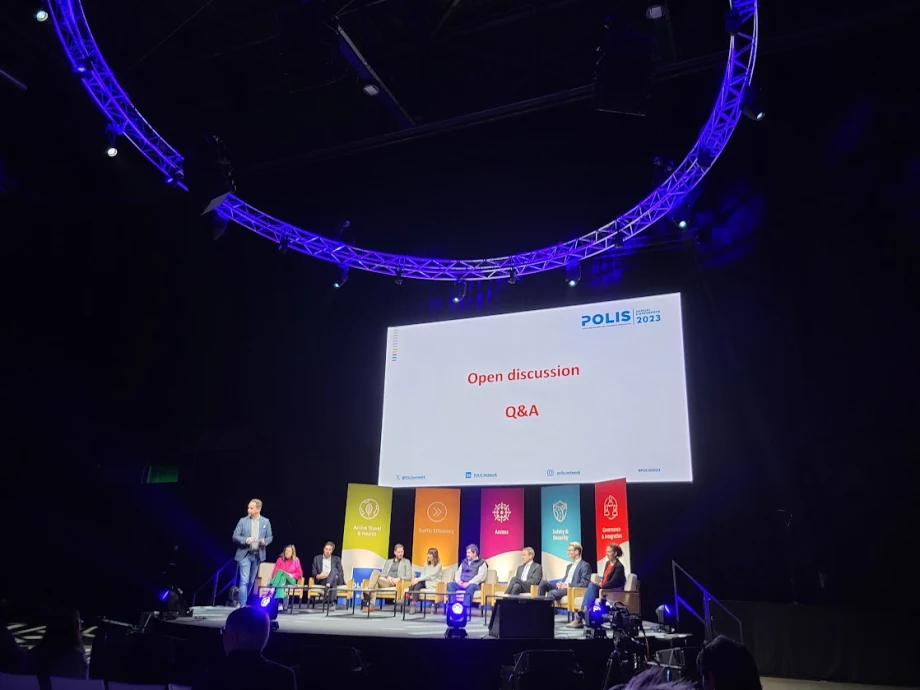
One plenary included a range of speakers, such as city leaders, industry experts, and modal specialists including the CEO of Renault/President of ACEA.
Controversially, but very usefully, he challenged us to “get real” with the view that micromobility could any time soon meet the widespread need for mobility across the continent. He indicated the automotive industry needs to be part of the mobility solution for the foreseeable future.
Ad Loading...
As professionals we do need to realistically define and accept the potential role of these sustainable solutions in defining our cities and regions, but also accept the limitations of these solutions in other user cases, as well as consider where the private car can or should also fit in within the mobility mix.
It was highlighted in the plenary that sustainable micromobility can make fairly rapid and comprehensive changes in the overall picture of mobility, particularly in dense European cities, but wider mobility needs must also be considered.
The panel also included a representative of IKEA who outlined the long-term repositioning of their business to a more “sustainable, affordable, and accessible” model that will over a number of years fit within the evolving needs of their customers as well as broader new public policy goals.
It was highlighted in the plenary that sustainable micromobility can make fairly rapid and comprehensive changes in the overall picture of mobility, particularly in dense European cities, but wider mobility needs must also be considered.
Photo: Giles Bailey
Finding Mobility Solutions
A further plenary, entitled “Winning Elections with Sustainable Mobility,” gathered politicians from across Europe to discuss implementing mobility policies and solutions. This included representatives from Ghent, Belgium; Utrecht, Netherlands; Rome, Italy; Stockholm, Sweden; and the region of Baden-Wurttemberg in Germany.
Some key points raised included Ghent’s controversial “Circulation (car traffic management) Plan” and thus the need to be bold, deliver an innovative sustainable transport vision, and then let the public view your success.
Ad Loading...
Stockholm suggested the need to give people tangible shorter-term sustainable mobility innovations at least at a “test” phase to engage public debate and concerns and then consolidate this around a longer term set of deliverables. A “data-led approach” to comprehensively understand the misunderstood and underrepresented segments of your population regarding transport was a focus for the representative from Baden-Wurttemberg.
Amongst the parallel sessions themes included a session on the evolving “15-minute city” from a variety of perspectives. The panel also addressed the range of negatives this policy is increasingly attracting from politicians and activists. A conclusion was on the need to openly debate the use of public space and honestly and transparently engage local residents in this debate to deliver long term solutions that can encourage more space for “civil” life rather than parking and traffic.
Shared micromobility was discussed in another parallel session. Lessons from cities and a range of operators including Bolt, Dott, Lime, and VOI were presented.
The session suggested there are currently tough times for shared micromobility, but it is an inevitable part of the mobility solution, and cities and operators have seen success in cities across the continent and need to continue to work together to roll out effective shared micromobility schemes.
The POLIS conference will return in late November 2024 to be hosted by the City of Karlsruhe in southwestern Germany.
With $610 million available through the FY 2026 Buses and Bus Facilities Competitive Program and the Low or No Emission Grant Program, agencies must build a compelling case before the September 21 deadline that balances environmental compliance with operational feasibility.
The global cycling conference highlighted how cities are integrating bicycles into multimodal transportation networks, expanding cycle tourism and reshaping urban mobility.
Mike Bismeyer — often known as “The Kindness Guy” — has spent more than 17 years in public transit and mobility, serving in industry leadership roles, speaking across North America, and advocating for stronger workplace cultures. But his message doesn’t come from theory. It comes from lived experience.
Transport leaders from around the world gathered in Leipzig, Germany, for the 2026 International Transport Forum to discuss resilience, climate impacts, supply chains and the future of sustainable mobility.
Polis comprises cities and regions, as well as corporate partners, from across Europe, promoting the development and implementation of sustainable mobility. This year’s event had over a thousand attendees across various policy forums and an exhibition.
Across North America and beyond, transit agency officials are contending with a perfect storm of operational headaches and strategic challenges that hamper daily service and long-term progress.
Simply incentivizing electrification is not enough to make a meaningful impact; we must shift our focus toward prioritizing public transportation and infrastructure.