



Testing whether Night Owl rail services can 'fly'
Those who depend on mass transit believe that service should be available 24/7 so that they can get to where they need to go, whenever they need to get there. In New York, MTA customers can hop on the subway 24 hours a day. In Chicago, CTA riders can use the Blue and Red “L” lines around the clock. But in cities like Boston and Philadelphia, major service lines and routes are not always all that convenient in the early hours of the morning — until now.

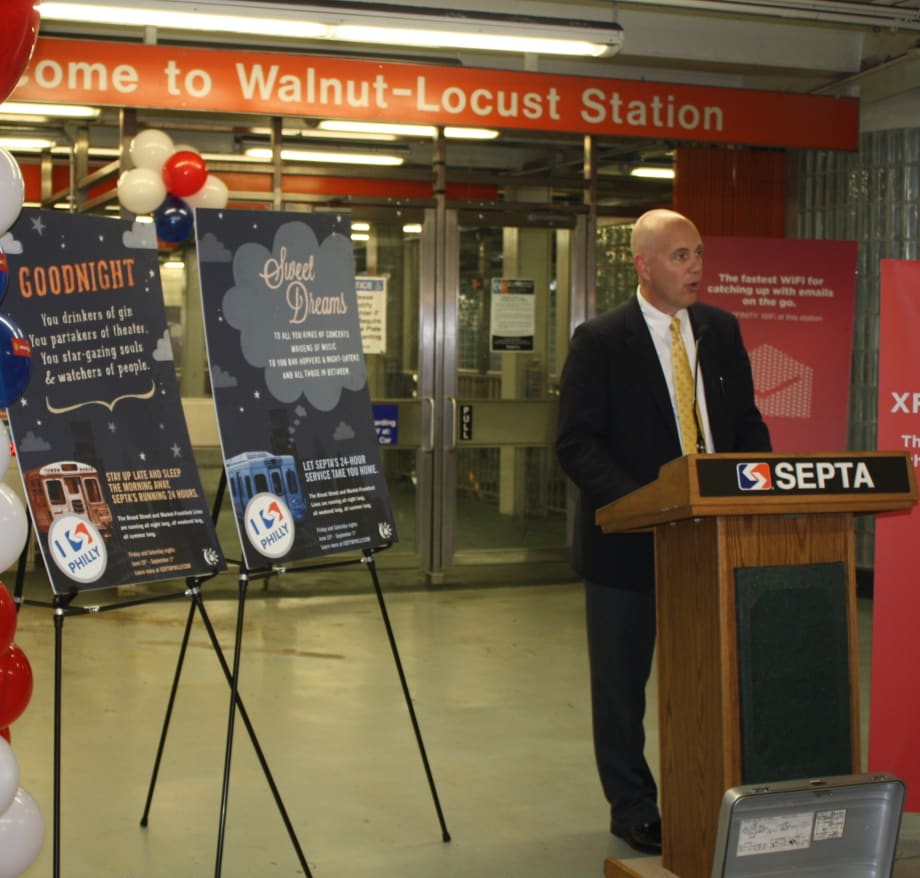
SEPTA Deputy General Manager Jeff Knueppel talks about the new overnight weekend subway service at a rally for customers.
SEPTA Deputy General Manager Jeff Knueppel talks about the new overnight weekend subway service at a rally for customers.
Those who depend on mass transit believe that service should be available 24 hours a day, seven days a week so that they can get to where they need to go, whenever they need to get there. In New York, MTA customers can hop on the subway 24 hours a day. In Chicago, CTA riders can use the Blue and Red “L” lines around the clock. But in cities like Boston and Philadelphia, major service lines and routes are not always all that convenient in the early hours of the morning — until now.
Two pilot programs recently launched by MBTA in Boston and SEPTA in Philadelphia are exploring the demand for late night service on the agencies’ most popular lines.
In late March, MBTA extended service on its Red, Orange, Green, Blue, Mattapan and Silver Lines, and 14 bus routes by 90 minutes on Fridays and Saturdays. In just the first month of the year-long pilot, MBTA had more than 72,000 late-night subway trips.

In Philadelphia, SEPTA offers 24/7 service on 22 bus routes. But since 1991, the authority has substituted overnight rail service on its Broad Street (subway) and Market-Frankford (subway-elevated) lines — its highest ridership modes —with Nite Owl buses. On Sunday, June 15, SEPTA started a summer-long pilot of 24-hour weekend train service on the Broad Street and Marker-Frankford Lines.
RELATED:U. of Mich. pilots late-night, off-campus route
Low ridership was cited as a main reason why SEPTA switched from train to bus service. However, in the 23 years since overnight train service was halted on the subway lines, Philadelphia’s nightlife has become more vibrant, with new restaurants, sports arenas and other attractions opening across the city. With more people out and about later in the evening, a demand for more reliable late night transportation alternatives was created.
“There has been a late-night renaissance in Philadelphia,” said SEPTA GM Joseph M. Casey. “More people are moving back to the city. And, more people are coming into Center City to enjoy the restaurants, and to experience nightlife venues. To get to these spots, Philadelphia officials, community and business leaders and young people asked SEPTA to run trains after midnight. We heard them and decided to introduce the summer weekend pilot.”
SEPTA will evaluate the weekend late night train program after the summer, examining ridership, staffing costs, safety and other factors to determine if the service should continue.
The extended service initiatives in Philadelphia and Boston are examples of how agencies keep the “public” in public transportation by listening to customers and the community and working on compromises that can benefit all parties.
In case you missed it...
Read our previous blog, "Keeping your drivers on the bus from ‘hire to retire’"
More Blog Posts
Building a Winning FTA Grant Proposal: Why Propane Autogas is the Pragmatic Choice for Fleet Resilience
With $610 million available through the FY 2026 Buses and Bus Facilities Competitive Program and the Low or No Emission Grant Program, agencies must build a compelling case before the September 21 deadline that balances environmental compliance with operational feasibility.
Read More →
Velo-city Conference 2026: Latest Trends in Cycling as Part of Urban Mobility
The global cycling conference highlighted how cities are integrating bicycles into multimodal transportation networks, expanding cycle tourism and reshaping urban mobility.
Read More →
Kindness Isn’t Soft...It’s Strategic.
Mike Bismeyer — often known as “The Kindness Guy” — has spent more than 17 years in public transit and mobility, serving in industry leadership roles, speaking across North America, and advocating for stronger workplace cultures. But his message doesn’t come from theory. It comes from lived experience.
Read More →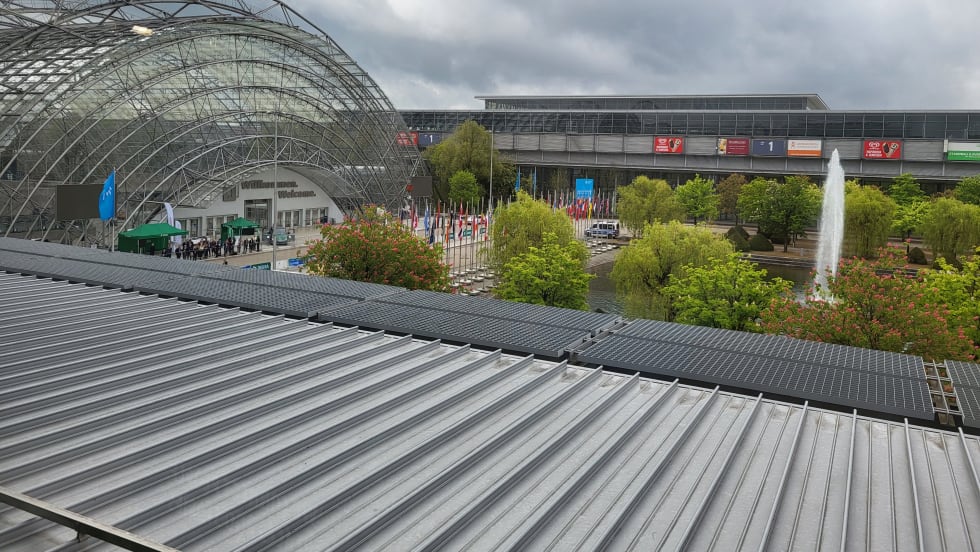
Inside ITF 2026: Transport Reacts to A Challenging World
Transport leaders from around the world gathered in Leipzig, Germany, for the 2026 International Transport Forum to discuss resilience, climate impacts, supply chains and the future of sustainable mobility.
Read More →
Every Ride Tells a Story — But You’re Not Just Selling the Ride
You’re selling the moment, the meaning, and the emotion behind it.
Read More →
How Digital Signage is Reshaping the Traveler Experience at Transportation Hubs
What was once a landscape of static signs has evolved into a responsive, immersive environment powered by real-time visual communication.
Read More →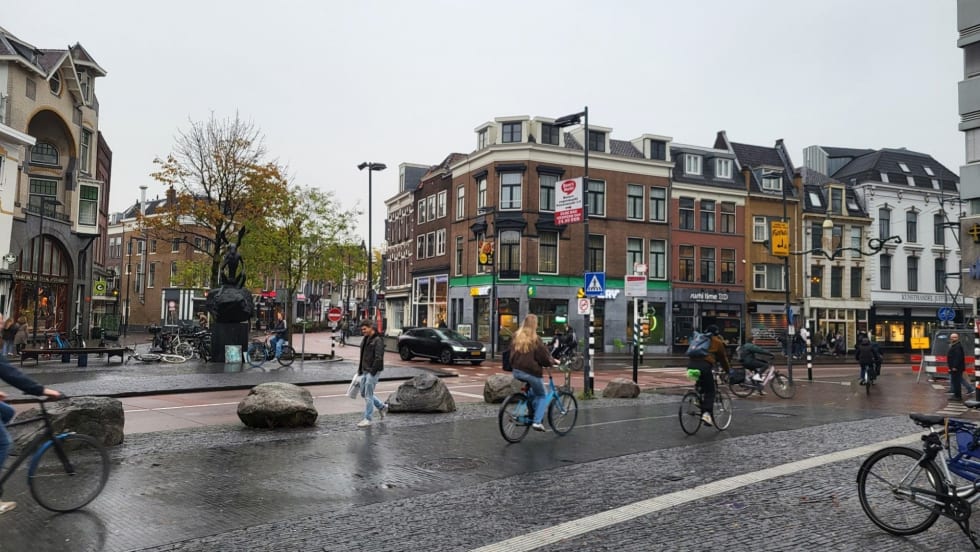
Latest Trends in Urban Mobility from Polis Conference 2025
Polis comprises cities and regions, as well as corporate partners, from across Europe, promoting the development and implementation of sustainable mobility. This year’s event had over a thousand attendees across various policy forums and an exhibition.
Read More →
Why Transit Leaders Require Better Tools for Operational Clarity In Today’s Tech-Fragmented Environment
Across North America and beyond, transit agency officials are contending with a perfect storm of operational headaches and strategic challenges that hamper daily service and long-term progress.
Read More →
The Powerless Brokers: Why California Can’t Build Transit
It is no secret that transit in the U.S. is slow and expensive to build.
Read More →
Why Transport Sustainability Should Focus on People Instead of Cars
Simply incentivizing electrification is not enough to make a meaningful impact; we must shift our focus toward prioritizing public transportation and infrastructure.
Read More →