Welcome to A New Place to Challenge Conventional Wisdom and More
TransPro Consulting and METRO have collaborated once again to build on that foundation of executive curiosity to provide greater frequency and establish a new form of correspondence: a monthly column.
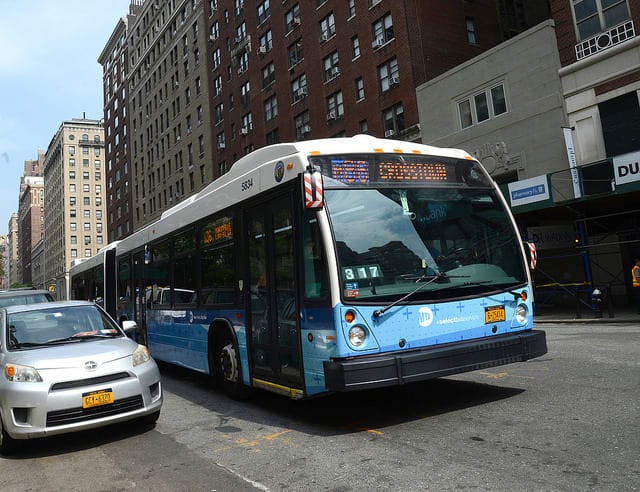
We're ready for electric buses, but are electric buses ready for us? That is just one of the questions that will be tackled in TransPro's new monthly column.
Credit:
Marc A. Hermann
2 min to read
Today kicks off the next chapter of a long-standing partnership between the teams at METRO Magazine and TransPro Consulting.
We have proudly partnered on facilitating several METRO Magazine-sponsored conferences and that relationship will continue — where we assemble leaders committed to driving an agenda of change, performance, and results.
Ad Loading...
We have collaborated to build on that foundation of executive curiosity to provide greater frequency and establish a new form of correspondence: a monthly column.
This will be the gathering space for challenging conventional wisdom and the shiny topics that have the spotlight.
Credit:
LA Metro
What Lies Ahead
This is the space where we will consider complicated topics that many of us are grappling with, and most are whispering about, in the corners of conferences rather than on the main stage. What do we do when ridership doesn't return to pre-COVID levels after all this massive investment? We're ready for electric buses, but are electric buses ready for us? How do we create leadership environments where risk is rewarded? What are we going to do about the collision course of USDOL 13c regulations and the reality of autonomous technology?
This will be the gathering space for challenging conventional wisdom and the shiny topics that have the spotlight. This is where we will spotlight results — leaders of organizations that are crushing it.
Who knew that customer satisfaction at New York City Transit has gone up 26% over the past 16 months? Why didn't we know that? Shouldn't we have known that? How did they do that? Look here for the answers.
With that — off we go. For those looking for a different conversation, you've found the right stop. Look for our first contribution to coincide with the week of APTA TRANSform & EXPO. See you then here on METRO-Magazine.com, and perhaps in person at the show as well.
With $610 million available through the FY 2026 Buses and Bus Facilities Competitive Program and the Low or No Emission Grant Program, agencies must build a compelling case before the September 21 deadline that balances environmental compliance with operational feasibility.
The global cycling conference highlighted how cities are integrating bicycles into multimodal transportation networks, expanding cycle tourism and reshaping urban mobility.
Mike Bismeyer — often known as “The Kindness Guy” — has spent more than 17 years in public transit and mobility, serving in industry leadership roles, speaking across North America, and advocating for stronger workplace cultures. But his message doesn’t come from theory. It comes from lived experience.
Transport leaders from around the world gathered in Leipzig, Germany, for the 2026 International Transport Forum to discuss resilience, climate impacts, supply chains and the future of sustainable mobility.
Polis comprises cities and regions, as well as corporate partners, from across Europe, promoting the development and implementation of sustainable mobility. This year’s event had over a thousand attendees across various policy forums and an exhibition.
Across North America and beyond, transit agency officials are contending with a perfect storm of operational headaches and strategic challenges that hamper daily service and long-term progress.
Simply incentivizing electrification is not enough to make a meaningful impact; we must shift our focus toward prioritizing public transportation and infrastructure.