



Chicago Continues to Increase Rail Service
The news marks a major milestone in CTA President Dorval R. Carter Jr.’s commitment to deliver pre-pandemic levels of rail service by end of year.

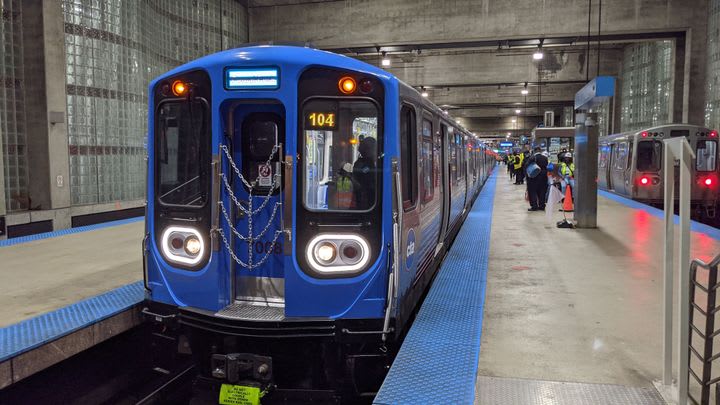
CTA continues to make significant progress in hiring new bus and rail operators to address workforce shortages and the usual trends of attrition.
Photo: CTA
The Chicago Transit Authority (CTA) announced because of continued, aggressive recruiting, hiring, and training efforts, it has added 8.5% more scheduled rail service in recent weeks for a total of 9% more scheduled service added since April 2024.
The news marks a major milestone in CTA President Dorval R. Carter Jr.’s commitment to deliver pre-pandemic levels of rail service by end of year. Since early April, CTA has added 788 weekly rail trips when compared to the fall 2023 schedule.
“CTA is putting reliability at the forefront of what we are doing. We will not announce new rail service being added until we are confident in our ability to deliver those additional rail trips with consistency,” said Carter. “As promised, thanks to our ongoing recruiting and training efforts, we are now at a point where we have been consistently filling more rail trips beyond those listed on our schedules, and we are now updating our rail timetables and Train Tracker data to reflect these improvements in service.”
Continuing to Build Rail Through Hiring
CTA continues to make significant progress in hiring new bus and rail operators to address workforce shortages and the usual trends of attrition. This year, CTA plans to train up to 200 new rail operators, which is double the number in 2023.
So far this year, 79 employees have successfully completed rail operator training. The next training course commences soon, at which time there will be more than 80 employees in training and are expected to begin qualifying for rail operator status over the next several months.
CTA’s rail operator training courses allow for at least 20 participants per class, with up to three classes in training at a given time. Additional rail service improvements are planned as part of the upcoming fall schedule, which will be announced in the coming months.
Still Building Bus Service
On the bus side, CTA has also made notable progress in its goal of delivering pre-pandemic levels of bus service by the end of the year.
Through June, service levels have been improved on 48 bus routes throughout the service region, with all these routes having returned to near pre-pandemic scheduled service levels.
An additional 28 bus routes are expected to receive improvements this fall and winter to meet the goal of providing pre-pandemic service levels.
The bus routes that received additional service in the Spring 2024 schedule were up 21% in June year-over-year for weekdays, far outpacing the other routes, which grew by 11% year-over-year.
More Management

ENC Lands MATA Contract and More in Biz Briefs
In this edition of Biz Briefs, we spotlight the latest developments shaping the future of mobility.
Read More →
From Surviving to Thriving: Building Stronger Transportation Organizations
Bus Business Consultants founder Brian Dickson shares lessons on leadership, organizational health, and creating options for long-term success in a changing transportation industry.
Read More →
Everett Transit, Community Transit Outline Consolidation Agreement
The proposed agreement calls for a 50% increase in bus service in Everett, a new microtransit zone, continued paratransit service, and the transfer of Everett Transit operations to Community Transit.
Read More →

Strada360’s Steve Lassey on Turning Transit Data Into Better Decisions
From breaking down data silos to preparing for AI, Strada360 CEO Steve Lassey discusses how transit agencies can use technology to improve operations, customer information, and long-term decision-making.
Read More →
People Movement: Phil Washington Joins HNTB, Denver RTD Launches CEO Search, and More
In this edition, we also spotlight recent personnel moves at STV, the Eno Center for Transportation, and more, highlighting the people taking on new roles across the transportation industry.
Read More →
SEPTA Details Accelerate Vision for Transit System
The plan outlines investments in trolley modernization, new Metro and Regional Rail vehicles, accessible stations, and more frequent bus and rail service.
Read More →
FTA Ends Direct Oversight of MBTA Safety Actions
The federal agency closed its remaining special directive to the Massachusetts Department of Public Utilities following a safety review that began in 2022.
Read More →
Report: Transit Bus Manufacturing Supports 34,100 Jobs, $5.1B in GDP
The “Buses Mean Business” report examines the transit bus manufacturing industry’s economic footprint, supply chain, and rising demand for vehicle replacements.
Read More →
LIT Marks 10-Year Milestone at Annual Summit
Hosted by the COTA from September 10 to 13, the Summit carried the theme “Celebrating 10 Years of Excellence, Leadership, and Impact,” with every part of the program honoring the people, agencies, and partners who built LIT over its first decade.
Read More →
People Movement: Dan Dipert Coaches Adds Third-Generation Leader, Keolis Names New Valley Metro VP/GM, and More
In this edition, we also cover recent appointments and announcements at the Wabtec, SilverRide, HNTB, and more, showcasing the individuals helping to shape the future of transportation.
Read More →