



Chicago's Metra OKs $1.1B Operating Budget with No Fare Changes
The Metra Board approved a $1.1b operating budget for 2025 with no planned fare changes. Withing the budget are costs associated with a capacity expansion on Metra’s Electric Line for the Northern Indiana Commuter Transportation District.

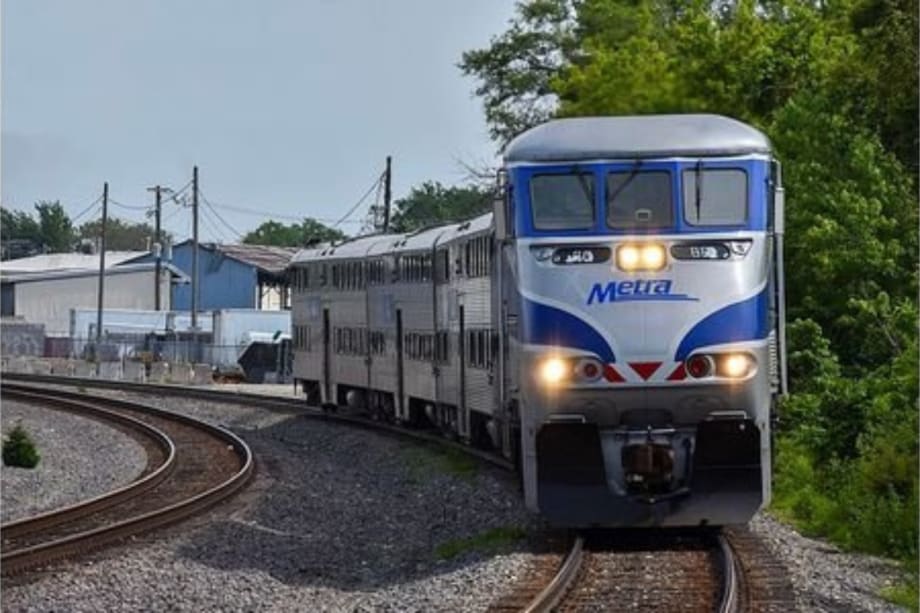
Metra's 2025 operating budget relies on tax dollars and COVID relief funds to keep fares at current rates.
Photo: Metra
The Metra Board of Directors approved a 2025 operating budget of $1.135 billion that holds fares steady at current levels and relies on strong sales tax revenues and a dwindling allotment of federal COVID relief aid to cover the expected growth in expenses.
A $366.4 million capital plan was also approved that continues major investment in bridges, stations and new and rehabilitated rolling stock.
Expanding Capacity
The 2025 operating budget includes about $65 million in costs associated with a capacity expansion on the Metra Electric Line for the Northern Indiana Commuter Transportation District (NICTD), which NICTD is covering. Excluding those costs, the budget is about 4.1% higher than the 2024 budget, largely due to expected inflationary, contractual, and market increases.
It includes additional spending related to new regulations and related training, upgrades to Metra’s Positive Train Control safety system, related to heightened cybersecurity risks, and increased costs related to marketing.
Budget Breakdown
The budget is funded by system-generated revenue of $304.1 million, including $184.2 million in fares, based on a projection that ridership will grow about 7% in 2025 to 39 million passenger trips. It also is funded by $592.5 million in regional sale tax receipts and $238.4 million out of Metra’s remaining $331.8 million in federal COVID relief funding.
The COVID relief funding, approved by Washington to help transit agencies cope with the pandemic related drop in ridership and fare revenue, is expected to run out in 2026 at Metra, CTA, and Pace. Lawmakers in Springfield are aware of the impending problem and have begun to work on potential solutions.
The proposed $366.4 million capital program allocated $93.8 million to rolling stock, $101.8 million to bridges, track, and structures, $39.2 million to signal, electrical and communication, $57 million to facilities and equipment, $34.9 million to stations and parking, and $39.8 million to support activities.
The capital program is funded with $242.3 million in federal formula funding, $29 million in federal Congestion Mitigation and Air Quality funds, $88.6 million in state PAYGO funds, and $6.5 million in RTA Innovation, Coordination, and Enhancement funds.
The full budget can be viewed here.
More Management

METRO Opens Submissions for 2026 Motorcoach Awards
Nominations are now being accepted for METRO Magazine’s Operator of the Year and Innovative Operator of the Year awards.
Read More →
New York MTA Advances Final Contract for Second Avenue Subway Expansion
Contract Four is the largest in the Second Avenue Subway Phase 2 project and includes construction of station infrastructure, tracks, and signals for the subway expansion, MTA officials said. Work on Contract Four will begin in 2027.
Read More →
Transit Agencies Highlight Safety Gains at National Summit
Leaders from 15 major transit systems shared crime-reduction results and safety initiatives while discussing the role of continued federal support.
Read More →

NITA Names New Leadership, Expands Reduced-Fare Program at First Board Meeting
The new regional transit authority appointed its first board chair and interim executive director while extending reduced fares across CTA, Metra, and Pace for eligible riders.
Read More →
Beyond the Checklist: A Structured Approach to Transit Maintenance
Reliability-Centered Maintenance helps transit agencies move beyond routine checklists to focus limited resources on the assets and failures that have the greatest impact on safety, reliability, and service.
Read More →
APTA 2026 Nominating Committee Selects Leadership Slate, Names Chair and Vice Chair Nominees
Leadership changes will help shape the association’s priorities and its representation of the transportation industry during the 2026–2027 term.
Read More →
DART Launches Major Security, Fare Enforcement Initiative
The 90-day demonstration will deploy coordinated security teams at five light rail stations while testing controlled access and gathering data to guide future investments.
Read More →
Advancing Fare Collection Through Technology and Innovation
Learn about delivering 1300 gates at 91 stations while managing fare evasion. Explore the large scale deployment, solution customization and real-world results that affect the region. Prepare for deployment in your region now.
Read More →
Game Day in Motion: Moving Millions During the 2026 World Cup
Between packed transit stations and team motorcoaches, see how agencies and operators across North America tackled the transportation demands of the 2026 FIFA World Cup.
Read More →
Surface Transportation Extension Averts Shutdown, Leaves Transit Funding Gap
The stopgap keeps federal transportation programs moving, but missing advance funding could complicate the transit and rail projects agencies are planning next.
Read More →