



New York Governor, MTA Tout Success of Congestion Pricing
August saw nearly 2.7 million fewer vehicles than baseline enter the congestion relief zone, a 14% reduction. August was level with June for the most significant vehicle reduction seen so far in 2025.

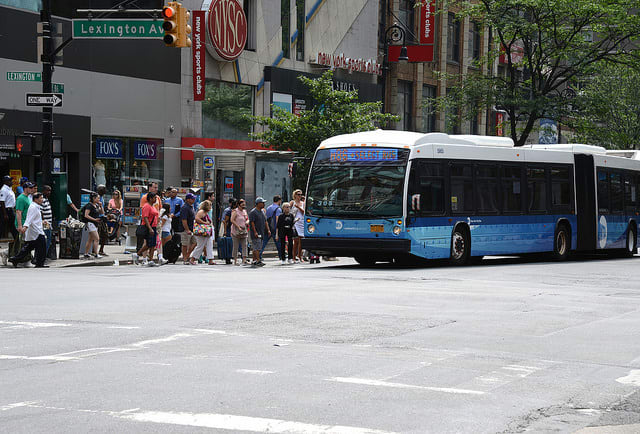
Congestion pricing has shown continued success in reducing traffic, speeding up the flow of traffic, and cutting down delays, not just in the congestion relief zone but throughout the New York metropolitan region, officials said.
Photo: Marc A Hermann
Gov. Kathy Hochul and the Metropolitan Transportation Authority (MTA) announced that New York City’s congestion relief program has continued to reduce traffic and improve travel times throughout the region successfully.
August saw nearly 2.7 million fewer vehicles than baseline enter the congestion relief zone, a 14% reduction. August was level with June for the most significant vehicle reduction seen so far in 2025.
The Governor and the MTA added that congestion pricing continues to generate revenue to fund transit improvements across the region, including new railcars, accessibility improvements, and enabling the advancement of the Second Avenue Subway Phase 2.
“This program has been nothing short of transformational, making streets safer, reducing gridlock across the region, and unlocking generational upgrades to mass transit, benefitting millions,” said Governor Hochul. “Congestion pricing is working, it is legal, and the cameras are staying on.”
Less Traffic, Safer Streets
Congestion pricing has shown continued success in reducing traffic, speeding up the flow of traffic, and cutting down delays, not just in the congestion relief zone but throughout the New York metropolitan region, officials said.
The number of vehicles entering the zone is down by 12% since congestion pricing started. Every day, 87,000 fewer vehicles enter the zone, and since the program began, 17.6 million fewer vehicles have entered the zone compared to last year.
Congestion pricing has had notable benefits, reducing gridlock on bridges and tunnels crossing the East River and Hudson River, making commutes faster.
According to the MTA, every crossing entering the congestion relief zone has seen morning peak travel times reduced in 2025 when compared to 2024, including:
Brooklyn Bridge: 13% faster
Holland Tunnel: 36% faster
Hugh L. Carey Tunnel: 16% faster
Lincoln Tunnel: 10% faster
Manhattan Bridge: 5% faster
Queens-Midtown Tunnel: 4% faster
Queensboro Bridge: 21% faster
Williamsburg Bridge: 23% faster
Reduced gridlock has improved the quality of life in New York City, officials report.
Crashes in the congestion relief zone are down 14%. Traffic injuries are down by 15% in the zone, and the safety benefits are being felt citywide. Earlier this summer, the New York City Department of Transportation released data showing that pedestrian fatalities on New York City streets are at historic lows, matching levels last seen in 2018.
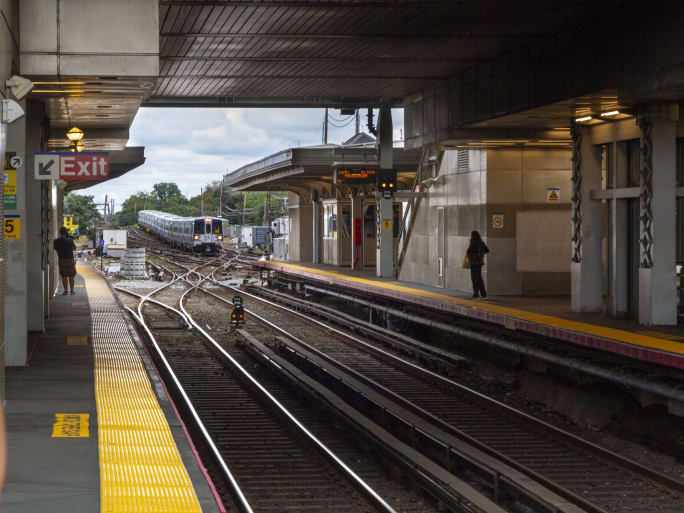
The Long Island Rail Road (LIRR) shattered its post-pandemic daily ridership record twice in July, carrying 298,419 passengers on July 23 and 295,419 passengers on July 22.
Photo: LIRR
Rising Transit Ridership
Transit ridership across all modes has increased from January to August 2025 when compared to the same period last year.
Subway: 9%
Bus: 13%
LIRR: 10%
Metro-North: 7%
Access-A-Ride: 22%
In July, the MTA achieved its best summer subway ridership week since 2019, hitting four million subway riders three days in a row in a summer season — a first since the start of the pandemic.
The Long Island Rail Road (LIRR) shattered its post-pandemic daily ridership record twice in July, carrying 298,419 passengers on July 23 and 295,419 passengers on July 22.
Improving Transit Performance
Transit service has improved across the board in 2025 to near-record heights. In August, subway weekday On-Time Performance was 85.2%, the best for that month in 10 years.
Overall, summer On-Time Performance on the subway was 84.3%, up from both 2024 and 2023.
LIRR and Metro-North On-Time Performance have consistently been at or near 97% in 2025.
Buses are moving faster thanks to congestion pricing. According to a new report from the New York City Comptroller, buses operating entirely or partially in the congestion relief zone have seen improvements to speed and overall performance in excess of citywide baselines. August also saw the final implementation of the MTA’s Queens bus Network Redesign.
At the same time, economic indicators demonstrate that congestion pricing has coincided with an increase in business activity in Manhattan’s central business district. A new report from Placer AI found that New York City office visits in July exceeded pre-pandemic levels for the first time, the first city in the nation to achieve that benchmark in its analysis.
More Management

METRO Opens Submissions for 2026 Motorcoach Awards
Nominations are now being accepted for METRO Magazine’s Operator of the Year and Innovative Operator of the Year awards.
Read More →
New York MTA Advances Final Contract for Second Avenue Subway Expansion
Contract Four is the largest in the Second Avenue Subway Phase 2 project and includes construction of station infrastructure, tracks, and signals for the subway expansion, MTA officials said. Work on Contract Four will begin in 2027.
Read More →
Transit Agencies Highlight Safety Gains at National Summit
Leaders from 15 major transit systems shared crime-reduction results and safety initiatives while discussing the role of continued federal support.
Read More →

NITA Names New Leadership, Expands Reduced-Fare Program at First Board Meeting
The new regional transit authority appointed its first board chair and interim executive director while extending reduced fares across CTA, Metra, and Pace for eligible riders.
Read More →
Beyond the Checklist: A Structured Approach to Transit Maintenance
Reliability-Centered Maintenance helps transit agencies move beyond routine checklists to focus limited resources on the assets and failures that have the greatest impact on safety, reliability, and service.
Read More →
APTA 2026 Nominating Committee Selects Leadership Slate, Names Chair and Vice Chair Nominees
Leadership changes will help shape the association’s priorities and its representation of the transportation industry during the 2026–2027 term.
Read More →
DART Launches Major Security, Fare Enforcement Initiative
The 90-day demonstration will deploy coordinated security teams at five light rail stations while testing controlled access and gathering data to guide future investments.
Read More →
Advancing Fare Collection Through Technology and Innovation
Learn about delivering 1300 gates at 91 stations while managing fare evasion. Explore the large scale deployment, solution customization and real-world results that affect the region. Prepare for deployment in your region now.
Read More →
Game Day in Motion: Moving Millions During the 2026 World Cup
Between packed transit stations and team motorcoaches, see how agencies and operators across North America tackled the transportation demands of the 2026 FIFA World Cup.
Read More →
Surface Transportation Extension Averts Shutdown, Leaves Transit Funding Gap
The stopgap keeps federal transportation programs moving, but missing advance funding could complicate the transit and rail projects agencies are planning next.
Read More →