



New York MTA Moving Forward with Capital Projects to Improve Transit Equity
In a presentation to the MTA Board’s Capital Program Committee, MTA Construction & Development President Jamie Torres-Springer put forward a proposed capital program amendment that allows the MTA to move projects along at a faster pace, offers support for megaproject expansions, and more.

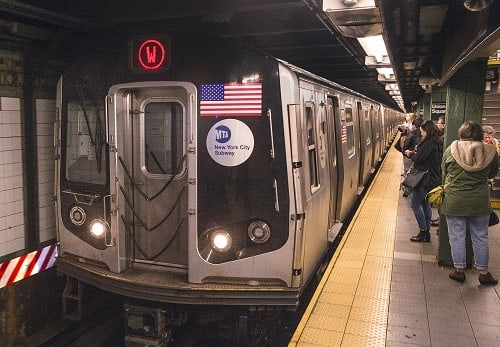
In 2020 and 2021 the MTA completed accessibility projects at the fastest pace in agency history, with 23 subway stations brought online in the two-year span.
New York MTA/PatrickCashin
New York’s Metropolitan Transportation Authority (MTA) detailed an update to the authority’s 2020-24 Capital Program that adjusts mass transportation needs for a post-COVID world. In a presentation to the MTA Board’s Capital Program Committee, MTA Construction & Development President Jamie Torres-Springer put forward a proposed capital program amendment that allows the MTA to move projects along at a faster pace, offers support for megaproject expansions, and rebalances priorities while accounting for the pandemic’s impact on external factors such as inflation, supply chain, and labor market issues.
The proposed amendment builds on the accelerated pace at which the MTA has completed projects during the pandemic, when it took advantage of low ridership to complete accessibility and signal modernization projects. Among the projects included are acceleration of accessibility upgrades at eight LIRR stations; modernization of the signal system on the A, C, and F lines in Brooklyn and Manhattan; Track Trespassing initiatives including the Platform Screen Doors pilot, cameras, and other technologies; bike and pedestrian accessibility at bridge and tunnel crossings; and renewal of Metro-North Railroad’s viaduct along Park Avenue in East Harlem.
“This capital program was already the most ambitious in the agency’s history, and COVID has only highlighted its importance,” said MTA Chair and CEO Janno Lieber. “Since the onset of COVID, we ramped up the speed of construction, including accelerating $2.3 billion of work. We also adopted new strategies to complete projects faster and efficiently — utilizing design-build contracts, holding contractors accountable and providing them with smart financial incentives, and leveraging private partnerships — which we will now use on a larger scale on projects that will help close the gap on transit equity across the region.”
Implementation of the program resumed following a pause at the start of the pandemic. In 2021, the authority initiated over $8 billion in projects, with another $8 billion set for 2022. The MTA has been able to contain costs in the early stages of the program, with the median contract for projects coming in 8% lower than expected cost. In 2020 and 2021 the MTA completed accessibility projects at the fastest pace in agency history, with 23 subway stations brought online in the two-year span. The authority also made progress on its signal modernization efforts with the installation of Communications Based Train Controlled (CBTC) signaling on the Queens Boulevard E, F, M, and R lines.
Looking forward, elements of the proposed 2020-24 Capital Plan amendment include:
Adapting to Changing Conditions and Needs - Prioritizing Reliability and Equity in Signal Modernization
New Projects and Acceleration - Track Trespassing Initiatives
Enhancing Micromobility
Accessibility Upgrade at LIRR Stations
Expansion Projects
More Management

METRO Opens Submissions for 2026 Motorcoach Awards
Nominations are now being accepted for METRO Magazine’s Operator of the Year and Innovative Operator of the Year awards.
Read More →
New York MTA Advances Final Contract for Second Avenue Subway Expansion
Contract Four is the largest in the Second Avenue Subway Phase 2 project and includes construction of station infrastructure, tracks, and signals for the subway expansion, MTA officials said. Work on Contract Four will begin in 2027.
Read More →
Transit Agencies Highlight Safety Gains at National Summit
Leaders from 15 major transit systems shared crime-reduction results and safety initiatives while discussing the role of continued federal support.
Read More →

NITA Names New Leadership, Expands Reduced-Fare Program at First Board Meeting
The new regional transit authority appointed its first board chair and interim executive director while extending reduced fares across CTA, Metra, and Pace for eligible riders.
Read More →
Beyond the Checklist: A Structured Approach to Transit Maintenance
Reliability-Centered Maintenance helps transit agencies move beyond routine checklists to focus limited resources on the assets and failures that have the greatest impact on safety, reliability, and service.
Read More →
APTA 2026 Nominating Committee Selects Leadership Slate, Names Chair and Vice Chair Nominees
Leadership changes will help shape the association’s priorities and its representation of the transportation industry during the 2026–2027 term.
Read More →
DART Launches Major Security, Fare Enforcement Initiative
The 90-day demonstration will deploy coordinated security teams at five light rail stations while testing controlled access and gathering data to guide future investments.
Read More →
Advancing Fare Collection Through Technology and Innovation
Learn about delivering 1300 gates at 91 stations while managing fare evasion. Explore the large scale deployment, solution customization and real-world results that affect the region. Prepare for deployment in your region now.
Read More →
Game Day in Motion: Moving Millions During the 2026 World Cup
Between packed transit stations and team motorcoaches, see how agencies and operators across North America tackled the transportation demands of the 2026 FIFA World Cup.
Read More →
Surface Transportation Extension Averts Shutdown, Leaves Transit Funding Gap
The stopgap keeps federal transportation programs moving, but missing advance funding could complicate the transit and rail projects agencies are planning next.
Read More →