



North Carolina's Transit Service Plan Approved
The plan represents a significant expansion of transit serving the Charlotte region, including a 50% increase in bus service and 43 more miles of rail service.

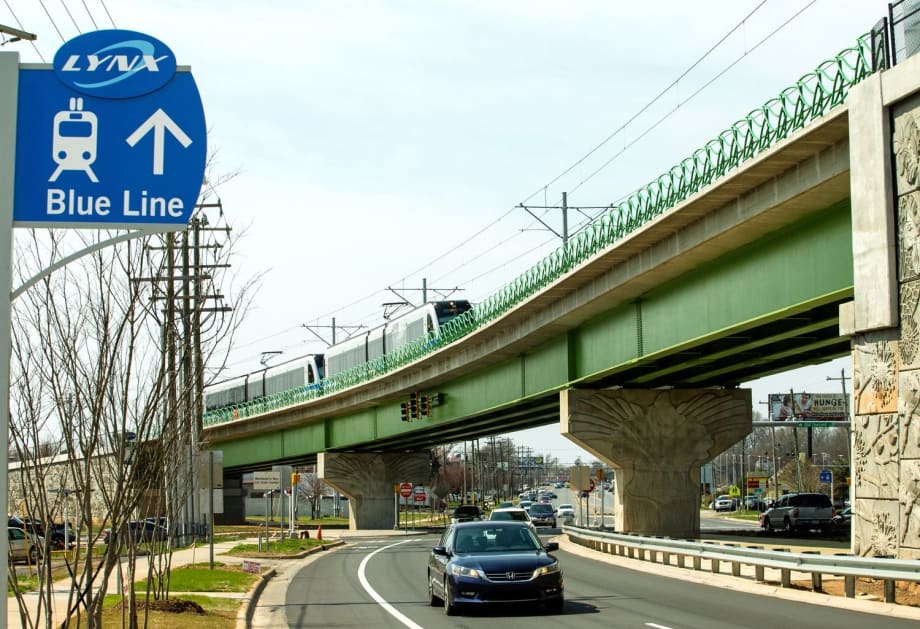
The decision to approve the plan comes after nearly half a year of extensive public engagement with stakeholders, residents, and riders across Mecklenburg County.
Photo: CATS
Charlotte, N.C.’s Metropolitan Transit Commission (MTC) voted to adopt the updated Charlotte Area Transit System’s (CATS) Transit System Plan (TSP), which includes the prioritization of the Better Bus program, inclusive of microtransit, along with phased implementation of the rapid transit corridors.
The plan represents a significant expansion of transit serving the Charlotte region, including a 50% increase in bus service and 43 more miles of rail service.
Approving the TSP
The decision to approve the plan comes after nearly half a year of extensive public engagement with stakeholders, residents, and riders across Mecklenburg County.
Four scenarios were developed and presented to the public, including the Better Bus program, the Red Line, and the Gold Line extension, but they varied in the mode and length of the Silver Line corridor and the Blue Line extension corridor.
“Through our surveys, 93% of participants indicated that more transit options are needed in Mecklenburg County and the time to act is now,” said interim CEO Brent Cagle. “They also highlighted the need for increased frequency and connections to jobs, housing, education, and daily destinations. We believe this updated plan meets the needs shared by our communities, and we applaud the MTC for their continued diligence and support of the communities that we serve.”
CATS staff presented their recommendation to the MTC in April based on public and stakeholder input.
The project website details the plan, the engagement process and staff recommendations, key takeaways, and a summary of the feedback received during the engagement process.
The decision made by the MTC is an integral part of making the plan a reality, CATS officials said.
Key Points of the Plan
The priority of the Better Bus plan is one of the key parts of the TSP, and most of the program will be implemented in the next five to 10 years.
Officials said riders can expect to see improved amenities, better frequencies, and additional microtransit zones within that period.
According to CATS, the other key to the updated TSP is the phased implementation of rail through the Rapid Transit Corridor System. These rail lines include commuter rail, light rail, and streetcar projects to provide reliable, time-competitive travel to connect people to housing, jobs, educational opportunities, shopping, and entertainment.
The Rapid Transit Corridor System plan includes:
Red Line commuter rail from Charlotte Gateway Station to Mt. Mourne.
Silver Line light rail from the Airport to the Coliseum/Ovens.
Gold Line streetcar extension from Rosa Parks Place to Eastland.
Blue Line light rail extension from I-485/South Boulevard to Carolina Place Mall (Pineville).
Future light rail extensions for the Silver Line west to I-485 and east to Matthews and the Blue Line to Ballantyne, as funding allows, with enhanced bus in the interim.
More Management

METRO Opens Submissions for 2026 Motorcoach Awards
Nominations are now being accepted for METRO Magazine’s Operator of the Year and Innovative Operator of the Year awards.
Read More →
New York MTA Advances Final Contract for Second Avenue Subway Expansion
Contract Four is the largest in the Second Avenue Subway Phase 2 project and includes construction of station infrastructure, tracks, and signals for the subway expansion, MTA officials said. Work on Contract Four will begin in 2027.
Read More →
Transit Agencies Highlight Safety Gains at National Summit
Leaders from 15 major transit systems shared crime-reduction results and safety initiatives while discussing the role of continued federal support.
Read More →

NITA Names New Leadership, Expands Reduced-Fare Program at First Board Meeting
The new regional transit authority appointed its first board chair and interim executive director while extending reduced fares across CTA, Metra, and Pace for eligible riders.
Read More →
Beyond the Checklist: A Structured Approach to Transit Maintenance
Reliability-Centered Maintenance helps transit agencies move beyond routine checklists to focus limited resources on the assets and failures that have the greatest impact on safety, reliability, and service.
Read More →
APTA 2026 Nominating Committee Selects Leadership Slate, Names Chair and Vice Chair Nominees
Leadership changes will help shape the association’s priorities and its representation of the transportation industry during the 2026–2027 term.
Read More →
DART Launches Major Security, Fare Enforcement Initiative
The 90-day demonstration will deploy coordinated security teams at five light rail stations while testing controlled access and gathering data to guide future investments.
Read More →
Advancing Fare Collection Through Technology and Innovation
Learn about delivering 1300 gates at 91 stations while managing fare evasion. Explore the large scale deployment, solution customization and real-world results that affect the region. Prepare for deployment in your region now.
Read More →
Game Day in Motion: Moving Millions During the 2026 World Cup
Between packed transit stations and team motorcoaches, see how agencies and operators across North America tackled the transportation demands of the 2026 FIFA World Cup.
Read More →
Surface Transportation Extension Averts Shutdown, Leaves Transit Funding Gap
The stopgap keeps federal transportation programs moving, but missing advance funding could complicate the transit and rail projects agencies are planning next.
Read More →