



NY MTA 2020 budget, financial plan projected to save $1.6 billion
Proposal also includes $253 million in higher farebox revenue than projected in the July plan due to increased ridership across system.

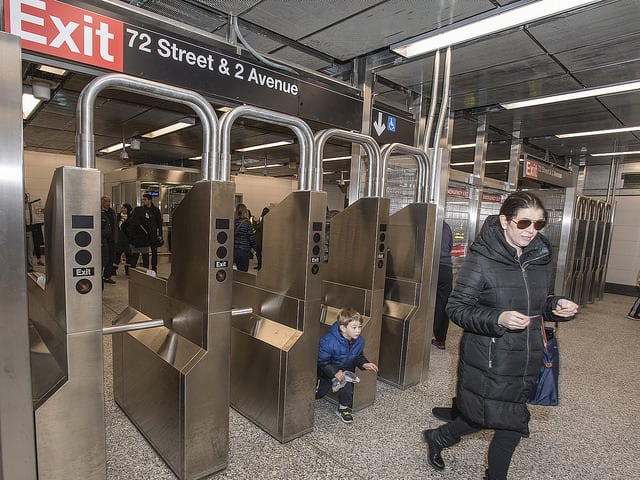
The budget proposal comes amidst the MTA and AlixPartners’ historic Transformation Plan to change the way the agency does business by consolidating and centralizing operating support functions to focus on core service delivery.
MTA
The 2020 budget and four-year plan also includes $253 million in higher farebox revenue than projected in the July plan due to increased ridership across the system.
Marc A. Hermann/MTA
New York’s Metropolitan Transportation Authority (MTA) presented its final proposed 2020 budget and four-year financial plan that includes no budget-driven service cuts and advances the agency’s historic Transformation Plan to dramatically improve service and deliver significant reforms for taxpayers and commuters. The implementation of the Transformation Plan, the agency’s first reorganization in half a century, is projected to deliver $1.6 billion in savings over the course of the financial plan.
The 2020 budget and four-year plan also includes $253 million in higher farebox revenue than projected in the July plan due to increased ridership across the system. Additionally, projected fare and toll increases remain below the rate of inflation as the MTA continues to undertake unprecedented cost-cutting measures to deliver for New Yorkers.
The budget proposal comes amidst the MTA and AlixPartners’ historic Transformation Plan to change the way the agency does business by consolidating and centralizing operating support functions to focus on core service delivery. The proposed budget includes significant efficiencies associated with transformation implementation with net savings over the plan.
The four-year plan includes the MTA’s recently issued Transformation Request for Proposals and the creation of the Transformation Management Office to be led by Chief Transformation Officer Anthony McCord. The MTA will also onboard a chief engineering officer, director of research and development, chief people officer, and chief technology officer.
In the proposed budget, the MTA assumes a renegotiation of the paratransit contract with the City to provide for equitable cost-sharing of the program. Since 1993, New York City Transit has assumed the city’s previous responsibility for providing paratransit service and prior to the NYCT takeover, NYC was responsible for 100% of the cost. With the substantial investments the MTA has made to improve this service over past 26 years, paratransit ridership has seen a six-fold increase from 25,000 registrants in 1994 to more than 159,000 registrants in 2019.
The budget proposal comes amidst the MTA and AlixPartners’ historic Transformation Plan to change the way the agency does business by consolidating and centralizing operating support functions to focus on core service delivery.
MTA
The cost of this critical service has gone from $10.9 million in 1994 to $548.5 million in 2019. Under the current agreement, the City pays 33% of the deficit limited to no more than a 20% increase from the amount the City paid in the prior year. Given these increases, the MTA is proposing an equitable sharing of paratransit costs. In many jurisdictions across New York, local governments cover the full amount of paratransit costs, including Nassau and Suffolk counties as well as localities across Metro-North’s territory. An equal share would reduce the cost to New York City Transit by more than $100 million annually. The arrangement is projected to save $361 million over the course of the four-year plan.
The Financial Plan also reflects the hiring of an additional 500 officers for the MTA Police Department. The officers will patrol across New York City Transit, Metro-North, and the Long Island Railroad with a focus on ensuring the safety and security of our employees and eight million daily customers. Recently, there has been a 39% increase in worker assaults as reported by the Transport Workers Union, a more than 50% increase in hate crimes and a 10% increase in robberies.
Finally, the AlixPartners report recommends the reduction of up to 2,700 primarily administrative positions. This will primarily focus on attrition and only a reduction of work force as a last resort. It is a critical component of the $1.6 billion in transformation savings.
The MTA continues to see significant improvements as a result of the Subway Action Plan with on-time performance reaching 81.5% this month. October was the fifth straight month with weekday on-time performance above 80%. The November Financial Plan maintains these improvements, which are funded from Phase 1 of Congestion Pricing/For-Hire-Vehicle fees, a $300 million annual ongoing revenue source.
The MTA is currently projected to see an operating deficit of $426 million by 2023. The projection is contingent on achieving significant savings and cost cutting outlined in the plan. There are significant risks to implementation; without achieving these critical savings, the MTA’s deficit could grow as high as $1 billion in the out-years, according to the agency.
More Management

LIT Marks 10-Year Milestone at Annual Summit
Hosted by the COTA from September 10 to 13, the Summit carried the theme “Celebrating 10 Years of Excellence, Leadership, and Impact,” with every part of the program honoring the people, agencies, and partners who built LIT over its first decade.
Read More →
People Movement: Dan Dipert Coaches Adds Third-Generation Leader, Keolis Names New Valley Metro VP/GM, and More
In this edition, we also cover recent appointments and announcements at the Wabtec, SilverRide, HNTB, and more, showcasing the individuals helping to shape the future of transportation.
Read More →
METRO Opens Submissions for 2026 Motorcoach Awards
Nominations are now being accepted for METRO Magazine’s Operator of the Year and Innovative Operator of the Year awards.
Read More →

New York MTA Advances Final Contract for Second Avenue Subway Expansion
Contract Four is the largest in the Second Avenue Subway Phase 2 project and includes construction of station infrastructure, tracks, and signals for the subway expansion, MTA officials said. Work on Contract Four will begin in 2027.
Read More →
Transit Agencies Highlight Safety Gains at National Summit
Leaders from 15 major transit systems shared crime-reduction results and safety initiatives while discussing the role of continued federal support.
Read More →
NITA Names New Leadership, Expands Reduced-Fare Program at First Board Meeting
The new regional transit authority appointed its first board chair and interim executive director while extending reduced fares across CTA, Metra, and Pace for eligible riders.
Read More →
Beyond the Checklist: A Structured Approach to Transit Maintenance
Reliability-Centered Maintenance helps transit agencies move beyond routine checklists to focus limited resources on the assets and failures that have the greatest impact on safety, reliability, and service.
Read More →
APTA 2026 Nominating Committee Selects Leadership Slate, Names Chair and Vice Chair Nominees
Leadership changes will help shape the association’s priorities and its representation of the transportation industry during the 2026–2027 term.
Read More →
DART Launches Major Security, Fare Enforcement Initiative
The 90-day demonstration will deploy coordinated security teams at five light rail stations while testing controlled access and gathering data to guide future investments.
Read More →
Advancing Fare Collection Through Technology and Innovation
Learn about delivering 1300 gates at 91 stations while managing fare evasion. Explore the large scale deployment, solution customization and real-world results that affect the region. Prepare for deployment in your region now.
Read More →