



5 COVID-19 Lessons to Make Public Transportation Better
Many of the old ways of doing business in the transit world are now in flux. Funding is not as stable as it was, ridership dropped, and full bus occupancy, once a measure of success, is now a thing to be avoided.

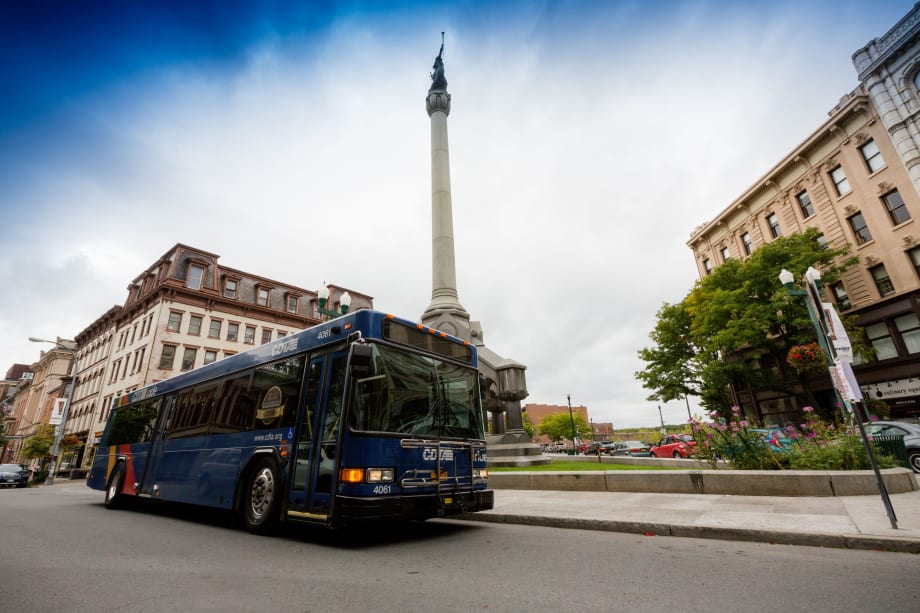
Throughout this crisis the need to quickly adjust service, from a weekend-only schedule to a service that better supports essential workers, was of utmost importance.
CDTA
The coronavirus pandemic has created considerable turmoil for cities, people, and the public transit systems that serve them. Although the pandemic is far from over, we are beginning to adjust to life in a COVID-19 world, and to examine the lessons for public transportation in the new reality that has formed.
Many of the old ways of doing business in the transit world are now in flux. Funding is not as stable as it was, ridership dropped, and full bus occupancy, once a measure of success, is now a thing to be avoided. Most importantly, changes to the service based on the easing of restrictions and changes in passenger behavior are expected to persist in the coming months. This means that services that were seldom changed for years, or that only had minute variations, will now change often, upending many of the old ways of planning and scheduling public transit operations.
The importance of quick scenario-based planning
Throughout this crisis the need to quickly adjust service, from a weekend-only schedule to a service that better supports essential workers, was of utmost importance. We now know that quick scenario planning is becoming a necessity, where once service was seldom changed. Questions such as whether the service can be supported with higher degrees of bus driver absenteeism, whether longer disinfection breaks can be supported, how to protect drivers from cross contamination needed to be answered quickly. Modern planning and scheduling platforms do just that. One of the biggest scenarios that needs addressing now is what the impact of social distancing will be on the amount of drivers/buses required for the service.
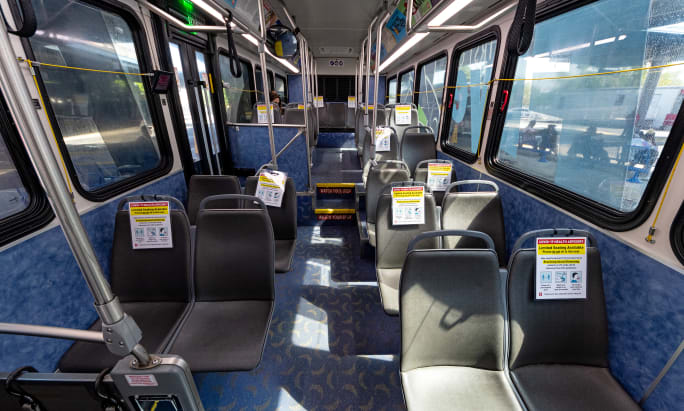
One of the biggest scenarios that needs addressing now is what the impact of social distancing will be on the amount of drivers/buses required for the service.
JTA
Social Distancing: are there enough buses and bus operators?
On June 30, Optibus polled a group of transportation providers and asked whether they were required to enforce social distancing through crowding prevention — 22% didn’t limit crowding whatsoever, yet 78% of respondents did. Thirty percent were planning on short-term crowding limitations and the rest were planning on varying degrees of social distancing for longer times.
We then asked what are their concerns in regards to crowding prevention, 59% said they were concerned about not having enough buses, 42% said there wouldn’t be enough drivers, and another 42% said it would be impossible to measure the amount of riders. Lastly, 28% expressed the fear that enforcing crowding limitations will degrade the service.
The truth is that no-one knows what the impact of crowding prevention will be because the actual ridership will fluctuate considerably over the next several months. However, the ability to plan for different ridership scenarios will help make better decisions and avoid service degradation.
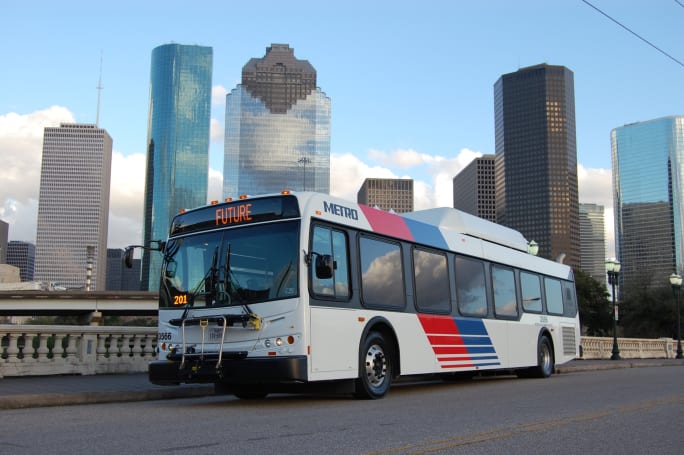
We all know that “Frequency is Freedom,” and we can hope that crowding will be avoided by adding frequency and not decreasing it.
Houston METRO
5 lessons
Despite all these challenges, we do think there are five positive lessons to learn from these challenging times:
Frequency is king - We all know that “Frequency is Freedom,” and we can hope that crowding will be avoided by adding frequency and not decreasing it. People are more likely to use a frequent service, and the same applies even today during the crisis. Frequency also helps quell fears about overcrowding. Examining ridership data closely and using scenario planning can help improve frequency during the new peak hours — they have changed, too — while still being able to support this with an existing amount of buses and bus operators. Focusing on frequency as a way out of this crisis will do well for the service as a whole.
Taking a holistic approach to planning - A good way of dealing with crowding prevention is to take the same approach used to deal with corridor planning. By taking a holistic approach to all routes in the city and the arteries they run through, you can do a better job at preventing overcrowding on stops or buses and still ensure that the service as a whole is sound and can serve passengers well. You will ensure that the increased frequency is deployed into the right transit corridors at the right time. You can overlay demographic data and ridership data to determine all demographics have equal access to public transportation.
Better Driver Conditions - Even before COVID-19, driver shortages were plaguing the industry. One of these reasons is that the workforce is not diverse regarding women and seniors. If a person is the head of a single career family, where they can only work specific hours, it makes it hard for them to take on the responsibilities of a bus driver. This can be addressed by creating “Emotional Rosters” — rosters created to support certain habits/needs on the part of bus operators. As part of this approach, there is more focus on a fair allocation of work for all drivers, rather than a focus on cafeteria style rostering. At the beginning of the crisis this was evident, as many agencies sought to use roster optimization to deliver better work to drivers and to protect them.
Using Ridership Data - By viewing ridership data often, as the basic underlying ridership factors are changing, agencies can make changes on the fly — and seeing how this impacts timetables, blocks, runcuts, and rosters. Most importantly, this will unleash an era that better ties actual ridership with the routes and services offered.
Unfixing Fixed Routes - In the past, when an agency made changes to their routes, they were forced to perform long planning and scheduling cycles. By being forced to generate scenarios and respond in real-time as many have done during COVID-19, agencies will begin to adopt a more flexible approach to their service, checking the scenarios that can better serve the public.
Amos Haggiag is CEO/cofounder of Optibus, a Tel Aviv-based company that provides technology to make mass transit operations more efficient.
More Blog Posts
Building a Winning FTA Grant Proposal: Why Propane Autogas is the Pragmatic Choice for Fleet Resilience
With $610 million available through the FY 2026 Buses and Bus Facilities Competitive Program and the Low or No Emission Grant Program, agencies must build a compelling case before the September 21 deadline that balances environmental compliance with operational feasibility.
Read More →
Velo-city Conference 2026: Latest Trends in Cycling as Part of Urban Mobility
The global cycling conference highlighted how cities are integrating bicycles into multimodal transportation networks, expanding cycle tourism and reshaping urban mobility.
Read More →
Kindness Isn’t Soft...It’s Strategic.
Mike Bismeyer — often known as “The Kindness Guy” — has spent more than 17 years in public transit and mobility, serving in industry leadership roles, speaking across North America, and advocating for stronger workplace cultures. But his message doesn’t come from theory. It comes from lived experience.
Read More →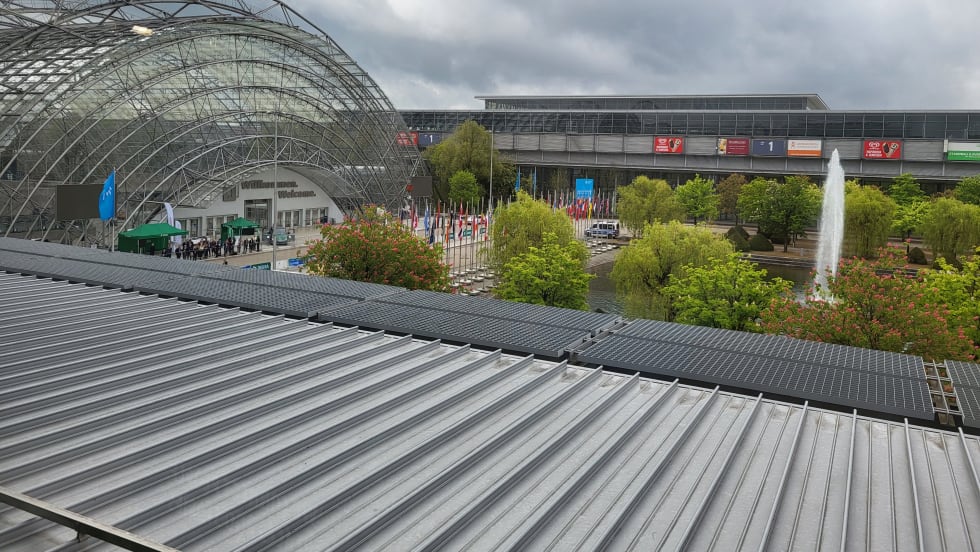
Inside ITF 2026: Transport Reacts to A Challenging World
Transport leaders from around the world gathered in Leipzig, Germany, for the 2026 International Transport Forum to discuss resilience, climate impacts, supply chains and the future of sustainable mobility.
Read More →
Every Ride Tells a Story — But You’re Not Just Selling the Ride
You’re selling the moment, the meaning, and the emotion behind it.
Read More →
How Digital Signage is Reshaping the Traveler Experience at Transportation Hubs
What was once a landscape of static signs has evolved into a responsive, immersive environment powered by real-time visual communication.
Read More →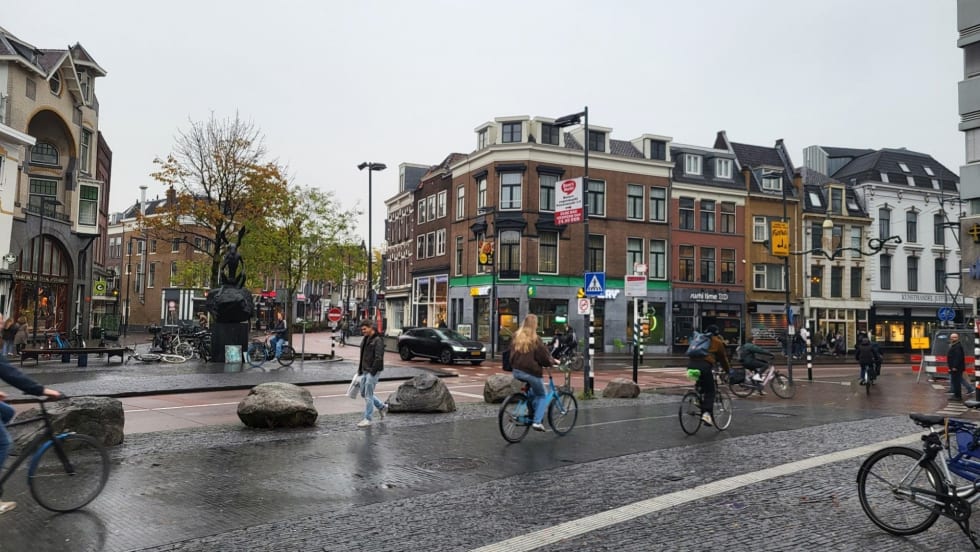
Latest Trends in Urban Mobility from Polis Conference 2025
Polis comprises cities and regions, as well as corporate partners, from across Europe, promoting the development and implementation of sustainable mobility. This year’s event had over a thousand attendees across various policy forums and an exhibition.
Read More →
Why Transit Leaders Require Better Tools for Operational Clarity In Today’s Tech-Fragmented Environment
Across North America and beyond, transit agency officials are contending with a perfect storm of operational headaches and strategic challenges that hamper daily service and long-term progress.
Read More →
The Powerless Brokers: Why California Can’t Build Transit
It is no secret that transit in the U.S. is slow and expensive to build.
Read More →
Why Transport Sustainability Should Focus on People Instead of Cars
Simply incentivizing electrification is not enough to make a meaningful impact; we must shift our focus toward prioritizing public transportation and infrastructure.
Read More →