How AI, Data Can Help Replace Gas Taxes with EV Road Usage Charges
It is estimated the average American driver pays approximately $300 through road and gas taxes each year, generating critical revenue from each driver that goes toward helping to pay for infrastructure maintenance and other important needs in each region and community.
Since the early 20th century, most states have relied heavily on gas taxes to fund their transportation systems, and the federal government has done the same since the Interstate Highway Act of 1956 was passed.
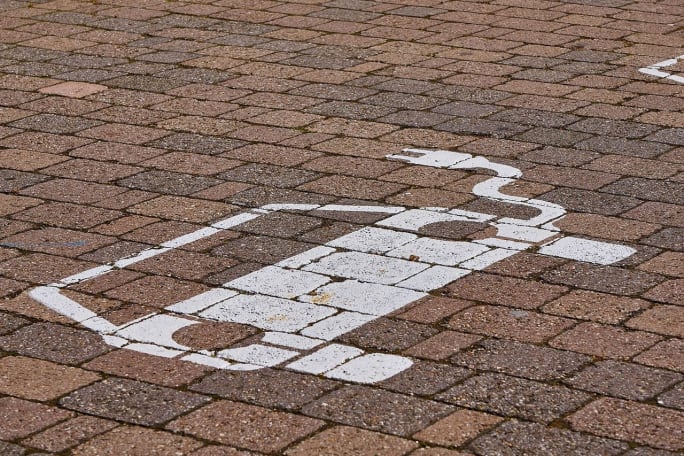
Photo: Larisa Koshkina from Pixabay
4 min to read
It is estimated the average American driver pays approximately $300 through road and gas taxes each year, generating critical revenue from each driver that goes toward helping to pay for infrastructure maintenance and other important needs in each region and community.
While it may appear this is yet another unnecessary tax on Americans, it is actually a tactic that each state employs to find new sources of revenue each year. All drivers, including light vehicle car drivers and those from rental and business fleets all fill up their gas tanks, and therefore, each pays roughly this amount on an annual basis.
Ad Loading...
The Eventual Decline of ICE Gas Taxes
However, each state’s gas tax revenue will continue to decline as more car drivers choose electric vehicles, thanks to incentives provided by the Inflation Reduction Act and other federal laws. While many decision-makers have embraced the switch to electric vehicles, neither the states nor the federal government have yet come up with a perfect solution to replace their gas taxes, which have historically been a vital source of funding for transportation infrastructure.
Since the early 20th century, most states have relied heavily on gas taxes to fund their transportation systems, and the federal government has done the same since the Interstate Highway Act of 1956 was passed. However, they have been insufficient for years. The last federal gas tax increase occurred in 1993, and since then, it hasn't kept up with inflation. Less than half of the states have a gas tax that is indexed to inflation.
Each state’s gas tax revenue will continue to decline as more car drivers choose electric vehicles, thanks to incentives provided by the Inflation Reduction Act and other federal laws.
Photo: Markus Distelrath from Pixabay
Road Usage Charges on the Rise
Today, states and local agencies are working closely with partners to identify ways to leverage road usage data from electric vehicles (EV) as a way to recoup those lost revenues from road and gas taxes collected from internal combustion engine (ICE) vehicles. This program is already being talked about through the Department of Transportations (DOT) in states such as Utah, Virginia, Oregon, and Hawaii.
These and other states are looking for partners with the capability of leveraging OEM data via cloud transfer, which does not involve any additional hardware or devices inside the vehicles themselves. This data, part of today’s connected vehicle data ecosystem, will communicate Road Usage Charges (RUC) back to the state DOT and DMV agencies, similar to how states currently collect usage charges when a person’s vehicle passes through a toll booth system.
Connected Vehicle Data Platforms Powering RUC Collections
However, it is important for states to find the right connected vehicle data partner that has the technology and capability to leverage AI (artificial technology) and the cloud to standardize data not only from multiple OEMs, but also in making actionable data from the different states that have varying tax levels. This is important, because when a vehicle travels across multiple states with different tax levels, the data provider must have the technology to calculate, with precision, how much revenue is collected from each vehicle, and then, how much of that revenue is distributed across each different state.
Ad Loading...
The usage of this type of connected vehicle data based on usage rates is also currently in use by many vehicle insurance companies.
Usage-based insurance (UBI) plans typically leverage connected vehicle data to monitor mileage, time of day you drive, harsh braking, acceleration, and speeding. The driver receives a driving evaluation, along with recommendations for improving driver performance. Therefore, each driver’s usage subsequently affects the insurance rates, which can be reduced following excellent driving behaviors.
States and local agencies are working closely with partners to identify ways to leverage road usage data from electric vehicles as a way to recoup those lost revenues from road and gas taxes collected from internal combustion engine vehicles.
Photo: Pexels from Pixabay
Only Specific Data Providers Can Provide Solutions
To truly be effective and useful, each vehicle’s data must be tracked, managed, cleaned, secured, and enriched throughout its journey to produce the right insight for state and local agencies wishing to leverage RUC data. This is why many states today are being careful about the selection of connected vehicle data providers, seeking partners with new processing capabilities to make this happen so that the data is properly used and computed.
Technological advancements by these partners have made it possible for embedded systems to communicate with sensors, within the vehicle as well as the cloud server, in an effective and efficient manner.
Leveraging a distributed computing environment that optimizes data exchange as well as data storage, IoT improves response times and saves bandwidth for a swift data experience. Integrating this architecture with a cloud-based platform further helps to create a robust, end-to-end communications system for cost-effective business decisions and efficient operations.
Ad Loading...
Collectively, an edge cloud and embedded intelligence duo connects the edge devices (vehicle sensors) to the IT infrastructure to make way for a new range of user-centric applications based on real-world environments.
With this connected vehicle data now available, along with a cloud-based AI environment that does not require additional hardware devices in each vehicle, states have the right strategy to evolve their RUC tax revenue collection from ICE vehicles to EVs as more of these vehicles hit our nation’s roads and highways.
With $610 million available through the FY 2026 Buses and Bus Facilities Competitive Program and the Low or No Emission Grant Program, agencies must build a compelling case before the September 21 deadline that balances environmental compliance with operational feasibility.
The global cycling conference highlighted how cities are integrating bicycles into multimodal transportation networks, expanding cycle tourism and reshaping urban mobility.
Mike Bismeyer — often known as “The Kindness Guy” — has spent more than 17 years in public transit and mobility, serving in industry leadership roles, speaking across North America, and advocating for stronger workplace cultures. But his message doesn’t come from theory. It comes from lived experience.
Transport leaders from around the world gathered in Leipzig, Germany, for the 2026 International Transport Forum to discuss resilience, climate impacts, supply chains and the future of sustainable mobility.
Polis comprises cities and regions, as well as corporate partners, from across Europe, promoting the development and implementation of sustainable mobility. This year’s event had over a thousand attendees across various policy forums and an exhibition.
Across North America and beyond, transit agency officials are contending with a perfect storm of operational headaches and strategic challenges that hamper daily service and long-term progress.
Simply incentivizing electrification is not enough to make a meaningful impact; we must shift our focus toward prioritizing public transportation and infrastructure.