



RELATED: FTA announces $221M in grants for new buses, facilities
How billions of dollars in transportation spending can transform our communities
Billions of taxpayer dollars are spent buying buses and railcars every year. Although the national unemployment rate has declined since the Great Recession, for low-income families and communities of color, the unemployment rate remains in the double-digits and good, family-supporting jobs can’t come fast enough. We need strategies that revive U.S. manufacturing and other industries that can create the kind of jobs we want.

Alaa Milbes・Senior Communications Specialist, Jobs to Move America
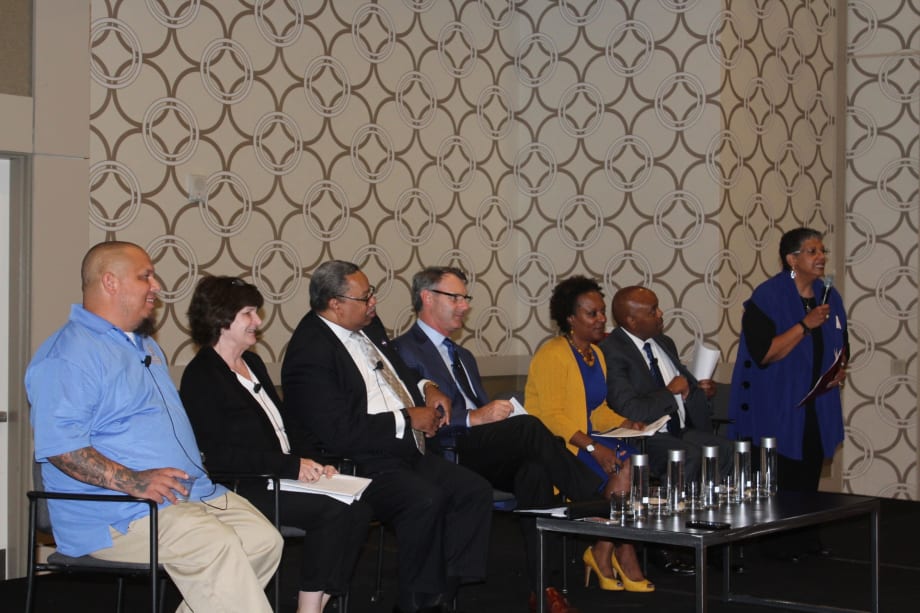
Panelists included (not listed in order) LA Metro CEO Phil Washington, Chicago Transit Authority President Dorval Carter, President/CEO of Beverly Scott Associates and Vice Chair of the National Infrastructure Advisory Council, Beverly Scott, APTA Business Member Board of Governors Chair Patrick Scully, USDOT’s chief opportunities officer Stephanie Jones, AFL-CIO director of organizing Elizabeth Bunn, and Kristian Mendoza, a U.S. Marines veteran who currently works at Kinkisharyo’s Palmdale, Calif. facility.
4 min to read

Panelists included (not listed in order) LA Metro CEO Phil Washington, Chicago Transit Authority President Dorval Carter, President/CEO of Beverly Scott Associates and Vice Chair of the National Infrastructure Advisory Council, Beverly Scott, APTA Business Member Board of Governors Chair Patrick Scully, USDOT’s chief opportunities officer Stephanie Jones, AFL-CIO director of organizing Elizabeth Bunn, and Kristian Mendoza, a U.S. Marines veteran who currently works at Kinkisharyo’s Palmdale, Calif. facility.
Billions of taxpayer dollars are spent buying buses and railcars every year.
Although the national unemployment rate has declined since the Great Recession, for low-income families and communities of color, the unemployment rate remains in the double-digits and good, family-supporting jobs can’t come fast enough. We need strategies that revive U.S. manufacturing and other industries that can create the kind of jobs we want.
On Monday, transportation leaders led a symposium entitled “Transforming Lives and Communities: The Power of Transportation Investment” at this year's American Public Transportation Association (APTA) Annual Meeting in Los Angeles. Panelists discussed how we can use innovative transit investment strategies to improve equity and livelihoods in communities across the U.S.
With the “Ladders of Opportunity” initiative, the United States Department of Transportation (USDOT) is moving toward more inclusive and equitable infrastructure that will improve access to public transportation for communities who have historically faced inadequate transportation options. This will make it easier for them to gain access to school, jobs, and training allowing them to improve their economic prospects.
The symposium, organized by Jobs to Move America, LA Metro and APTA, expanded on this idea to include job creation and economic development opportunities as a vital part of transportation spending. On average, we are spending $5.4 billion taxpayer dollars a year on transportation. The aim of the symposium was to reframe the discussion from “cheapest is best” to a broader debate about economic development opportunities for our communities, especially those historically excluded from manufacturing, like women and people of color. Investing these dollars in U.S.-based manufacturing has the potential to support 56,000 jobs, including 30,000 manufacturing and related jobs.
Panelists included LA Metro CEO Phil Washington, Chicago Transit Authority President Dorval Carter, President/CEO of Beverly Scott Associates and Vice Chair of the National Infrastructure Advisory Council, Beverly Scott, APTA Business Member Board of Governors Chair Patrick Scully, USDOT’s chief opportunities officer Stephanie Jones, AFL-CIO director of organizing Elizabeth Bunn, and Kristian Mendoza, a U.S. Marines veteran who currently works at Kinkisharyo’s Palmdale, Calif. facility. The Ford Foundation’s acting deputy director Amy Kenyon was unable to make it but sent a note that was read to the audience.
In 2011, LA Metro piloted an innovative approach to its purchase of light rail vehicles called the U.S. Employment Plan. This plan takes into account the quantity and qualities of U.S. jobs created, as well as how the company will develop the jobs (recruitment, workforce development and training commitments), and create access for people historically underrepresented in the industry. Kinkisharyo, the company that was awarded the bid from LA Metro, committed to 235 U.S. jobs based on U.S. Employment Plan guidelines. To date, the company has exceeded its commitments, employing around 400 workers, most of whom are people of color. One of those workers was Kristian Mendoza, who said, “I’m a marine vet and had a hard time finding a job when aerospace left the Antelope Valley. I am a direct result of the U.S. Employment Plan...Now, people working in the Kinkisharyo plant can get affordable housing and take care of their families.
Another agency that has been successful in prioritizing economic development in their transportation investment is the Chicago Transit Authority. Dorval Carter said: “I was fortunate enough to not only support an important policy [referring to the U.S. Employment Plan], but actually came back to the second largest transit agency and executed a policy was resulted in the creation of hundreds of jobs.” Carter was referring to earlier this year, when the Chicago Transit Authority — which had adopted the U.S. Employment Plan — awarded CSR Sifang America, a Chinese-based manufacturer, a contract for new railcars. As part of its bid, the company committed to creating 169 good U.S. jobs and pledged to build a new railcar assembly facility in Chicago’s South Side, a few miles away from where the last Pullman car rolled off the line over 35 years ago.
The examples above demonstrate the transformative effect that leveraging transportation investment can have. If the federal government, local transportation agencies, economic development agencies, community and labor coalitions expand these efforts across the country, we can set in motion a manufacturing renaissance, and create more prosperity in our communities.
Alaa Milbes is senior communications specialist for Jobs to Move America, a national coalition uniting more than 30 community, labor, faith, civil rights, philanthropic, academic and environmental groups.
Subscribe to Our Newsletter
More Blog Posts
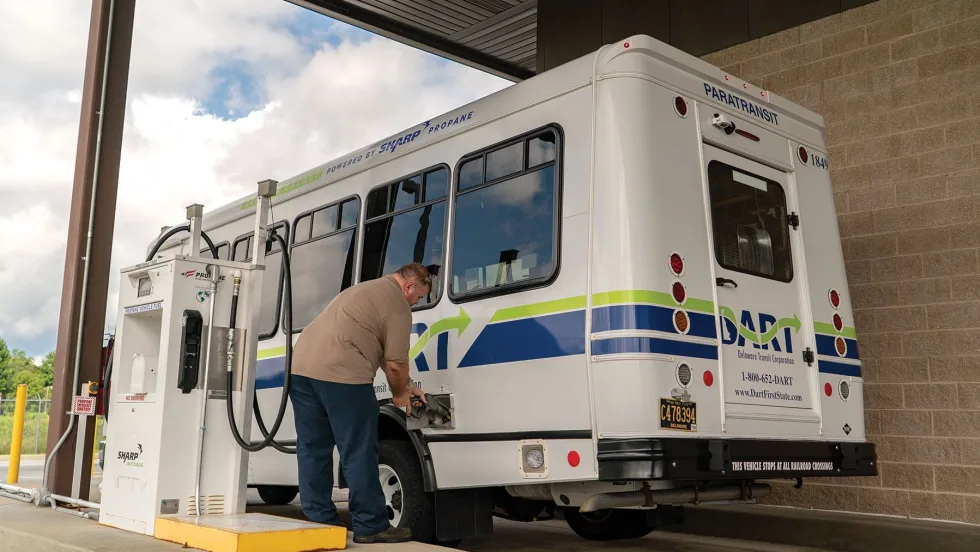
Building a Winning FTA Grant Proposal: Why Propane Autogas is the Pragmatic Choice for Fleet Resilience
With $610 million available through the FY 2026 Buses and Bus Facilities Competitive Program and the Low or No Emission Grant Program, agencies must build a compelling case before the September 21 deadline that balances environmental compliance with operational feasibility.
Read More →
Velo-city Conference 2026: Latest Trends in Cycling as Part of Urban Mobility
The global cycling conference highlighted how cities are integrating bicycles into multimodal transportation networks, expanding cycle tourism and reshaping urban mobility.
Read More →
Kindness Isn’t Soft...It’s Strategic.
Mike Bismeyer — often known as “The Kindness Guy” — has spent more than 17 years in public transit and mobility, serving in industry leadership roles, speaking across North America, and advocating for stronger workplace cultures. But his message doesn’t come from theory. It comes from lived experience.
Read More →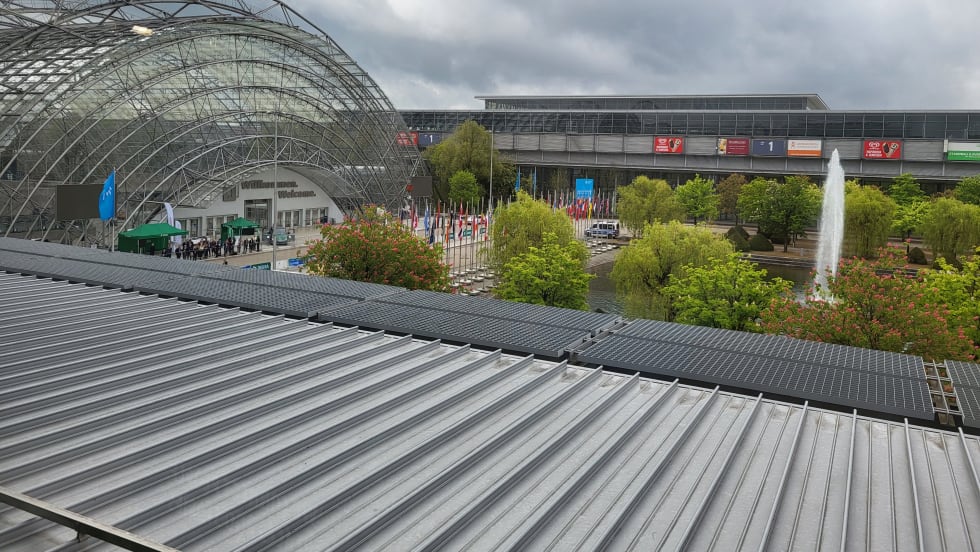
Inside ITF 2026: Transport Reacts to A Challenging World
Transport leaders from around the world gathered in Leipzig, Germany, for the 2026 International Transport Forum to discuss resilience, climate impacts, supply chains and the future of sustainable mobility.
Read More →
Every Ride Tells a Story — But You’re Not Just Selling the Ride
You’re selling the moment, the meaning, and the emotion behind it.
Read More →
How Digital Signage is Reshaping the Traveler Experience at Transportation Hubs
What was once a landscape of static signs has evolved into a responsive, immersive environment powered by real-time visual communication.
Read More →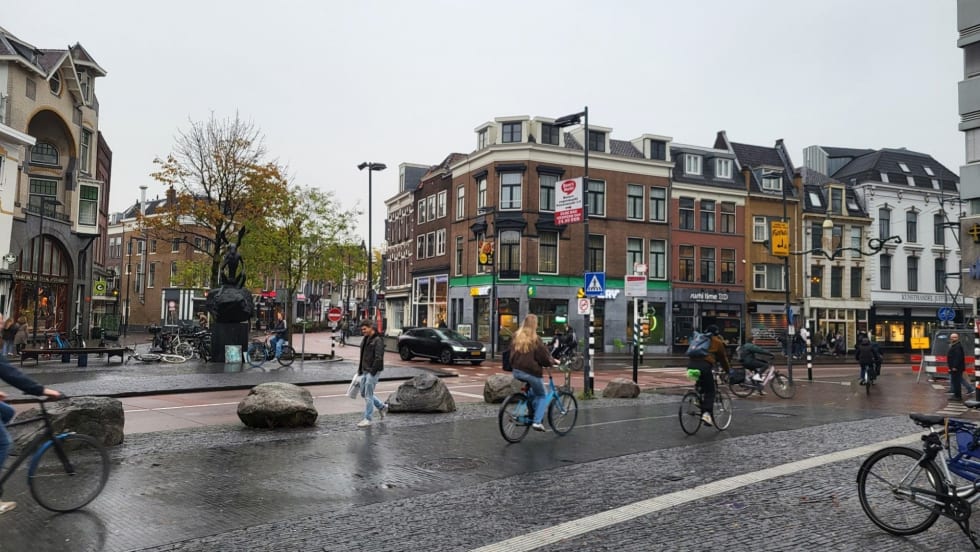
Latest Trends in Urban Mobility from Polis Conference 2025
Polis comprises cities and regions, as well as corporate partners, from across Europe, promoting the development and implementation of sustainable mobility. This year’s event had over a thousand attendees across various policy forums and an exhibition.
Read More →
Why Transit Leaders Require Better Tools for Operational Clarity In Today’s Tech-Fragmented Environment
Across North America and beyond, transit agency officials are contending with a perfect storm of operational headaches and strategic challenges that hamper daily service and long-term progress.
Read More →
The Powerless Brokers: Why California Can’t Build Transit
It is no secret that transit in the U.S. is slow and expensive to build.
Read More →
Why Transport Sustainability Should Focus on People Instead of Cars
Simply incentivizing electrification is not enough to make a meaningful impact; we must shift our focus toward prioritizing public transportation and infrastructure.
Read More →