



Prepare Today for a Pandemic-Free Future
The spread of the coronavirus has had a devastating impact on mass transit systems all over the world, particularly in large cities like New York City, Paris, and Tokyo.

It is impossible to predict when the pandemic will recede and how long it will take for ridership levels to return to normal.
RATPDev USA
It is understandably difficult for public transit officials and operators to look optimistically to a pandemic-free future. The spread of the coronavirus has had a devastating impact on mass transit systems all over the world, particularly in large cities like New York City, Paris, and Tokyo. And, ridership levels will not immediately return to “normal” after the pandemic finally fades away.
However, there are reasons for optimism. Throughout Europe, Asia, and in some U.S. cities, transit system operators have had success in bringing riders back to buses, trains, and subways. They are preparing for whatever the “new normal” may be, whenever that time finally arrives, and can serve as models to emulate.
Where we are today
Simply stated, the pandemic’s impact on public transit systems has been unprecedented. Entire cities were effectively shut down in March and April, and even today, many downtowns more closely resemble ghost towns instead of busy metropolises. There are few commuters as office buildings remain closed and people have grown accustomed to working from home. Businesses remain closed, some for good, as tourists have stayed away.
New York City was one of the world’s hardest hit cities during the early days of the pandemic. After the World Health Organization declared the spread of the coronavirus a global pandemic and businesses began closing, over 90% of the subway’s 5.5 million weekday riders abandoned the system. Today, the infection rate continues to fall and businesses are re-opening — yet ridership is still just 20% of pre-pandemic levels. Fear lingers among riders, but there is some good news for transit operators. New research shows the risk of so-called “superspreader” events is low.
The New York Times recently surveyed transportation agencies across the U.S. and found that subways, commuter railways, and buses may not be a significant source of transmission, as long as riders wear masks and train cars or buses never become crowded.
In Paris, public health authorities conducting contact tracing found that none of the 386 infection clusters identified between early May and mid-July were linked to the city’s public transportation. In Austria, a study of coronavirus clusters in April and May did not link any cases to public transit. And in Tokyo, no virus clusters have been linked to the city’s rail lines.
Ridership numbers are rising slowly but steadily, particularly outside the U.S., including:
Beijing: Subway ridership is now at 59% of pre-pandemic levels.
Tokyo: Metro ridership has increased to 63%.
Berlin: Ridership on buses and subways is between 60% to 70% of normal rates.
Paris: Ridership on the Metro has returned to 45% of usual levels.
After the pandemic struck, mass confusion reigned. Health officials and government agencies couldn’t seem to agree on what measures to take to prevent the spread of the virus. There were debates over whether wearing masks provided adequate protection; which businesses were “essential” and could therefore remain open; what the impact of closing cities would have on local and national economies; and whether social distancing should include avoiding mass transit systems, ride-sharing services, and flying in airplanes.
Today, we know the answers to many of those questions, and at least one thing is clear for mass transit operators: shutting down service entirely is not an effective short- or long-term solution.
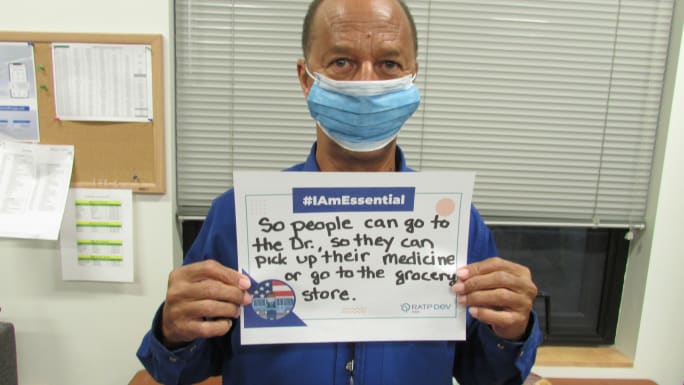
Even as the industry focuses on day-to-day operations, the pandemic provides an opportunity for transit to take a step back and examine how we can improve service levels over the long-term.
RATPDev USA
Be Forward-Looking
Of course, that was the first reaction among many operators, and it made sense. Reducing service by taking buses out of service, etc., would prevent a superspreader event. But RATPDev works with mass transit operators around the world, and we have seen firsthand how taking the opposite approach can help lessen the pandemic’s impact.
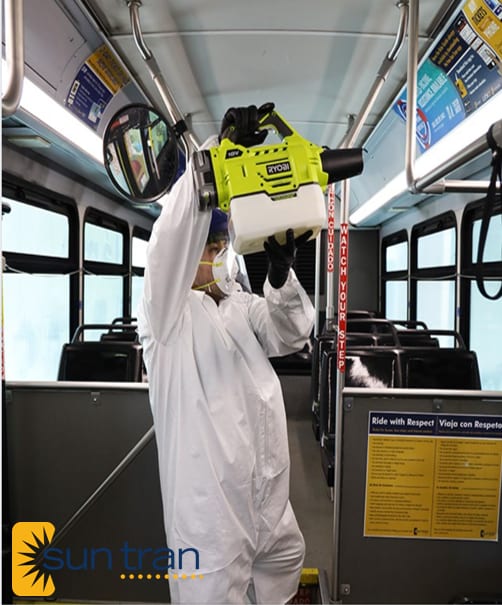
Some operators were able to keep ridership levels from falling of the proverbial cliff by increasing the number of buses in service to maintain pre-pandemic service levels while ensuring the health and safety of transit workers and riders. They have initiated best practices, such as daily cleaning and disinfection of vehicles and strict enforcement of mask-wearing policies on riders and operators. New York City, for example, not only enforces mask wearing, it has helped riders comply by distributing over a million masks and launching public service campaigns encouraging people to practice social distancing.
Seize the Opportunity to Modernize
Even as the industry focuses on day-to-day operations, the pandemic provides an opportunity for us to take a step back and examine how we can improve service levels over the long-term. That could even include changing the long-standing business model of collecting fares from individuals.
Mass transit is a public service, so why isn’t it run like one? Eliminating fares and using tax dollars to fund all areas of operations — similar to how cities manage virtually all other public services like schools, police and fire departments, garbage, and recycling pick-up services — will increase ridership levels by making mass transit options more accessible to more people. At the same time, incorporating technologies like partial or fully self-driving vehicles, modernizing mobile apps, and other digital transformation initiatives will reduce the costs to a city and achieve new levels of efficiency.
It is impossible to predict when the pandemic will recede and how long it will take for ridership levels to return to normal. I do not want to downplay the public health threat; we are not ready for a return to jam-packed buses and subway and train cars. But, taking steps today to strike the balance between ensuring the safety of employees and riders and maintaining consistent service levels will mitigate the pandemic’s immediate impact and accelerate the modernization of the entire industry.
More Blog Posts
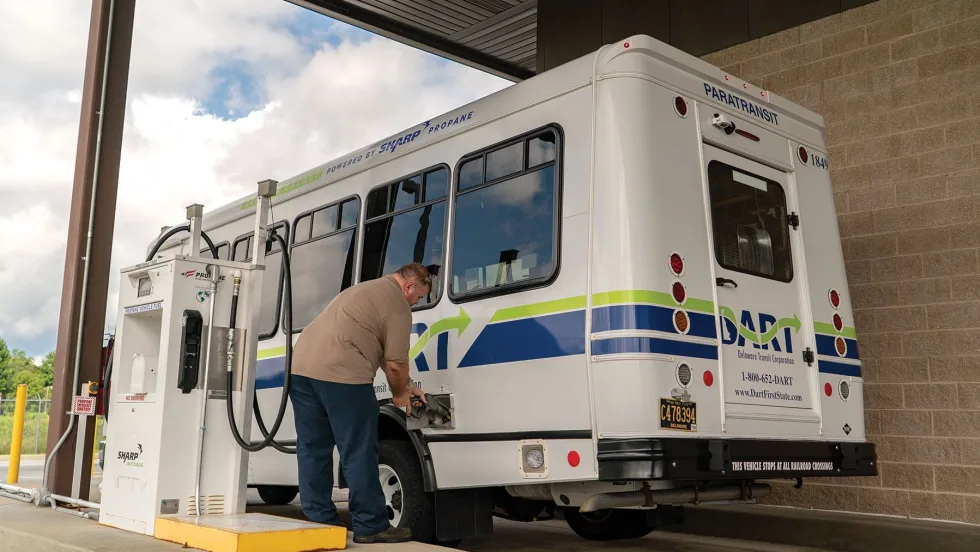
Building a Winning FTA Grant Proposal: Why Propane Autogas is the Pragmatic Choice for Fleet Resilience
With $610 million available through the FY 2026 Buses and Bus Facilities Competitive Program and the Low or No Emission Grant Program, agencies must build a compelling case before the September 21 deadline that balances environmental compliance with operational feasibility.
Read More →
Velo-city Conference 2026: Latest Trends in Cycling as Part of Urban Mobility
The global cycling conference highlighted how cities are integrating bicycles into multimodal transportation networks, expanding cycle tourism and reshaping urban mobility.
Read More →
Kindness Isn’t Soft...It’s Strategic.
Mike Bismeyer — often known as “The Kindness Guy” — has spent more than 17 years in public transit and mobility, serving in industry leadership roles, speaking across North America, and advocating for stronger workplace cultures. But his message doesn’t come from theory. It comes from lived experience.
Read More →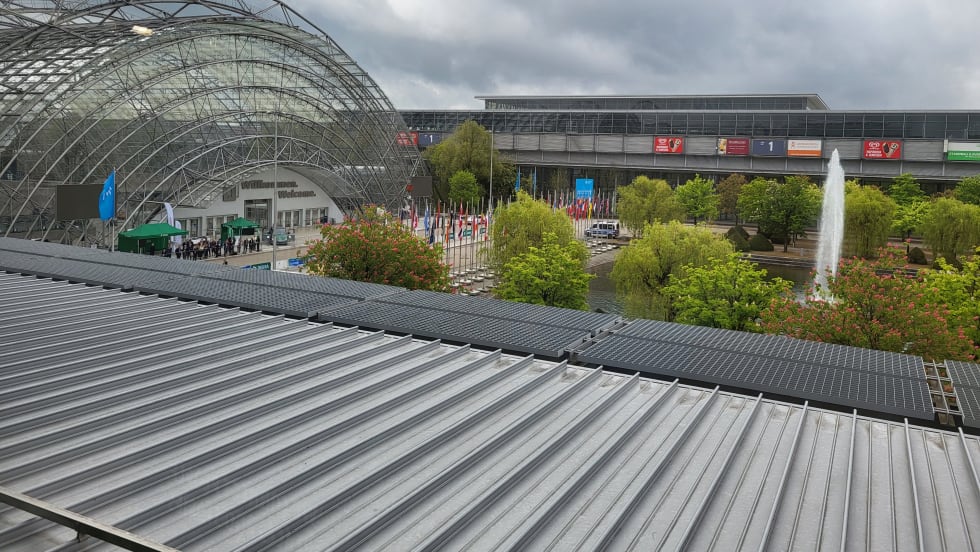
Inside ITF 2026: Transport Reacts to A Challenging World
Transport leaders from around the world gathered in Leipzig, Germany, for the 2026 International Transport Forum to discuss resilience, climate impacts, supply chains and the future of sustainable mobility.
Read More →
Every Ride Tells a Story — But You’re Not Just Selling the Ride
You’re selling the moment, the meaning, and the emotion behind it.
Read More →
How Digital Signage is Reshaping the Traveler Experience at Transportation Hubs
What was once a landscape of static signs has evolved into a responsive, immersive environment powered by real-time visual communication.
Read More →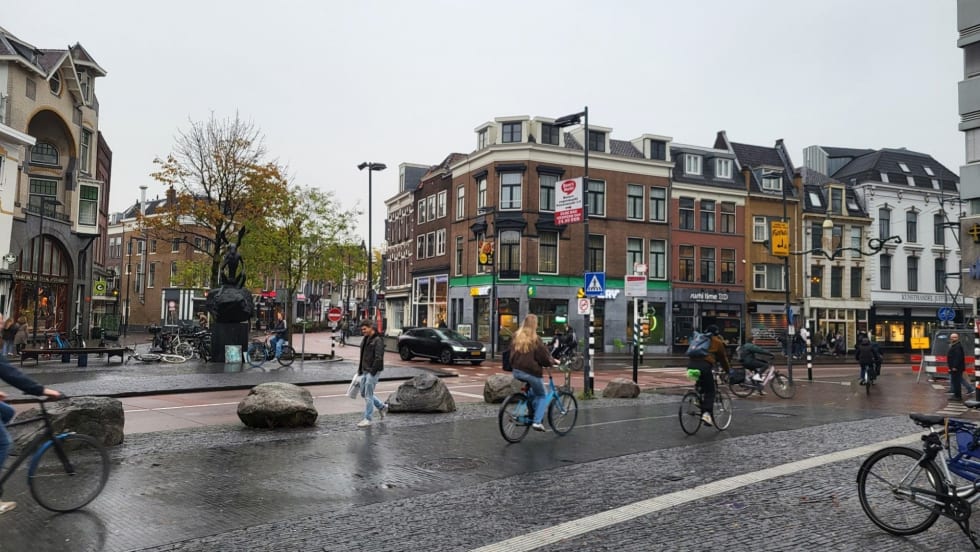
Latest Trends in Urban Mobility from Polis Conference 2025
Polis comprises cities and regions, as well as corporate partners, from across Europe, promoting the development and implementation of sustainable mobility. This year’s event had over a thousand attendees across various policy forums and an exhibition.
Read More →
Why Transit Leaders Require Better Tools for Operational Clarity In Today’s Tech-Fragmented Environment
Across North America and beyond, transit agency officials are contending with a perfect storm of operational headaches and strategic challenges that hamper daily service and long-term progress.
Read More →
The Powerless Brokers: Why California Can’t Build Transit
It is no secret that transit in the U.S. is slow and expensive to build.
Read More →
Why Transport Sustainability Should Focus on People Instead of Cars
Simply incentivizing electrification is not enough to make a meaningful impact; we must shift our focus toward prioritizing public transportation and infrastructure.
Read More →