Prioritize Success Outcomes First, Develop Fiscal Budget Second
As we approach July 1, many public sector organizations across the country have fiscal years that begin at the midpoint of the year. To that point, many public sector executives believe that "adopting the budget" is the single critical event of their year.
Most public organizations adopt budgets that spend limited resources on what they did last year, but for more money.
Photo: Canva
4 min to read
As we approach July 1, many public sector organizations across the country have fiscal years that begin at the midpoint of the year. To that point, many public sector executives believe that "adopting the budget" is the single critical event of their year.
"Show me your budget and it will show me your priorities," some are quick to say. I would suggest the exact opposite is true.
Ad Loading...
Most public organizations adopt budgets that spend limited resources on what they did last year, but for more money. Salaries go up. Healthcare costs go up. Cost of good go up.
Success isn't opening a new county park or building a new rail station. Success is more satisfied residents with the value they see from county government, or happier transit customers.
Photo: Denver RTD
“Needs Based” Budgeting
Years ago, when I ran a public agency, a senior executive at the Department of Transportation proudly talked about how they ran a "needs based" budgeting process. The translation was simple, "the more you needed, the more you got." No analysis of whether the "need" brought value.
A financially driven budget process typically has the following characteristics.
Finance Driven – People in the Finance and Budget departments make most of the decisions regarding what will be funded and what won't. Strategy is not in charge, money is. The budget process isn't to achieve a goal, rather it is to "get through the year" with the financial resources the organization has.
Lack of Ownership – If Finance and Budget personnel are going to make the decisions, then department heads rarely take ownership over the conclusions, and more important, rarely take ownership over the dollar amounts.
Protects Status Quo – Finance and Budget personnel lack the authority to dramatically reshape the vision of the organization. That means incremental change, viewed largely through the lens of "will it cost less this way," becomes the dominant voice.
If Finance and Budget personnel are going to make the decisions, then department heads rarely take ownership over the conclusions, and more important, rarely take ownership over the dollar amounts.
Photo: King County Metro
A Success Outcomes Based Process
Contrast that "financially driven" budgeting process with the characteristics of what we call a Success Outcomes based process.
Ad Loading...
Outcomes Rule – Absolute quantifiable clarity over the three to five most important priorities to achieve. Not actions. Not projects. Results. Success isn't opening a new county park or building a new rail station. Success is more satisfied residents with the value they see from county government, or happier transit customers.
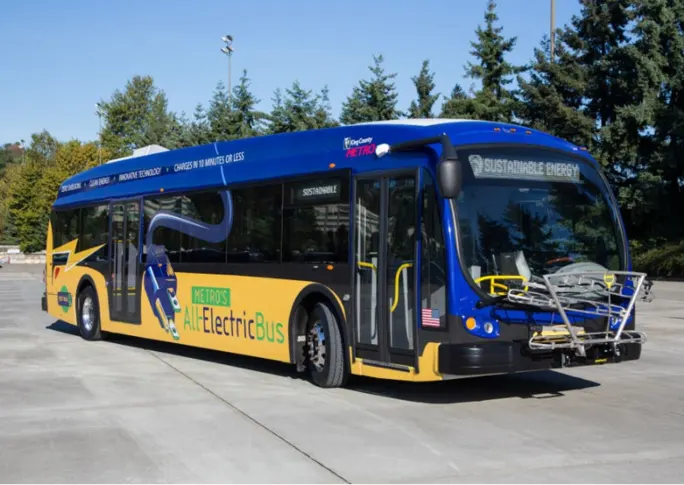
Purpose Filled Actions – Budgets shouldn't fund programs. Budgets should fund actions, programs, and projects that will produce the Success Outcomes. This is how Wi-Fi on buses and electric bus "projects" occur. Transit customers rank "Wi-Fi on buses" 14th on their items of importance. It will never lead to happier customers. One percent of transit customers don’t care what the propulsion system is that makes the bus go. They do care that it shows up on time, is clean, and has a low fare. What are the right actions, the right programs, and the right projects that will actually achieve the outcomes we have prioritized?
Departments Dominate – With clarity of prioritized outcomes and a strategy driven set of actions, programs, and projects, departments are empowered to build informed budgets to deliver those programs and achieve the aligned upon outcomes. Clearly there is a negotiation that takes place between finance and budget and the departments. Departments can't simply get everything they want, but the key is they are driving the discussion as opposed to subordinate to finance.
Appeals Process – The next to last step in a Success Outcomes budget development process is the criticality of an appeals process from the functioning department head to the organization executive. When I was a CEO in the public sector, every year we had "Appeals Day" and every department head had the authority to schedule an appeal. Finance and Budget personnel had made a decision the department head believed would prevent them from being able to deliver the results they were charged with producing. Finance and Budget would make their argument as to why the department had the appropriate levels of resources to deliver, the department head would make their contrary argument and the CEO would determine how to resolve. Strategy drove the decision making, versus merely money.
Board Adoption – Language matters, and we urge public organizations to not bring their boards simply a "budget" but a Comprehensive Plan. That is, a clear, quantifiable, and measurable business plan. Clarity of the results the leadership team is committed to producing; the action steps, programs, and projects to produce the outcomes; a budget which funds those actions; and finally a performance management system to measure whether the Comprehensive Plan is working as envisioned.
Budget is a tool, not the answer.
As public sector organizations begin their budget development process, they would be well served to consider disrupting their budgeting process, to disrupt their business, bringing greater value to customers, community, and their employees.
With $610 million available through the FY 2026 Buses and Bus Facilities Competitive Program and the Low or No Emission Grant Program, agencies must build a compelling case before the September 21 deadline that balances environmental compliance with operational feasibility.
The global cycling conference highlighted how cities are integrating bicycles into multimodal transportation networks, expanding cycle tourism and reshaping urban mobility.
Mike Bismeyer — often known as “The Kindness Guy” — has spent more than 17 years in public transit and mobility, serving in industry leadership roles, speaking across North America, and advocating for stronger workplace cultures. But his message doesn’t come from theory. It comes from lived experience.
Transport leaders from around the world gathered in Leipzig, Germany, for the 2026 International Transport Forum to discuss resilience, climate impacts, supply chains and the future of sustainable mobility.
Polis comprises cities and regions, as well as corporate partners, from across Europe, promoting the development and implementation of sustainable mobility. This year’s event had over a thousand attendees across various policy forums and an exhibition.
Across North America and beyond, transit agency officials are contending with a perfect storm of operational headaches and strategic challenges that hamper daily service and long-term progress.
Simply incentivizing electrification is not enough to make a meaningful impact; we must shift our focus toward prioritizing public transportation and infrastructure.