Time for 'One-and-Done' Universal Transit Pass for People with Disabilities
Imagine trying to plan a weekend getaway and needing permission from some bureaucrat in your destination city’s transportation department to be able to get around easily and affordably.
Claudia Folska・Founder/CEO of All-Access Transit Solutions
All told, there are about 61 million Americans with some sort of disability, an astounding one in four adults.
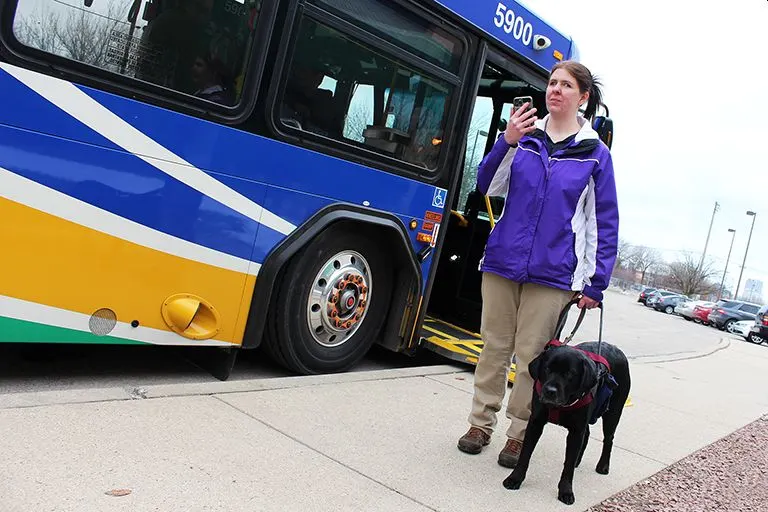
Photo: MCTS
4 min to read
The solution starts with inviting people with actual disabilities into the discussion. We know what we need and what doesn’t work for us.
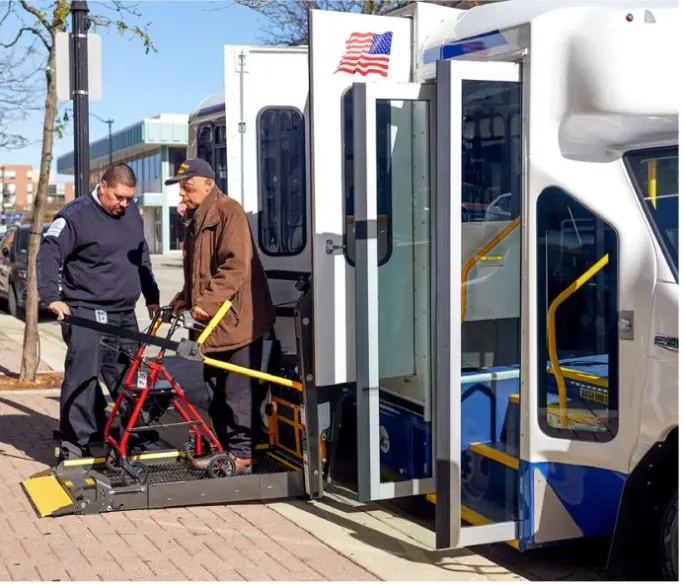
Photo: RTA
Imagine trying to plan a weekend getaway and needing permission from some bureaucrat in your destination city’s transportation department to be able to get around easily and affordably.
Or, maybe it’s the county you have to contact, or some mysterious metropolitan district that oversees the regional paratransit system.
Ad Loading...
Maybe they can find a bus to accommodate you on relatively short notice. Maybe not, in which case you are on your own.
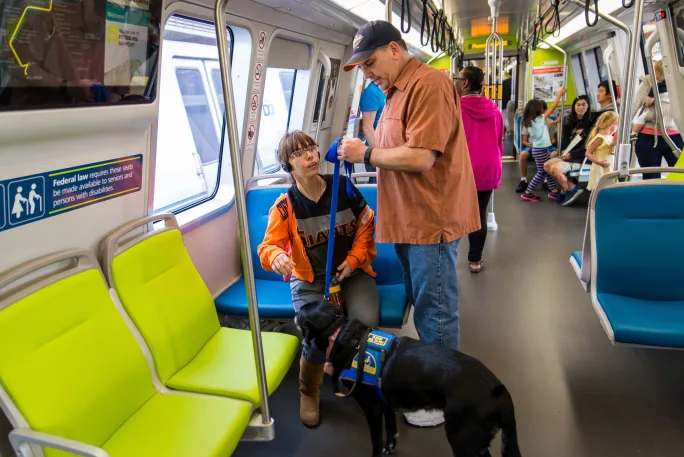
That’s the reality for millions of Americans with disabilities, whether that means they are using a wheelchair, have a guide dog, or have some other hidden disability.
All told, there are about 61 million Americans with some sort of disability, an astounding one in four adults. That’s a lot of people struggling to get from one place to another, especially when they have to rely on public transportation in unfamiliar surroundings.
I am one of them.
A Topic Close to Home
I travel for pleasure and work. Blind since childhood, I know firsthand how challenging it is to navigate a familiar city, much less one I am visiting for the first time.
Ad Loading...
Having to also navigate local government bureaucracies before my plane even lands only makes moving about that much harder for me and others like me.
That’s one reason people with disabilities are less likely to leave home and even more less likely to hold a job than their fully mobile peers.
The solution starts with inviting people with actual disabilities into the discussion. We know what we need and what doesn’t work for us.
Ad Loading...
When it comes to paratransit — the buses that pick-up people with disabilities and deliver them to their destinations for a fixed fee or voucher — there is a lot of wasted taxpayer dollars and disabled users’ time and energy. There is no continuity at all.
Travelers with disabilities need a universal pass that works anywhere and everywhere in America. Think TSA precheck, with its one-and-done application.
In other words: if a disabled person is certified as disabled and qualifies for paratransit in one city, she qualifies in all. The pass becomes something akin to a disability parking placard. Users don’t have to reapply for every road trip. They just need to make their case once.
Travelers with disabilities need a universal pass that works anywhere and everywhere in America. Think TSA precheck, with its one-and-done application.
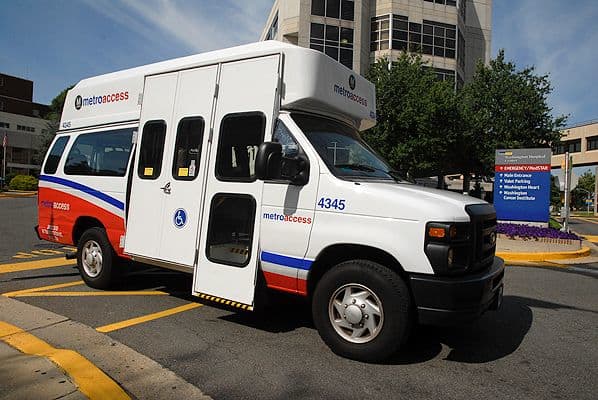
Photo: Larry Levine
Solving A Real Issue
As it stands, I have to call a month in advance to make arrangements for paratransit services in another city, or possibly two counties if I’ll be going from one system to another along the way.
This is not as simple as it sounds and allows for no spontaneity at all.
Ad Loading...
First, I have to locate the correct agency, then the correct person, then get the proper forms, fill them out, and await approval.
If all goes well — a big if — I can more easily and safely enjoy the city I’m visiting. Oh, and this is after I’ve already been approved in my hometown. That’s another certification that’s often easier said than received.
Under the Americans with Disabilities Act of 1990 (ADA), public transportation services such as city buses and trains can’t discriminate against riders with disabilities.
In other words, they’re supposed to be accessible — which anyone who uses mass transportation has seen firsthand is not always, or even often, the case.
Steep stairways, broken elevators, slippery floors, and poor signage are just some of the obstacles travelers with disabilities face in train stations around the country. Bus aisles are too narrow, wheelchair lifts non-existent, and so on.
Ad Loading...
That’s where paratransit comes in. The service is intended for use by individuals with disabilities. Instead, specially equipped buses or other vehicles are provided to get them where they’re going, which of course includes going to and from work and the doctor.
Not surprisingly, people with disabilities drive less, earn less, and have less access to healthcare.
Photo: BART
A Real Need
More than 223 million passenger trips are taken using paratransit services each year in the U.S. alone, serving tens of millions of passengers, according to the American Public Transportation Association.
Transit agencies, non-profit organizations, and private companies, Uber and Lyft among them, all offer the rides to varying degrees.
But while ridership continues to expand, efficiency continues to decline. The cost of a single paratransit ride rose by about 37% from 2015 to 2019.
Other indicators show a fixed-route bus typically costs about $5 per trip, compared with as much as $90 for one trip on paratransit.
Ad Loading...
The ADA is an unfunded federal mandate, so the tab for paratransit is paid at the local, state, or regional level.
That in turn has led to agency territorialism that, along with a lack of imagination and leadership, hasn’t well served taxpayers or the people who need specialized transportation.
We all know that what’s good for people with disabilities is great for everyone (think curb cuts). Likewise, maybe the universal pass could be for everyone, too.
The point is we can do better. We don’t even need new laws. Just the willpower to create the universal pass.
The impetus should come from the very top, Secretary of Transportation Pete Buttigieg, who’s already indicated he’s an ally. Now, he needs to prove he’s able to come through for people with disabilities.
With $610 million available through the FY 2026 Buses and Bus Facilities Competitive Program and the Low or No Emission Grant Program, agencies must build a compelling case before the September 21 deadline that balances environmental compliance with operational feasibility.
The global cycling conference highlighted how cities are integrating bicycles into multimodal transportation networks, expanding cycle tourism and reshaping urban mobility.
Mike Bismeyer — often known as “The Kindness Guy” — has spent more than 17 years in public transit and mobility, serving in industry leadership roles, speaking across North America, and advocating for stronger workplace cultures. But his message doesn’t come from theory. It comes from lived experience.
Transport leaders from around the world gathered in Leipzig, Germany, for the 2026 International Transport Forum to discuss resilience, climate impacts, supply chains and the future of sustainable mobility.
Polis comprises cities and regions, as well as corporate partners, from across Europe, promoting the development and implementation of sustainable mobility. This year’s event had over a thousand attendees across various policy forums and an exhibition.
Across North America and beyond, transit agency officials are contending with a perfect storm of operational headaches and strategic challenges that hamper daily service and long-term progress.
Simply incentivizing electrification is not enough to make a meaningful impact; we must shift our focus toward prioritizing public transportation and infrastructure.