When considering how to appeal to Millennials and their younger counterparts, Gen-Z, evaluating the health of your city’s transportation system is critical.
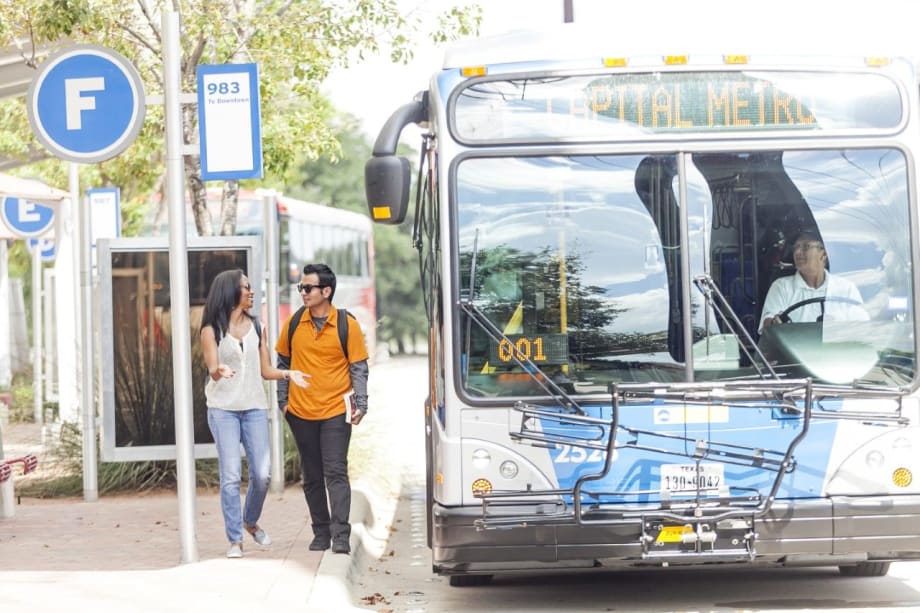
Photo: CapMetro
8 min to read
Millennials and their younger counterparts, Gen-Z make up a significant portion of the world’s population. They are also becoming a dominant demographic in the labor pool. It’s predicted that in the next decade, this group will account for 58% of the workforce.
This makes them essential participants of urban prosperity — creating new jobs, boosting the economy, and redefining what makes up an urban lifestyle.
Ad Loading...
That’s why 85% of city officials recently noted attracting this desirable demographic as one of their top 10 priorities. When considering how to appeal to these generations, evaluating the health of your city’s transportation system is critical. In fact, recent research suggests that when looking for a place to settle, the most important criteria for those aged 24-44 is easy access to transit.
There is something fundamentally urbanistic about this demographic. Young people are vocal advocates for safer streets, extensive bike infrastructure, and efficient, effective public transit. A recent survey by WISPIRG Foundation concluded that “car culture no longer represents the “American Dream” for young Americans.” Instead, this demographic expects a multimodal lifestyle where optionality in travel is based on convenience, predictability, and positive impact on their community.
Recent research suggests that when looking for a place to settle, the most important criteria for those aged 24 to 44 is easy access to transit.
Technology has played a key role in enabling this expectation, and transportation leaders have a unique opportunity to modernize their services and systems with these technologies.
Leveraging tech creates benefits beyond digital transformation — it helps improve access to varied transportation options, enhance the transit planning process, and ultimately deliver transit experiences to meet unique, individual rider needs. The combination of these things can help cities use transit as a recruitment tool for attracting and retaining young talent.
Start with the Data
Millennials and Gen-Z have grown up in an age defined by data. Their needs, preferences, and behaviors are interpreted through data, which has shaped the experiences they have as consumers. Transit agencies can utilize data in the same way a company like Amazon would, analyzing customers’ travel patterns to identify particular modes or services that best serve riders’ needs.
Data and software are necessary components for improving transit planning, service offerings, and customer experience.
However, limited access to data (and the technology to make sense of it) has long prohibited transit agencies from being able to accurately plan services based on demand or assess the health of their transit systems and adjust accordingly.
Instead, agencies are often left with no choice but to run somewhat blindly, operating inefficient routes that drain transit budgets and make it impossible to respond with services that compete with personal vehicles or TNCs.
To understand how to make public transit more effective, local transit agencies need to analyze the trends, gaps, and behaviors of riders. To achieve this, transit agencies need to use three critical types of data:
First, it’s essential that transit agencies have access to rider data to understand where people are traveling, where first- and last-mile commuter issues exist, and how current forms of transit are being used.
It’s also important to analyze system data that allows for real-time assessment of the health and performance of various services.
Lastly, utilization of standardized data specifications like General Transit Feed Specification (GTFS) is critical for generating greater discoverability, access, and availability of transit information on a wide variety of digital platforms.
[Tech companies focused on mobility] are giving agencies the power to access and analyze these data sets, while also enabling them to freely manage and share transit data and gain a comprehensive look at community-based transit needs as a result.
Ad Loading...
Constructing transit plans informed by data-backed insights helps agencies alter services so that public transportation meets riders where they are. For young talent that means using data to improve access, performance, and information of the services they desire.
Rather than trying to compete with TNCs and other private transit providers, collaboration and shared policy between public and private service providers will enable more coordinated transit systems.
One Mode of Transit will no Longer Suffice
Millennials and Gen-Zers crave optionality, a behavior influenced by the proliferation of on-demand services and the ubiquity of smartphones. To appeal to those modern riders, cities must find ways to make public transportation more convenient and frequent. To do so, mobility planning efforts shared between cities and public transit agencies need to be more:
Holistic.
Coordinated.
Responsive.
The good news is, a shared vision on mobility and strong cross-functional collaboration between public agencies and private partners can deliver these flexible choices to riders. For example, rather than trying to compete with TNCs and other private transit providers, collaboration and shared policy between public and private service providers will enable more coordinated transit systems. Given current workforce trends and preferences, young professionals expect much more than one mode of transit.
What this means is that transit agencies and cities need to be able to assess the effectiveness of existing transit options while also exploring how new modes can be integrated, too.
Adopting this holistic approach to urban transit planning is the best way to deliver comprehensive, equitable choices to riders, while ensuring existing transit like subway and fixed bus routes are more desirable and efficient. Services like on-demand transit can help cities offer this type of flexibility and access within the walls of an existing transit ecosystem.
Take Johnson County, Kan., for example — this conglomeration of over 20 municipalities is the fastest growing county in the Kansas City area.
As a major player in a region that is historically one of the most important economic hubs in the Midwest, it boasts a surplus of cheap land alongside a sprawling, diverse population, which has made city transit a serious logistical challenge. Instead of trying to execute a costly and complicated overhaul, they developed a diverse transit ecosystem that would not only meet the needs of its widespread and diverse population, but give them the freedom of choice as well.
To achieve this, they supplemented existing transit with new modes — from microtransit and private mobility providers, to bikeshare and electric scooters.
The result? The city was able to boost business in the urban core, but also create greater access to jobs and opportunities for people living outside the city center.
At the same time, they were able to increase demand for fixed-route service through realigning fixed-bus lines to high-demand areas and give citizens outside the city easier access to fixed-route service through agile transit options like microtransit.
Millennials and Gen-Z have grown up in an age defined by data.
Photo: TransLoc
Improve the Perception and Experience of Public Transit
Rideshare has become a popular transportation option among younger demographics.
Ad Loading...
Yes, the convenience of door-to-door service is part of the appeal of TNCs, but rideshare service also allows users to control their travel experience in a way public transit often can’t. Because of this, TNCs are often criticized for taking riders away from public transportation (they have) and putting more private cars on the road (they do) — which have adverse effects on climate, congestion, and livability.
However, in this challenge lies an opportunity for transit agencies, particularly on how to deliver a strong customer experience focused on individual rider needs.
[Public transit] systems leave riders with fragmented journeys whether that’s first-mile, last-mile problems or overcomplicated transfers.
Public transit services have a brand problem. Riders, especially young people, want consistency, predictability, and ease when it comes to their travel. These systems leave riders with fragmented journeys whether that’s first-mile, last-mile problems or overcomplicated transfers.
Using technology and data can help agencies and cities better understand those journeys, and the modes available to complete them, to fill in gaps that create an integrated, holistic travel experience.
For example, transit agencies can utilize technologies, similar to Uber and Lyft, to offer on-demand transit services that create more convenient travel experiences and improve transit access by linking the on-demand and existing transit options into a single journey.
This can be done by planning new transit services in the context of one another to ensure coverage and convenience. Then agencies can design those services, and service information, to create holistic rider experiences that can be consumed through one or multiple digital platforms.
Ad Loading...
Making investments like these to improve the experience of public transportation is important to create the brand trust necessary to increase rider perception and retention. That’s why 98% of transit agencies believe their most important goal in the next three years is improving the passenger experience.
Bakersfield, Calif., is a great example of a city that achieved this through identifying a unique and sustainable approach to modernizing their transit service offerings. With the help of TransLoc, the Golden Empire Transit District (GETbus) launched an on-demand microtransit service called RYDE to supplement existing transit options.
The program was this agency’s response to closing gaps in service and providing a fresh, yet affordable, way to get around the city. Offering on-demand rides at just $3.50, this service provides a direct alternative to luxury rideshare that doesn’t break the bank.
Businesses like McDonalds, Amazon, and Caterpillar understand that to attract talent they need improved access to transit.
Young talent is choosing transit. This is a great opportunity for cities and transit agencies to regenerate interest in strong public transportation offerings while enabling a network of mobility services through public-private partnerships.
To do this, agencies need access to data and technologies that improve planning and service optimization. These technologies also help cities and agencies do more with less as budgets tighten in response to infrastructure and ridership decline. The private sector is realizing this opportunity, too.
Ad Loading...
More than 60% of jobs in U.S. Cities are now within one-half mile of a transit stop.
That’s no coincidence. Businesses like McDonalds, Amazon, and Caterpillar understand that to attract talent they need improved access to transit. City leaders can leverage technology to take advantage of this momentum and improve the effectiveness and attractiveness of their transit. If they don’t, they'll risk losing an important demographic that’s essential to the desirability and sustainability of cities.
About the Author: Lenae Storey is a Director of Mobility Strategy at TransLoc, a Ford Mobility Co.
Editor's Note: (This blog was originally posted Oct. 1, 2019)
With $610 million available through the FY 2026 Buses and Bus Facilities Competitive Program and the Low or No Emission Grant Program, agencies must build a compelling case before the September 21 deadline that balances environmental compliance with operational feasibility.
The global cycling conference highlighted how cities are integrating bicycles into multimodal transportation networks, expanding cycle tourism and reshaping urban mobility.
Mike Bismeyer — often known as “The Kindness Guy” — has spent more than 17 years in public transit and mobility, serving in industry leadership roles, speaking across North America, and advocating for stronger workplace cultures. But his message doesn’t come from theory. It comes from lived experience.
Transport leaders from around the world gathered in Leipzig, Germany, for the 2026 International Transport Forum to discuss resilience, climate impacts, supply chains and the future of sustainable mobility.
Polis comprises cities and regions, as well as corporate partners, from across Europe, promoting the development and implementation of sustainable mobility. This year’s event had over a thousand attendees across various policy forums and an exhibition.
Across North America and beyond, transit agency officials are contending with a perfect storm of operational headaches and strategic challenges that hamper daily service and long-term progress.
Simply incentivizing electrification is not enough to make a meaningful impact; we must shift our focus toward prioritizing public transportation and infrastructure.