Feds Invest $4B in 14 Major Transit Construction Projects
The rail and BRT projects will bring about transformative change in their communities by providing transit opportunities to new riders, creating jobs, and jumpstarting economic development.
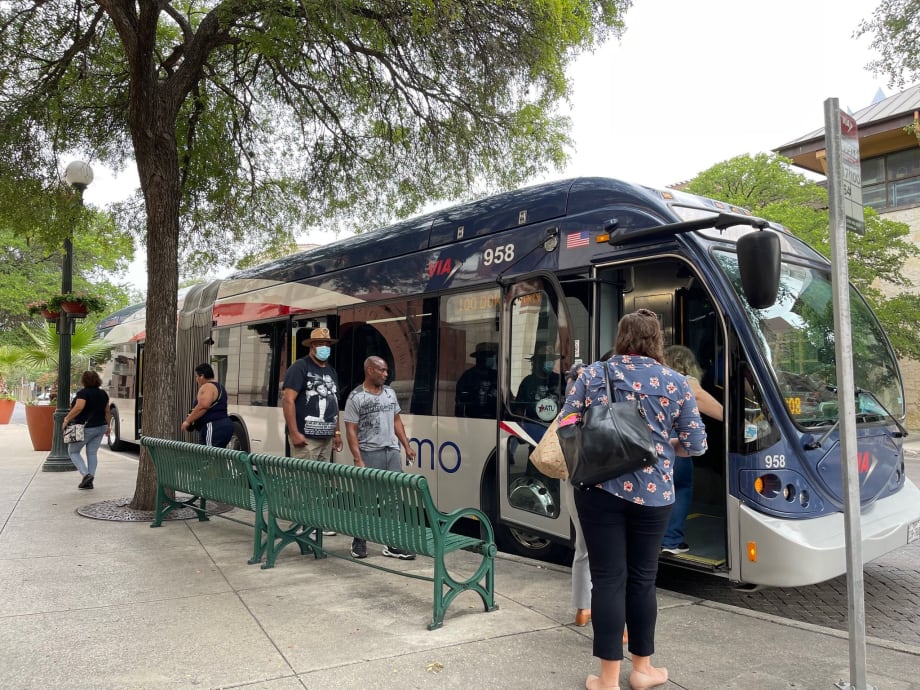
VIA's BRT project will serve a corridor with a high proportion of low-income and zero-car households, older adults, people with disabilities, and minority groups. It includes 5.1 miles of dedicated transit lanes, stations, and the purchase of low- or no-emission vehicles.
Photo: VIA
7 min to read
U.S. Transportation Secretary Pete Buttigieg recommended 14 large transit projects in 11 states receive nearly $4 billion in federal support for construction as part of President Biden's Fiscal Year (FY) 2025 Budget Request to Congress.
The rail and bus rapid transit (BRT) projects will bring about transformative change in their communities by providing transit opportunities to new riders, creating jobs, and jumpstarting economic development, according to Secretary Buttigieg.
Ad Loading...
"Public transportation connects people to jobs, school, family, and more — and when transit reaches more people and communities, its impact is even greater," said U.S. Transportation Secretary Pete Buttigieg. "The Biden-Harris Administration is proud to support funding for 14 large projects that will expand transit for millions of Americans across the country."
Supporting Capital Projects
The Capital Investment Grants (CIG) and Expedited Project Delivery Pilot programs are the Federal government's primary grant programs supporting new large transit capital projects that are locally planned, implemented, and operated. This includes investments such as new and expanded subway systems, commuter rail, light rail, streetcars, and BRT.
Seven of the 14 recommended projects would receive funding recommendations through FTA's CIG program for the first time, while others on the list are already under construction or far along in the process required to receive a capital construction grant. The projects, which require a local funding match, seek funding through FTA's CIG and EPD Pilot programs.
The FY25 Annual Report on Funding Recommendations recommends $2.37 billion in annual appropriations requested from Congress and $1.6 billion in FY 2025 funding provided through the Bipartisan Infrastructure Law advance appropriations.
3 Pipeline Projects
The President's FY 2025 Budget request proposes funding for three projects in the CIG/EPD pipeline that were recommended in prior budgets but have not yet entered into a construction grant agreement:
Ad Loading...
In Illinois, $350 million is recommended for the Chicago Red Line Extension Project to extend the Red Line Dan Ryan branch on Chicago’s Far South Side from the present 95th Street Terminal to the 130th Street area. The project will reduce commute times, improve mobility and accessibility, and foster economic development in a corridor with high levels of poverty, unemployment, and long travel times. The 5.6-mile extension includes the purchase of railcars, stations, parking facilities, and a new railyard and maintenance shop.
In New Jersey/New York, $700 million is recommended for the proposed Hudson Tunnel Project to improve reliability for New Jersey Transit and Amtrak trains. The project includes construction of a new two-track heavy rail tunnel along the Northeast Corridor from the Bergen Palisades in New Jersey to Manhattan. The project includes the construction of a new tunnel under the Hudson River, the rehabilitation and modernization of the existing North River tunnel, and utility relocation work for the Long Island Railroad Emergency Services Building.
In Texas, $109.7 million is recommended for the proposed VIA Advanced Rapid Transit North/South Corridor Project, a bus rapid transit project from the San Antonio International Airport in the north, through downtown San Antonio, to Steves Avenue in the south. It will connect key destinations along the corridor including North Star Mall, Baptist Medical Center, Missions National Historic Park, and numerous high-density commercial and residential areas. The project includes eight miles of dedicated transit lanes, stations, and the purchase of vehicles.
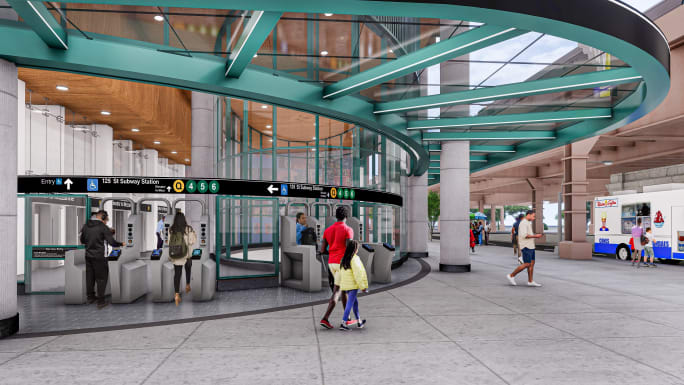
New York City's Second Avenue Subway Phase 2 project will provide transit access in Manhattan to East Side residents, workers, and visitors, and improve mobility for all New Yorkers.
Photo: New York MTA
7 Projects to Receive First-Time Funding
The President's FY 2025 Budget request includes seven projects recommended to receive funding for the first time:
In California, $200 million is recommended for the Inglewood Transit Connector Joint Powers Authority's Inglewood Transit Connector Project, which will provide automated, elevated rail service to multiple large-event venues located along the project corridor and is intended to connect the underserved Inglewood community and the countywide passenger rail system. The project includes the construction of new rail tracks and stations and the purchase of vehicles.
Also in California, $500 million is recommended for the Transbay Joint Powers Authority's Transbay Downtown Extension Project, which will extend Caltrain commuter rail service from the China Basin/South Park neighborhood near the current Caltrain terminus to the Salesforce Transit Center in central San Francisco. The project is intended to improve public access to bus and rail service and accommodate projected growth in travel demand along the San Francisco Peninsula and South Bay corridor. The project includes 1.3 miles of underground tunnel, new rail tracks, stations, ventilation and egress systems, and the purchase of vehicles.
In Florida, $263.7 million is recommended for the Miami-Dade County Department of Transportation and Public Works' Northeast Corridor Rapid Transit Project, which will provide commuter rail service between Downtown Miami and the city of Aventura. The project is intended to improve multi-modal regional connections and increase transit options in an urban, commercial corridor. The 13.5-mile project includes stations, park- and-ride facilities, the purchase of vehicles and improvements to a rail yard and rail vehicle maintenance storage facility.
In Indiana, $141.9 million is recommended for IndyGo’s Blue Line Rapid Transit Project, which will implement BRT between the Indianapolis International Airport, downtown Indianapolis, and Cumberland along IndyGo's busiest bus route, which serves a high concentration of low-income and zero-car households. The project includes 13.4 miles of dedicated transit lanes, stations, and the purchase of diesel hybrid powered buses.
In North Carolina, $138.3 million is recommended for the Chapel Hill Transit's North-South Bus Rapid Transit Project, which will connect riders to several major activity and job centers, including the University of North Carolina at Chapel Hill, hospitals, and downtown Chapel Hill, and is intended to improve mobility and accessibility in the corridor’s low-income communities. The project includes 5.7 miles of exclusive bus lanes, stations, and the purchase of vehicles.
In Texas, $134.7 million is recommended for the VIA Metropolitan Transit's Advanced Rapid Transit East/West Corridor Project, which will provide BRT connecting key destinations, including the Alamo, the San Antonio Riverwalk, the University of Texas San Antonio Downtown Campus, and downtown San Antonio. The project will serve a corridor with a high proportion of low-income and zero-car households, older adults, people with disabilities, and minority groups. It includes 5.1 miles of dedicated transit lanes, stations, and the purchase of low- or no-emission vehicles.
In Wisconsin, $118.1 million is recommended for the city of Madison's North-South BRT Project, which will connect neighborhoods north of Madison, through downtown, and into the city of Fitchburg. The BRT project will provide access for underserved communities and low-income populations and link them to employment opportunities and healthcare facilities. The project includes 5.2 miles of exclusive bus lanes, stations, and the purchase of battery-electric buses.
4 More Projects Set for Funding
The President's FY 2025 Budget request also proposes funding for four projects with existing construction grant agreements:
In California, $315.7 million is recommended for the Westside Purple Line Extension Section 3 Rail Project. The Westside Subway provides a critical connection for the region’s second-largest job center and connects downtown Los Angeles with the Westside.
In Minnesota, $129.5 million is recommended for the Minneapolis Southwest Light Rail Transit Project. The Southwest Light Rail adds 14.5 miles to the existing METRO Green Line and connects downtown Minneapolis, downtown Saint Paul, St. Louis Park, Hopkins, Minnetonka, and Eden Prairie.
In New York, $496.8 million is recommended for the New York City Second Avenue Subway Phase 2 project. The subway extension will provide transit access in Manhattan to East Side residents, workers, and visitors, and improve mobility for all New Yorkers.
In Washington, $88.4 million is recommended for the Seattle Lynnwood Link Light Rail Extension Project. This project will extend the light rail system from Northgate station in King County to the Lynnwood City Center Station in Snohomish County and is intended to relieve congestion, improve transit performance, and enhance mobility choices.
Ad Loading...
Seven of the 14 recommended projects would receive funding recommendations through FTA's CIG program for the first time, while others on the list are already under construction or far along in the process required to receive a capital construction grant.
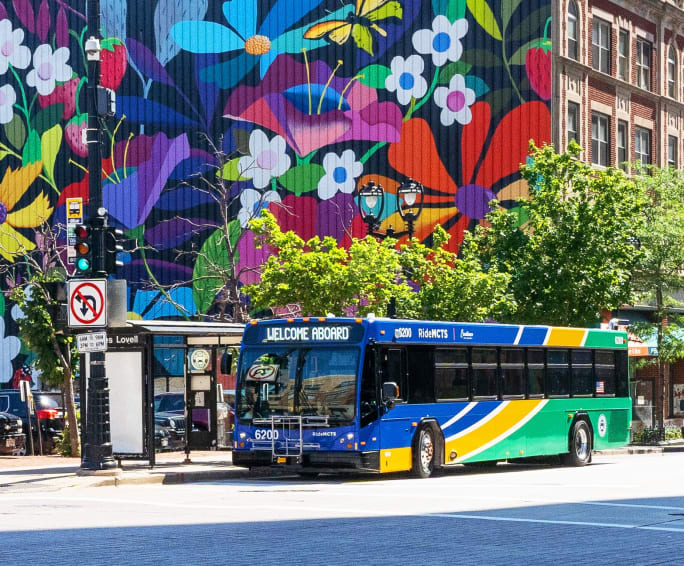
Photo: MCTS
Looking to Expand Federal Funding
In the President's FY 2025 Budget, FTA also proposes several provisions to increase access to and the effectiveness of federal funds across communities:
Support equity in rural and Tribal areas: Waive the match requirement for rural, tribal, and non-profit providers in the Enhanced Mobility of Seniors and People with Disabilities and Formula Grants for Rural Areas programs and waive the match requirement for Tribal applicants to the Buses and Bus Facilities and Low-and No Emission competitive programs.
Address the fiscal cliff: Allow Urbanized Area Formula Funds and Federal Highway Administration "flex funds" to be used for operating assistance in all urban areas.
Empower local authorities: Enable transit agencies to purchase real property outside an existing transit corridor, harmonizing with Federal Highway Administration policies.
Unlock micromobility systems: Allow FTA grantees to directly fund shared micromobility systems, such as bicycles and scooters, to enhance connectivity to transit stations.
Lower bus costs and speed up delivery: Authorize FTA to encourage lower costs and faster delivery of low- and no-emission buses, such as through standardized purchases.
The Bipartisan Infrastructure Law (BIL), enacted in November 2021, is the Biden-Harris Administration's plan for building a better America with a historic investment in our nation’s infrastructure and competitiveness.
BIL provides support to rebuild America's roads, bridges, and rails; upgrade and expand public transit; modernize the nation's ports and airports; improve safety; tackle the climate crisis; advance environmental justice; and invest in communities that have too often been left behind. It will drive the creation of good-paying union jobs and grow the economy sustainably and equitably to help everyone get ahead for decades to come.
Contract Four is the largest in the Second Avenue Subway Phase 2 project and includes construction of station infrastructure, tracks, and signals for the subway expansion, MTA officials said. Work on Contract Four will begin in 2027.
The new regional transit authority appointed its first board chair and interim executive director while extending reduced fares across CTA, Metra, and Pace for eligible riders.
Reliability-Centered Maintenance helps transit agencies move beyond routine checklists to focus limited resources on the assets and failures that have the greatest impact on safety, reliability, and service.
The 90-day demonstration will deploy coordinated security teams at five light rail stations while testing controlled access and gathering data to guide future investments.
Learn about delivering 1300 gates at 91 stations while managing fare evasion. Explore the large scale deployment, solution customization and real-world results that affect the region. Prepare for deployment in your region now.
Between packed transit stations and team motorcoaches, see how agencies and operators across North America tackled the transportation demands of the 2026 FIFA World Cup.
The stopgap keeps federal transportation programs moving, but missing advance funding could complicate the transit and rail projects agencies are planning next.