




Read More: LIRR Names New Acting President
New York MTA Board Approves Series of Procurements
These contracts are made possible by the support and investment from the federal government.
December 21, 2023
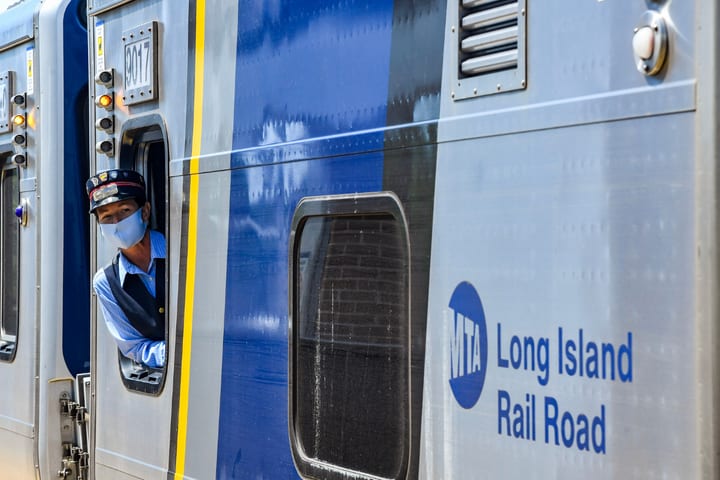
The MTA said systemwide accessibility remains a top priority for LIRR, which is committed to maintaining its level of investment to make stations ADA-accessible.
Photo: MTA
4 min to read
The Metropolitan Transportation Authority (MTA) Board announced it has approved a series of procurements that advance the authority’s goals of achieving systemwide accessibility, reducing its carbon footprint, and maintaining the transit system in a state of good repair.
These contracts are made possible by the support and investment from the federal government.
“The procurements moving forward today advance top 2023 MTA goals – expanding accessibility systemwide, reducing greenhouse gas emissions, and keeping the transit system in a state-of-good repair,” said MTA Chair/CEO Janno Lieber. “Together they will help move forward the transit system riders deserve. Many of these projects include federal funds from the Bipartisan Infrastructure Law, and – as always – we thank Sen. Schumer, House Democratic Leader Jeffries, the New York congressional delegation, and our USDOT partners.”
Accessibility Upgrades at 13 More Subway Stations
The MTA completed eight station projects across all five boroughs in 2023 and 24 stations since 2020.
The new elevator cabs are equipped with modern technology features including security cameras and two-way communication systems that give riders the ability to reach MTA staff at the Operations Control Center in the event of an emergency. Customers can communicate audibly via speakers or visually using a touch screen in the elevator.
This package of accessibility upgrades encompasses 13 subway and Staten Island Railway stations and spans all five boroughs.
The project includes the installation of new elevators or ramps compliant with the Americans with Disabilities Act at each of these stations as well as other accessibility upgrades and work to bring the facilities into a state of good repair.
Broadway Junction
The MTA will perform a rehabilitation of the Broadway Junction complex, which is the third-largest subway station in Brooklyn and serves as a major transfer point between the AC, JZ, and C lines.
The project will create a stair-free path of travel throughout the entire complex rendering it fully ADA-accessible. In addition, crews will replace existing escalators and construct a new entrance from Van Sinderen Ave that leads riders directly to the L train platform.
The MTA will also build a new comfort station at Callahan Kelly Playground.
Bus Fleet Modernization
The MTA currently has over 1,300 low-emissions hybrid buses in its fleet, including 399 second-generation hybrid buses which run on battery-only EV mode a portion of the time, greatly reducing fossil fuel usage, and 15 electric buses.
The MTA Board approved two contracts to purchase a total of 429 new buses for $552.8 million that will replace buses that have reached the end of their useful life. The purchase includes 205 low-floor battery-electric buses (with two options for up to 1,215 additional battery-electric buses) and 224 low-floor 60-foot clean diesel buses (with two options to purchase up to 446 additional 60-foot clean diesel buses).
The purchase contracts also include related items such as spare parts, special tools, equipment, diagnostic testing, technical documentation, and requisite training from the bus manufacturer.
The battery-electric bus purchase, part of the MTA’s current capital plan, was made whole with the support of the $116 million in federal low-or-no-emission grant funding via the Bipartisan Infrastructure Law.
The purchase of 205 low-floor battery-electric buses supports the Authority’s commitment to transitioning to a fully zero-emissions bus fleet by 2040 and is the first set of battery-electric buses earmarked in the 2020-2024 Capital Plan.
The projected pilot bus delivery for the first of the 205 battery-electric buses is slated for 2025, with production deliveries beginning later that year.
While work to retrofit the necessary infrastructure to support the 205 battery-electric buses is underway, beginning fall of next year, 60 battery-electric buses will begin arriving at multiple depots across all boroughs, with prioritization to environmental justice communities.
Accessibility and State-of-Good-Repair on the Long Island Rail Road
The MTA said systemwide accessibility remains a top priority for LIRR, which is committed to maintaining its level of investment to make stations ADA-accessible.
The projects moving forward will make the stations at Forest Hills and Hollis accessible and improve accessibility at Babylon.
In addition, platforms at Forest Hills and Hollis will be extended to allow for increased future capacity. Babylon will also receive a full platform and canopy replacements.
Metro-North Railroad’s Brewster Yard Improvement Program
MTA Construction & Development and Metro-North Railroad have planned multi-phased improvements at Metro-North's Brewster Campus in Putnam County.
The Brewster Yard Improvements program will transform the campus into a strategic maintenance facility and transportation hub. The current campus includes the Southeast station, customer surface parking lots, the Harlem Line tracks, the existing train storage yard, and the Brewster Yard maintenance facility.
The project scope comprises the existing MNR Brewster Campus and an undeveloped 52-acre property situated to the east of the Harlem Line.
The Brewster Yard Improvements Program is structured into three phases:
Phase One - Southeast Station Parking and Access Improvements
Phase Two - Northward Yard Expansion
Phase Three - Existing Yard Reconfiguration
The first phase will include relocating the existing Southeast station parking lot to a new facility to facilitate future yard expansion.
Crews will construct a 1320-space parking garage with an overpass that will take riders to the platform level.
More Management

METRO Opens Submissions for 2026 Motorcoach Awards
Nominations are now being accepted for METRO Magazine’s Operator of the Year and Innovative Operator of the Year awards.
Read More →
New York MTA Advances Final Contract for Second Avenue Subway Expansion
Contract Four is the largest in the Second Avenue Subway Phase 2 project and includes construction of station infrastructure, tracks, and signals for the subway expansion, MTA officials said. Work on Contract Four will begin in 2027.
Read More →
Transit Agencies Highlight Safety Gains at National Summit
Leaders from 15 major transit systems shared crime-reduction results and safety initiatives while discussing the role of continued federal support.
Read More →

NITA Names New Leadership, Expands Reduced-Fare Program at First Board Meeting
The new regional transit authority appointed its first board chair and interim executive director while extending reduced fares across CTA, Metra, and Pace for eligible riders.
Read More →
Beyond the Checklist: A Structured Approach to Transit Maintenance
Reliability-Centered Maintenance helps transit agencies move beyond routine checklists to focus limited resources on the assets and failures that have the greatest impact on safety, reliability, and service.
Read More →
APTA 2026 Nominating Committee Selects Leadership Slate, Names Chair and Vice Chair Nominees
Leadership changes will help shape the association’s priorities and its representation of the transportation industry during the 2026–2027 term.
Read More →
DART Launches Major Security, Fare Enforcement Initiative
The 90-day demonstration will deploy coordinated security teams at five light rail stations while testing controlled access and gathering data to guide future investments.
Read More →
Sponsored•September 9, 2026
Advancing Fare Collection Through Technology and Innovation
Learn about delivering 1300 gates at 91 stations while managing fare evasion. Explore the large scale deployment, solution customization and real-world results that affect the region. Prepare for deployment in your region now.
Read More →
Game Day in Motion: Moving Millions During the 2026 World Cup
Between packed transit stations and team motorcoaches, see how agencies and operators across North America tackled the transportation demands of the 2026 FIFA World Cup.
Read More →
Surface Transportation Extension Averts Shutdown, Leaves Transit Funding Gap
The stopgap keeps federal transportation programs moving, but missing advance funding could complicate the transit and rail projects agencies are planning next.
Read More →