




Keep Reading: WMATA Delivers $120M in Savings, Record Ridership in FY2025
COG and WMATA Endorse $460M Plan to Modernize Regional Transit
Regional leaders unite behind the DMVMoves plan, calling for annual funding to modernize and improve coordination across the region’s 14 transit systems.
November 18, 2025
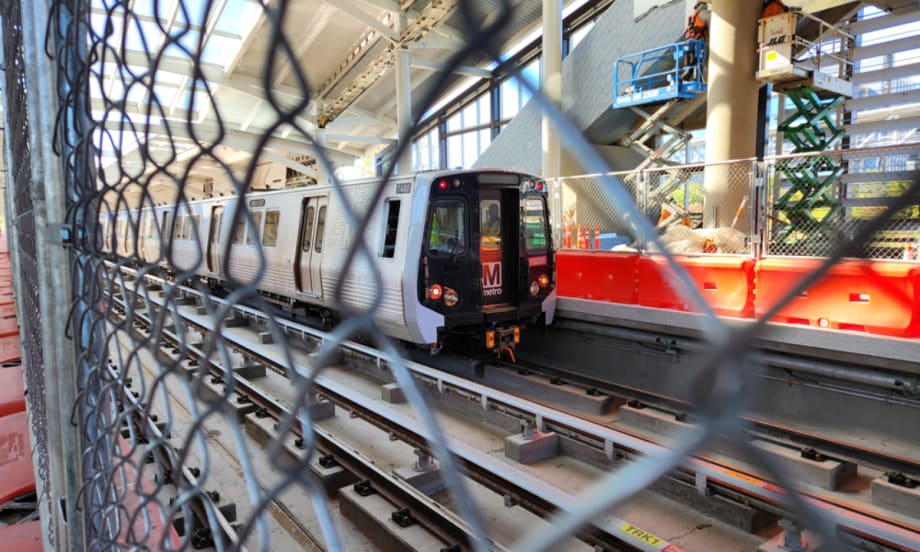
A key proposal includes $460 million in new annual capital funding for the agency, beginning in Fiscal Year 2028.
Photo: WMATA
3 min to read
The Metropolitan Washington Council of Governments (COG) and the Washington Metropolitan Area Transit Authority (WMATA) boards jointly endorsed recommendations from the DMVMoves Task Force and called on regional leaders to advance funding solutions to support the agency’s long-term modernization and strengthen coordination among the region’s 14 transit operators, including metro, MARC, VRE, and local bus systems.
The recommendations outline a vision for a modern, seamless, and world-class transit network that supports economic growth, efficiency, and safe, reliable access across the National Capital Region.
A key proposal includes $460 million in new annual capital funding for the agency, beginning in Fiscal Year 2028. This investment would allow WMATA to modernize its bus and rail systems.
“This is a pivotal moment for our region,” said General Manager and Chief Executive Officer Randy Clarke, “A reliable and well-funded metro system is essential to our region’s economic vitality. These recommendations provide a roadmap to modernize our transportation network, deliver safer and more reliable service, and ensure [WMATA] continues to connect people to opportunities for generations to come.”
Task Force Recommendations to Strengthen and Modernize
In addition to the new capital funding, the task force recommended a set of actions to make transit more efficient and easier to use across the regional WMATA metro, commuter rail, and local bus systems.
These actions include implementing bus-priority projects along high-priority corridors to improve bus speeds and reliability for riders and reduce long-term operating costs, integrating fare policies, such as consistent discounts for low-income riders and free fares for children, and improving customer information, such as standard bus stop designs.
“The DMVMoves plan is a major milestone for our region, but it isn’t an endpoint,” said COG Executive Director Clark Mercer. “Our region has produced some great plans in the past whose goals were not fully achieved. This time, COG, [WMATA], and our partners have outlined the path forward to ensure these recommendations are implemented and that we hold ourselves accountable to delivering our shared vision for world-class transit.”
In endorsing the investment plan, the DMVMoves Task Force recommended that the funding should be unencumbered and grow by 3% annually to ensure the system’s long-term financial stability. If secured, the funding would ensure:
Ongoing repair, maintenance, and modernization of assets, systems, and technologies.
Deployment of rail modernization — modern signaling, compatible fleet upgrades, and selective platform screen doors — to improve safety, reliability, capacity, and efficiency.
The creation of a sustainable bond program to support long-term investments, maintain the system’s state of good repair, and strengthen overall financial stability.
“The DMVMoves Task Force has shown what’s possible when our region comes together to plan for the future,” said Rodney Lusk, COG Board of Directors chair and a Fairfax County supervisor. “Transit propels our region’s economy forward, and this collaboration is a clear call to action. We must move forward together to secure a sustainable future for everyone who depends on the metro and our entire transit network.”
“Our region’s prosperity depends on having a safe, resilient, and reliable metro — the world-class transit system our communities deserve,” said Board Chair Valerie Santos. “Together, the COG and metro boards support the vision articulated in the DMVMoves plan and urge our regional and state partners to work together to secure the sustainable, dedicated funding necessary to make that vision a reality for our Washington metropolitan area.”
Following the recent joint endorsement, regional advocacy will begin to seek the enactment of funding legislation by the DC Council and the Maryland and Virginia state legislatures.
More Management

METRO Opens Submissions for 2026 Motorcoach Awards
Nominations are now being accepted for METRO Magazine’s Operator of the Year and Innovative Operator of the Year awards.
Read More →
New York MTA Advances Final Contract for Second Avenue Subway Expansion
Contract Four is the largest in the Second Avenue Subway Phase 2 project and includes construction of station infrastructure, tracks, and signals for the subway expansion, MTA officials said. Work on Contract Four will begin in 2027.
Read More →
Transit Agencies Highlight Safety Gains at National Summit
Leaders from 15 major transit systems shared crime-reduction results and safety initiatives while discussing the role of continued federal support.
Read More →

NITA Names New Leadership, Expands Reduced-Fare Program at First Board Meeting
The new regional transit authority appointed its first board chair and interim executive director while extending reduced fares across CTA, Metra, and Pace for eligible riders.
Read More →
Beyond the Checklist: A Structured Approach to Transit Maintenance
Reliability-Centered Maintenance helps transit agencies move beyond routine checklists to focus limited resources on the assets and failures that have the greatest impact on safety, reliability, and service.
Read More →
APTA 2026 Nominating Committee Selects Leadership Slate, Names Chair and Vice Chair Nominees
Leadership changes will help shape the association’s priorities and its representation of the transportation industry during the 2026–2027 term.
Read More →
DART Launches Major Security, Fare Enforcement Initiative
The 90-day demonstration will deploy coordinated security teams at five light rail stations while testing controlled access and gathering data to guide future investments.
Read More →
Sponsored•September 9, 2026
Advancing Fare Collection Through Technology and Innovation
Learn about delivering 1300 gates at 91 stations while managing fare evasion. Explore the large scale deployment, solution customization and real-world results that affect the region. Prepare for deployment in your region now.
Read More →
Game Day in Motion: Moving Millions During the 2026 World Cup
Between packed transit stations and team motorcoaches, see how agencies and operators across North America tackled the transportation demands of the 2026 FIFA World Cup.
Read More →
Surface Transportation Extension Averts Shutdown, Leaves Transit Funding Gap
The stopgap keeps federal transportation programs moving, but missing advance funding could complicate the transit and rail projects agencies are planning next.
Read More →