



N.Y. bus, rail systems boost ridership, increase on-time performance
Subway average weekday ridership of 5.77 million in September was up 4.5% over the prior year, and local bus ridership of 2.25 million was 1.5% over the previous year.

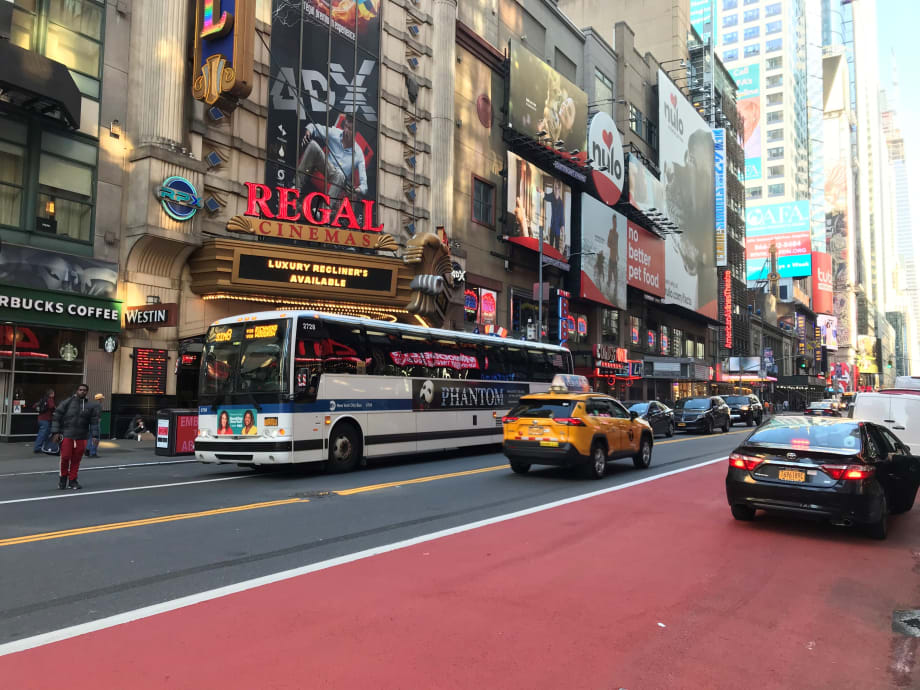
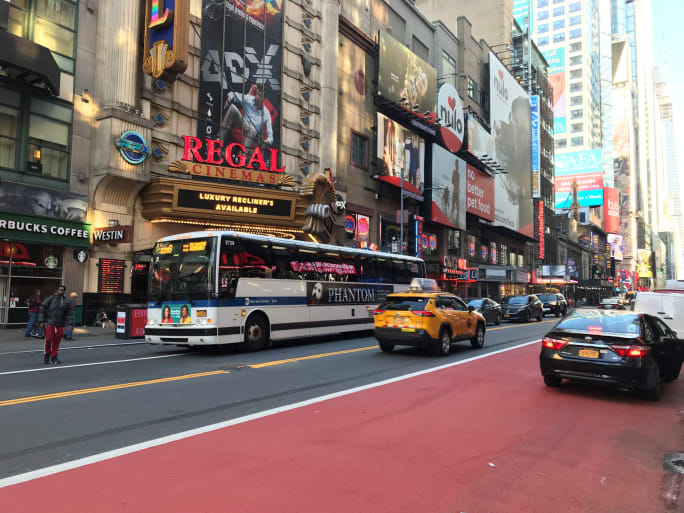
MTA New York City Transit bus in midday traffic. Janna Starcic/METRO Magazine
New York’s Metropolitan Transportation Authority (MTA) reported ridership increases on its bus and subway systems, as well as on the Long Island Rail Road (LIRR) and Metro-North Railroad, coinciding with improvements in performance at all agencies. Subway average weekday ridership of 5.77 million in September was up 4.5% over the prior year, and local bus ridership of 2.25 million was 1.5% over the previous year.
LIRR ridership increased 2% in September, boosting year-to-date ridership to 2.4% increase and putting the railroad on pace to set another modern-day record. Metro-North Railroad’s ridership increased 1% in September and has risen 0.6% year-to-date. Traffic on MTA Bridges and Tunnels of 29.4 million in August was 0.6% higher than the prior year.
The subway system is carrying nearly 250,000 more trips each weekday than it was a year earlier, while buses are carrying 34,000 more trips per average weekday. The MTA’s commuter railroads together have carried nearly two million more people in 2019 through Sept. 30 than during the same period a year prior.
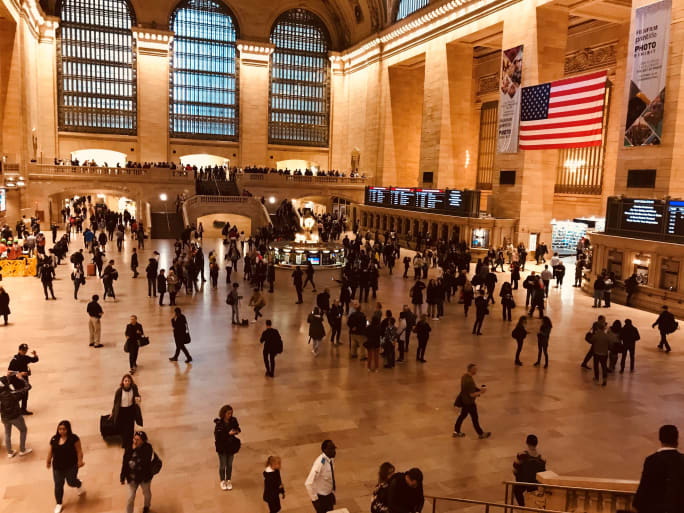
New York City's Grand Central Terminal. Janna Starcic/METRO Magazine
New York City Transit
Weekday subway on-time performance was 82.7% in September — the fourth month in a row it’s been above 80% in five years. The SAP has provided a surge of additional union personnel, outside contractors, and new tools and methods for the maintaining and improving the system.
Overall, subway performance continued its steady improvement in September 2019 across a host of categories. Major incidents have declined to the lowest number since this record has been kept, while on-time performance has continued to improve and customer-centric performance numbers are also pointing higher as well. The Save Safe Seconds Initiative and Train Speed and Safety Task Force are also working on improving running times throughout the system.
Weekday major incidents decreased nearly 28.9% from September 2018, dropping from 45 to a record-low of 32 in September 2019. Weekday on-time performance (OTP) for September was approximately 82.7%, up from 69.4% in the same month last year. Seven non-shuttle lines achieved figures in excess of 80% and the CBTC-enabled 7 Subway line experienced a 96% on time performance rate.
Improvements were also realized in many of NYC Transit’s customer-focused metrics, including Service Delivered and Customer Journey Time Performance improved to 84.7%, up from 80.1% a year ago. Meanwhile, customer commendation figures are up 12%.
A contributing factor to the reduction in delays has been the significant progress made in reducing track debris fires, which are down considerably since NYCT focused on this problem with new equipment in 2017. This has included clearing debris at an unprecedented rate using new platform-based mobile vacs, and vacuum trains that move around the system picking up trash. Year to date, track fires are down nearly 31% from the previous 12 months, from 956 to 703.
Additional highlights included:
A year-to-date on-time performance of 92.6% through Sept. 30 for LIRR, which is 2.4 percentage points higher than it was over the same time in 2018. The LIRR has scheduled 1.3% more trains in 2019 through Sept. 30 than it had over that timeframe in 2018, yet experienced a 0.4 percentage point increase in trips completed, to 99.4%. Trains operating with fewer cars than their normal length plunged 23.6% and trains’ mechanical reliability increased 7.4%, with trains traveling 193,667 miles between experiencing a mechanical failure as of Aug. 31. Track circuit failures in 2019, have plunged to 42 through Sept. 30, down by a third from 64 during the prior year.
A year-to-date on-time performance of 94.3% through Sept. 30 for Metro-North, which is 3.7 percentage points higher than it was over the same time in 2018. Metro-North has scheduled 142 more trains in 2019 through Sept. 30 than it had over that timeframe in 2018, yet experienced a 0.3 percentage point increase in trips completed, to 99.8%. The percentage of trains operating at their full length this year has increased 0.7 percentage points East of Hudson through Sept. 30, to 99.4%, while the improvement West of Hudson was even more pronounced, rising 1.2 percentage points to 98.9%. Trains’ mechanical reliability surged 63%, with trains traveling 244,074 miles between experiencing a mechanical failure, up from 149,683 a year prior. Delays related to switch and signal problems have plunged to 741 through Sept. 30, down by more than half from 1,800 experienced during the prior year.
More Management

METRO Opens Submissions for 2026 Motorcoach Awards
Nominations are now being accepted for METRO Magazine’s Operator of the Year and Innovative Operator of the Year awards.
Read More →
New York MTA Advances Final Contract for Second Avenue Subway Expansion
Contract Four is the largest in the Second Avenue Subway Phase 2 project and includes construction of station infrastructure, tracks, and signals for the subway expansion, MTA officials said. Work on Contract Four will begin in 2027.
Read More →
Transit Agencies Highlight Safety Gains at National Summit
Leaders from 15 major transit systems shared crime-reduction results and safety initiatives while discussing the role of continued federal support.
Read More →

NITA Names New Leadership, Expands Reduced-Fare Program at First Board Meeting
The new regional transit authority appointed its first board chair and interim executive director while extending reduced fares across CTA, Metra, and Pace for eligible riders.
Read More →
Beyond the Checklist: A Structured Approach to Transit Maintenance
Reliability-Centered Maintenance helps transit agencies move beyond routine checklists to focus limited resources on the assets and failures that have the greatest impact on safety, reliability, and service.
Read More →
APTA 2026 Nominating Committee Selects Leadership Slate, Names Chair and Vice Chair Nominees
Leadership changes will help shape the association’s priorities and its representation of the transportation industry during the 2026–2027 term.
Read More →
DART Launches Major Security, Fare Enforcement Initiative
The 90-day demonstration will deploy coordinated security teams at five light rail stations while testing controlled access and gathering data to guide future investments.
Read More →
Advancing Fare Collection Through Technology and Innovation
Learn about delivering 1300 gates at 91 stations while managing fare evasion. Explore the large scale deployment, solution customization and real-world results that affect the region. Prepare for deployment in your region now.
Read More →
Game Day in Motion: Moving Millions During the 2026 World Cup
Between packed transit stations and team motorcoaches, see how agencies and operators across North America tackled the transportation demands of the 2026 FIFA World Cup.
Read More →
Surface Transportation Extension Averts Shutdown, Leaves Transit Funding Gap
The stopgap keeps federal transportation programs moving, but missing advance funding could complicate the transit and rail projects agencies are planning next.
Read More →