



Modernizing Urban Transportation: The Funding Challenge and Innovative Solutions
Transportation infrastructure serves as the backbone of any thriving city, facilitating the movement of people and goods that drive economic growth and enhance quality of life.


While many cities continue to rely on traditional funding strategies, progressive urban regions are now exploring innovative approaches that utilize smart technologies to create sustainable and renewable funding sources.
Photo: METRO
Transportation infrastructure serves as the backbone of any thriving city, facilitating the movement of people and goods that drive economic growth and enhance quality of life.
However, local governments often encounter significant challenges in securing adequate funding for essential transportation improvement projects.
While many cities continue to rely on traditional funding strategies, progressive urban regions are now exploring innovative approaches that utilize smart technologies to create sustainable and renewable funding sources.
The Funding Challenge
Local city governments frequently struggle to allocate sufficient resources for transportation infrastructure improvements due to constrained budgets.
Competing priorities, such as public safety, education, and social services, can push transportation projects to the sidelines. This neglect can lead to increased congestion, reduced mobility, and economic stagnation.
To tackle these challenges, cities must diversify their funding sources and develop creative financing strategies.
Common mechanisms include local tax revenues — like property and sales taxes — state and federal grants, bond measures, public-private partnerships, special assessment districts, and user fees or tolls.
Federal grants play a crucial role in supporting local initiatives; for instance, the U.S. Department of Transportation's BUILD (Better Utilizing Investments to Leverage Development) program awarded $1 billion to 70 projects across 44 states in 2020 alone.
An Overreliance on Grants
Securing grant funding is only the initial step in addressing transportation infrastructure financing challenges.
Cities must integrate these funds into their operating budgets to ensure long-term project sustainability. This process typically involves identifying matching fund requirements and developing multi-year capital improvement plans while also allocating resources for ongoing maintenance and operations.
Establishing dedicated transportation funds can help leverage grant funds to attract additional investments, amplifying the impact of transportation investments and fostering a cycle of continuous improvement.
How to Fund for Expanding Transit Needs
Maintaining a robust transportation network necessitates consistent long-term investment.
One-time capital infusions are insufficient to meet the evolving needs of growing urban areas; ongoing funding is essential for regular maintenance and repairs, adapting to changing travel patterns and technologies, expanding capacity for future demand, implementing safety improvements, and enhancing accessibility and equity.
The American Society of Civil Engineers (ASCE) estimates the U.S. faces a staggering $786 billion backlog in road and bridge capital needs, emphasizing the critical importance of sustained investment in transportation infrastructure.
Efficient transportation systems are fundamental to urban prosperity as they improve access to jobs and economic opportunities while enhancing business productivity. These systems contribute to reduced congestion and travel times, lower transportation costs for households and businesses, increased property values in well-connected areas, and improved public health through reduced emissions and enhanced active transportation options.
According to a study by the American Public Transportation Association, every $1 invested in public transportation generates $5 in economic returns.
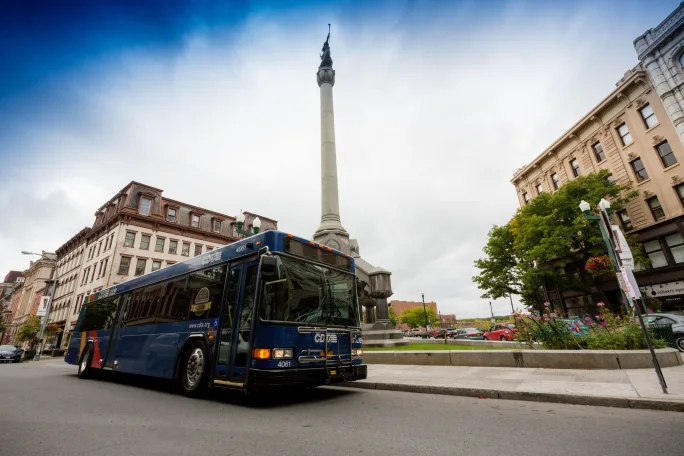
Establishing dedicated transportation funds can help leverage grant funds to attract additional investments, amplifying the impact of transportation investments and fostering a cycle of continuous improvement.
Photo: CDTA
New Technologies for Ongoing Funding
Progressive cities are increasingly leveraging advanced technologies to address transportation challenges cost-effectively.
By partnering with technology solution providers, municipalities are implementing smart systems that optimize existing infrastructure without requiring massive capital expenditures.
A prime example is traffic signal prioritization (TSP), which utilizes real-time data and AI algorithms to dynamically adjust traffic light timing. This technology prioritizes transit buses and emergency vehicles, enhancing public transit reliability while enabling quicker emergency responses.
The success of these advanced technologies hinges on their ability to leverage data for continuous improvement.
By collecting and analyzing substantial amounts of traffic data, cities can identify congestion hotspots while optimizing signal timing plans in real-time. These systems also provide accurate travel time information to commuters and improve emergency vehicle response times.
For instance, King County in Seattle has successfully implemented TSP solutions that allow them to include this technology in their ongoing operating budget due to the savings achieved.
Self-Sustaining Funding Sources
One compelling aspect of technology-driven solutions is their potential for self-sustainability.
Although initial implementation may require grants or other one-time funding sources, the operational efficiencies created can generate ongoing saving and revenue streams.
Benefits include reduced fuel consumption for public transit vehicles due to improved traffic flow, lower maintenance costs for roads and vehicles, increased public transit ridership from enhanced service quality, and improved revenue from efficient parking management systems.
By reinvesting these savings into their transportation programs, cities can foster a cycle of continuous improvement that expands their infrastructure without overburdening local taxpayers.
As urban areas continue to grow and evolve, the need for efficient and sustainable transportation systems becomes increasingly critical.
By embracing innovative technologies and data-driven approaches, local governments can overcome funding challenges while implementing transformative improvements in their transportation infrastructures. These solutions not only address immediate congestion issues but also lay the groundwork for long-term economic growth and enhanced quality of life for residents.
The success stories from cities like San Jose illustrate that with strategic planning combined with a willingness to adopt new technologies, it is possible to create effective yet financially sustainable transportation systems.
As more cities implement these approaches, we can anticipate a future characterized by smarter urban mobility that benefits all community members.
More Blog Posts
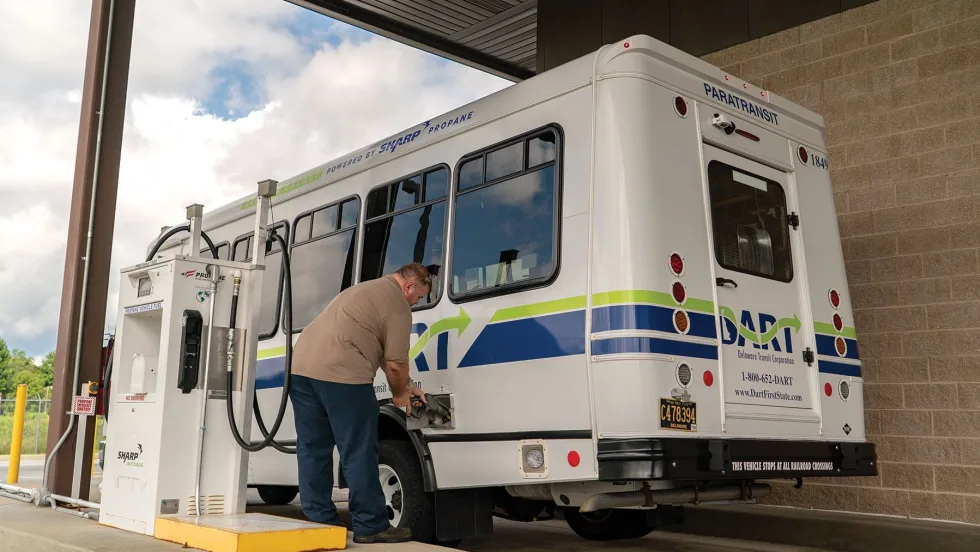
Building a Winning FTA Grant Proposal: Why Propane Autogas is the Pragmatic Choice for Fleet Resilience
With $610 million available through the FY 2026 Buses and Bus Facilities Competitive Program and the Low or No Emission Grant Program, agencies must build a compelling case before the September 21 deadline that balances environmental compliance with operational feasibility.
Read More →
Velo-city Conference 2026: Latest Trends in Cycling as Part of Urban Mobility
The global cycling conference highlighted how cities are integrating bicycles into multimodal transportation networks, expanding cycle tourism and reshaping urban mobility.
Read More →
Kindness Isn’t Soft...It’s Strategic.
Mike Bismeyer — often known as “The Kindness Guy” — has spent more than 17 years in public transit and mobility, serving in industry leadership roles, speaking across North America, and advocating for stronger workplace cultures. But his message doesn’t come from theory. It comes from lived experience.
Read More →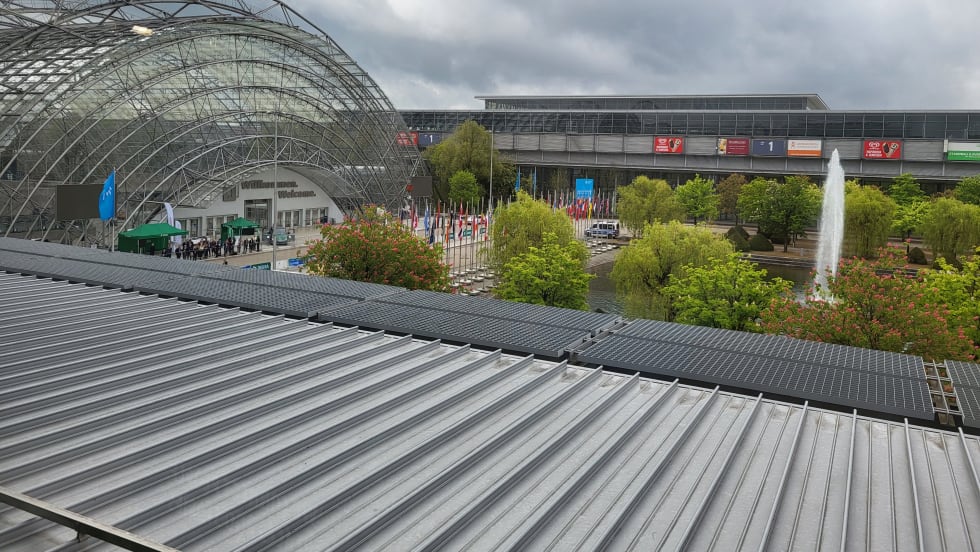
Inside ITF 2026: Transport Reacts to A Challenging World
Transport leaders from around the world gathered in Leipzig, Germany, for the 2026 International Transport Forum to discuss resilience, climate impacts, supply chains and the future of sustainable mobility.
Read More →
Every Ride Tells a Story — But You’re Not Just Selling the Ride
You’re selling the moment, the meaning, and the emotion behind it.
Read More →
How Digital Signage is Reshaping the Traveler Experience at Transportation Hubs
What was once a landscape of static signs has evolved into a responsive, immersive environment powered by real-time visual communication.
Read More →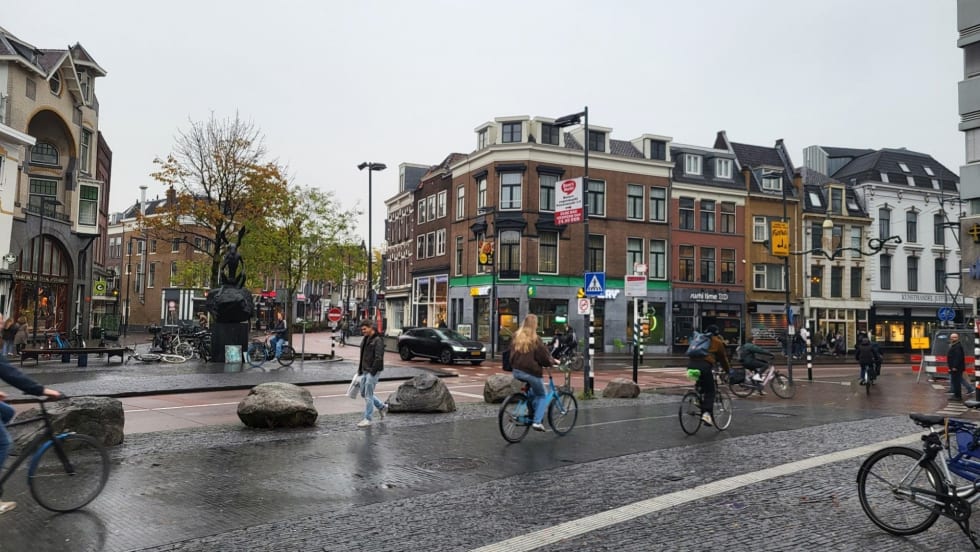
Latest Trends in Urban Mobility from Polis Conference 2025
Polis comprises cities and regions, as well as corporate partners, from across Europe, promoting the development and implementation of sustainable mobility. This year’s event had over a thousand attendees across various policy forums and an exhibition.
Read More →
Why Transit Leaders Require Better Tools for Operational Clarity In Today’s Tech-Fragmented Environment
Across North America and beyond, transit agency officials are contending with a perfect storm of operational headaches and strategic challenges that hamper daily service and long-term progress.
Read More →
The Powerless Brokers: Why California Can’t Build Transit
It is no secret that transit in the U.S. is slow and expensive to build.
Read More →
Why Transport Sustainability Should Focus on People Instead of Cars
Simply incentivizing electrification is not enough to make a meaningful impact; we must shift our focus toward prioritizing public transportation and infrastructure.
Read More →